

Audio By Carbonatix
New Patriotic Party (NPP) running mate in the 2024 election, Dr Matthew Opoku Prempeh, says the former government’s biggest failure was its own assumptions.
The former Energy and Education Minister admitted that too many signals were ignored and too many voices went unheard, creating a deep fracture between the state and its people.
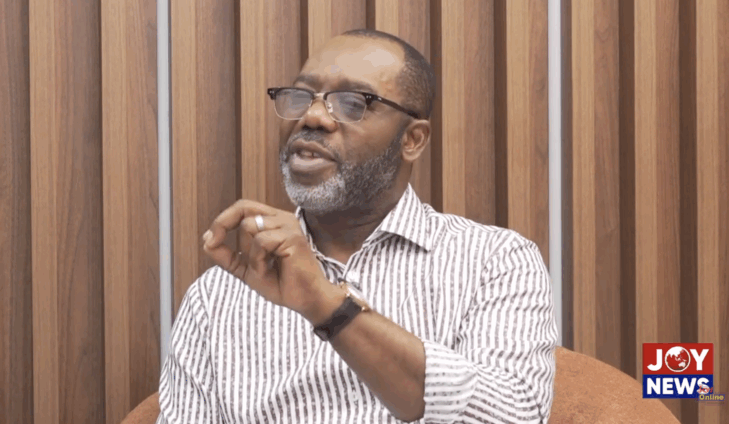
Speaking on Joy News’ PM Express on Tuesday, the former Manhyia MP said he reached this conclusion after months of personal reflection.
“One thing I’ve come to a conclusion in the last 10 months is that there was a broken trust between citizens to government,” he said.
“The trust that was broken hurt so much so that we saw the results so broken.”
Pressed by host Evans Mensah on what caused the rupture, he did not hesitate.
“We didn’t listen enough,” he said.
He explained that leaders “assumed a lot of things we shouldn’t have assumed,” a mistake he believes damaged the relationship with citizens at a critical period.
He added that “probably our purpose was a bit challenged for us,” a moment he described as one shaped by global chaos.
Dr Prempeh pointed to the economic shocks that swept across the world after the pandemic.
He said the government was hit by the same storms other nations faced. He recalled how global freight costs skyrocketed.
“A container from China that cost $1200 logistic-wise had risen to $14,000,” he said.
He stressed that many people lost everything. “People’s lifetime savings have been wiped out,” he said. He noted that the health toll was unbearable, too.
“People had died in their droves that had never been seen before, without a military crisis or World War,” he added.
He argued that these global shocks shook even the strongest political systems.
“Governments around the whole world have been toppled and changed,” he said, pointing out that only “dictatorial moments” and “autocratic governments” were able to avoid the tide.
For him, the crisis created conditions where public trust easily collapsed.
Dr Prempeh insisted that the government’s errors were not rooted in malice but in misjudgment. But he acknowledged that misjudgment carries a cost.
The people felt abandoned. They felt unheard. They felt the state had lost touch. For him, the lesson is clear. Broken trust comes from broken listening. And the former government, he admits, failed to hear early enough.
Latest Stories
-
World Cup visa scandal: Mahama will act on corruption allegations – Abass Nurudeen
37 seconds -
Abass Nurudeen accuses Minority of ‘scandal scavenging’ over World Cup visa controversy
2 minutes -
US Embassy recognised NSA, GFA and GTA as separate entities for visa applications – Sports Minister’s aide
8 minutes -
Only 30% of Ghanaian teachers satisfied with their jobs – CAPCOE data reveals
20 minutes -
Communities affected by construction of Akosombo Dam urge government to speed up compensation process
41 minutes -
World Cup visa scandal: Sports Ministry not shielding anyone – Sports Minister’s special aide
1 hour -
World Cup visa scandal: Over 30 people misrepresented as GTA board members to US Embassy – Vincent Assafuah alleges
1 hour -
Fire destroys wooden structure near Yesu Mo Villa at Bush Road
1 hour -
NDC threatens sanctions over oversized campaign posters, gives aspirants 5 days to comply
2 hours -
Star Oil paid GH¢2.7bn in taxes, levies in nine months of 2026
2 hours -
Samson’s Take: The rule of law is cheaper before the bulldozer
2 hours -
GRA blames system failure for delay in issuing receipt over passenger’s customs duty
3 hours -
Livestream: Newsfile discusses World Cup visa scandal, beach demolitions, education strikes, BRICS bid
3 hours -
NC-PTAs welcomes end of teachers’ strike, urges parents to prepare children for Monday
3 hours -
Government procures over 2,000 transformers as Ghana’s electricity access hits 89.13% – Energy Minister
3 hours