

Audio By Carbonatix
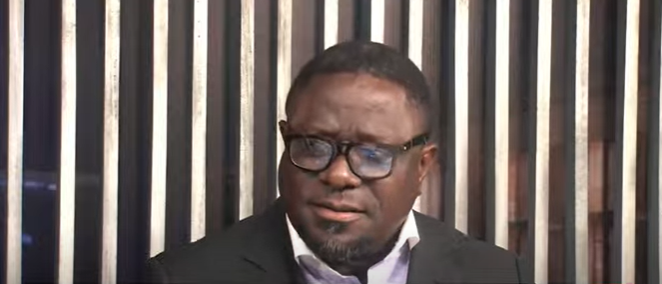
President of the Association of Ghana Industries (AGI) has called for a united national front in response to the 10% tariff imposed by the United States on Ghanaian exports.
Dr. Humphrey Ayim-Darke stressed that this is no time for isolated or reactionary decisions but for “collective engagement” involving government, industry, and regional partners.
Speaking on Joy News’ PM Express Business Edition on Thursday, April 10, he stated the need for Ghana to respond strategically, rather than emotionally, to the unfolding development, which threatens to undermine the country’s already fragile export earnings and fiscal stability.
“We don’t have to be issuing statements that might bring ripples into the system,” he cautioned. “It is still an unfolding event—we are studying it and the dynamism it comes with.”
While a 90-day pause in implementing the new U.S. tariff regime has provided some breathing room, the AGI president stressed that this window must be used wisely.
“But for the 90-day pause, we would have been in a higher anxiety. But for now, we are taking the opportunity to consult—engaging government and our counterparts.”
In this regard, he called for a holistic national approach.
“It will be useful if the country does some form of collective engagement. We need collective engagement,” he said, underscoring that the consequences of inaction or disjointed responses could ripple across sectors, from trade to inflation to monetary policy.
Dr. Ayim-Darke did not mince words about what’s at stake.
“The Finance Minister knows that if he doesn’t get it right, he’ll have a tough time balancing his books, getting his revenue, getting domestic revenue, which is largely based upon imports,” he said.
“Significantly, about 50% of domestic revenue comes from the ports, and these are largely imports, and then from exports as well, which are from the cocoa.”
But the cocoa sector has already taken hits.
“Unfortunately, we know we had a cocoa drop by virtue of the events of the galamsey and the cocoa export,” he said.
“Leave that of the crude oil aside.”
Dr. Ayim-Darke warned that if the government fails to stabilise export markets like cocoa, the ripple effects will touch every aspect of Ghana’s economy.
“Are you worried about the uncertainty and the impact on fiscal and revenue as well? Oh yes, because it has a ripple effect,” he said.
“If you’re not getting enough domestic build, you slap more monetary policies on us, and it will trigger the policy rate, lending rates. And the cycle continues—and it has a consequential effect on the U.S. dollar as well, which is a medium of trading.”
He also expressed concern about disparities in how Ghana and its West African neighbor, Côte d’Ivoire, are being treated under the U.S. tariff regime.
“That is why we are also concerned about the disparity between the tariffs on Ghana and Ivory Coast,” he said.
“We are together seeking to harmonize our total cocoa export and the benefits to the farmers. Now, within 10, they are being 14.”
This, he warned, could create long-term trade distortions.
“So what will be the impact on our trade? When we think that, oh, we have a 10%—it’s good for us? Look, once today you are happy, the next time, it will all catch up with you.”
Dr. Ayim-Darke also raised alarms about the indirect effects of the tariffs, including potential inflation in the United States and its knock-on effect on remittances to Ghana.
“Remittances have become part of our inflows,” he noted.
“If the inflationary rate hits the U.S. by virtue of the tariffs on cocoa or chocolate or other products, and the consumers’ disposable income is reduced, how much remittances will come to your family? And that will affect government too.”
His conclusion was clear: Ghana cannot afford to look at this crisis in isolation. “You cannot look at this in isolation,” he warned.
“We need to be concerned with looking at the macro picture and the micro picture.”
Latest Stories
-
Gov’t distributes over 8,500 laptops to One Million Coders project
8 seconds -
Julius Debrah, ‘man to beat’ as NDC’s James Agbey dismisses Musah Dankwah’s polls
6 minutes -
GPRTU in Savannah Region to protest alleged eviction in Damongo
35 minutes -
Re: Reinsurance does not replace process — A response to the SIGA–SIC defence
50 minutes -
Gender Ministry supports Harriet Amuzu in ongoing abuse case
1 hour -
AG joins plaintiff to scrap OSP ?: We should be mindful of the mischief in this – Bobby Banson
1 hour -
Samson Lardy Anyenini questions willingness of Attorneys-General to prosecute political colleagues
1 hour -
It is only fair the OSP is heard in Supreme Court case – Bobby Banson
1 hour -
Asiedu Nketia resumes Ashanti tour, second leg kicks off on Sunday
1 hour -
NLA denies salary cut claims, threatens legal action over reports
2 hours -
BoG Governor honoured for stabilising cedi, improve inflation
2 hours -
Kyebi Easter Homecoming 2026: A resounding success!
2 hours -
RNAQ divorce ruling: What the noise is hiding
2 hours -
Trade Minister applauds GUTA as a pillar of economic growth; Prez Mahama honoured
3 hours -
President’s brother’s takeover of Damang Mines is ‘untidy’ – Alhassan Tampuli
3 hours