

Audio By Carbonatix
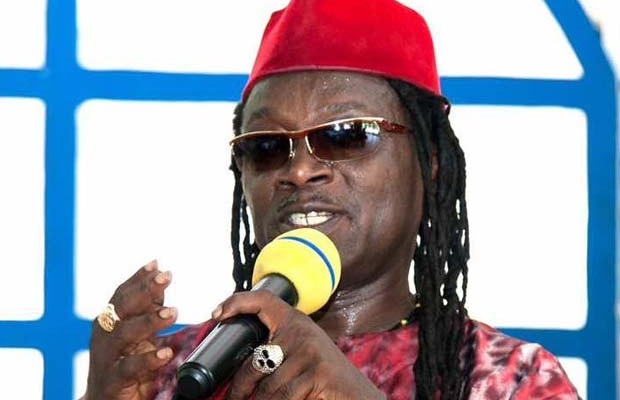
Veteran highlife musician Amandzeba has spoken about the seeming nonchalance of Ghanaians in helping promote and preserve Ghana's highlife music genre.
He told Kwame Dadzie on Joy FM's Showbiz A-Z that although highlife is rich in Ghanaian culture and has the potential to represent the country globally, Ghanaians seem to have failed in projecting it.
He made this comment while discussing UNESCO’s move in to list highlife as intangible cultural heritage.
“Collectively, we seem to have failed. We normally trivialize our heritage, everything. The Chinese can make our kente, they can do anything at all with our own heritage and then we sit in silence and keep admiring them while we know that we have the thing and must be developed here.
It’s just like music. When we had highlife, right from the outset, it affected everybody along the coast even all the way to Zaire, Congo and other places. Take the likes of Fela Kuti, Miriam Makeba, Hugh Masekela. They were here [because of highlife]," he said.
He also recounted that a lot of music stars across the world keep asking what Ghanaians are doing to project the highlife genre.
According to Amandzeba, while National Folkore Board is working at making UNESCO list highlife as intangible cultural heritage is commendable, the media must also take the responsibility to make sure the genre lives on.
A few weeks ago, Ama Serwah Nerquaye-Tetteh, the Secretary General of the Ghana Commission for UNESCO, mentioned that highlife will be listed by UNESCO as Ghana’s intangible heritage soon.
This comes after series of engagements and conferences organised by the Ghana Folklore Board and the Ghana Cultural Forum to discuss plans by which Ghana’s highlife can be listed as a UNESCO’s list of Intangible Cultural Heritage (ICH).
An intangible cultural heritage (ICH) is a practice, representation, expression, knowledge, or skill considered by UNESCO to be part of a place’s cultural heritage.
Intangible heritage consists of non-physical intellectual wealth, such as folklore, customs, beliefs, traditions, knowledge, and language.
Intangible cultural heritage is considered by member states of UNESCO in relation to the tangible World Heritage, focusing on intangible aspects of culture.
Jamaica’s reggae and Congo’s rhumba are some music genres listed by UNESCO as intangible heritage.
Latest Stories
-
Parliament’s Human Rights Committee demands swift justice in Obuasi SHTS sexual abuse case
5 minutes -
From Campaign Propaganda to Gov’t Accountability: When the message-makers demand a seat at the table
24 minutes -
Ashanti Region Security Coordinator warns sand winners to stay off Accra–Kumasi Expressway site
28 minutes -
PZ Cussons Ghana promotes hand washing among schoolchildren through Camel campaign
51 minutes -
30 NDC aspirants file nominations in Upper West as regional election approaches
1 hour -
UPSA launches laptop assembly plant, requiring new students to assemble their own devices
1 hour -
UCC sociologist calls for action on gender inequality to end child marriage
1 hour -
LSN questions Ghana’s proposed five-year presidential term and DCE election reforms
1 hour -
AFCON 2027Q: Black Queens Coach to lead Black Stars for Somalia doubleheader with Tanko, Attram as assistants
1 hour -
AMA completes road repairs on Kwame Nkrumah Avenue
1 hour -
Law Students’ Network warns executive dominance could undermine constitutional review
1 hour -
Mahama to meet relevant stakeholders over concerns about the new Customs Act
2 hours -
CHASS demands a 20% increase in SHS funding and payment of outstanding debts
2 hours -
Investigation launched after male body found in County Cork
2 hours -
We have been scammed by NDC, government is only doing PR – Abanga Fuseini
2 hours