

Audio By Carbonatix
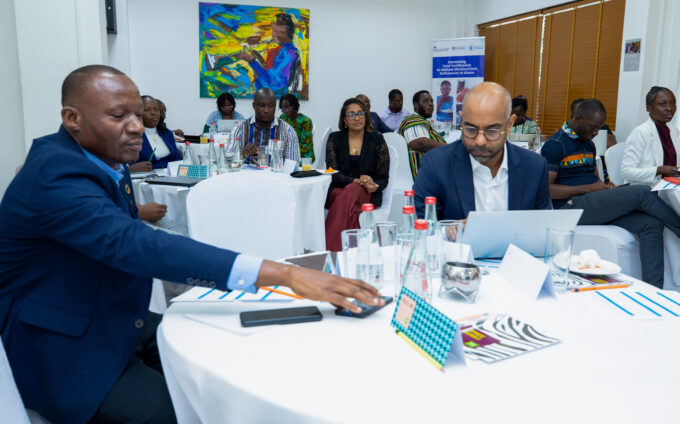
The World Food Programme (WFP) and the United Kingdom’s Foreign, Commonwealth & Development Office (FCDO) are urging Ghana to introduce fortified rice into the Ghana School Feeding Programme, describing it as a practical and cost-effective way to address malnutrition among children.
The call follows a cost-benefit analysis, which found that rice fortification is an affordable, high-impact intervention capable of improving children’s nutrition and boosting learning outcomes.
Speaking on behalf of the WFP Country Director, Steven Ordatefio said micronutrient deficiencies remain a major public health concern in Ghana, with anaemia affecting nearly half of children under five and more than 40 per cent of women of reproductive age.
He noted that poor nutrition continues to undermine children’s health, cognitive development and academic performance.
WFP is therefore calling on the Government of Ghana to make fortified rice a mandatory component of meals served under the school feeding programme.
Supporting the proposal, FCDO Representative Dr Tristan Eagling said results from a pilot initiative show that rice fortification is both feasible and impactful.
“Fortification is affordable, smart and high-impact,” he said, adding that the intervention is particularly important at a time when rising food prices and economic pressures are affecting the quality of meals served in schools.
Dr. Eagling noted that with the right systems in place — including reliable supply chains and strong institutional backing — the initiative could be expanded nationwide.
Director of Operations at the Ghana School Feeding Programme, Esther Z. Mahama, also reaffirmed the programme’s readiness to collaborate with partners to improve the nutritional quality of meals provided to pupils.
She said the GSFP remains committed to working with stakeholders to strengthen the programme and enhance the nutritional value of food served in schools.
The initiative, which involves collaboration between government and private sector millers, is also expected to support local food systems by creating opportunities for farmers and food processors.
Representatives from the Food and Drugs Authority, Ghana Standards Authority, Ghana Education Service and Ghana Health Service attended the meeting, alongside international partners including UNICEF and the World Health Organisation.
Stakeholders say Ghana is well-placed to scale up rice fortification, pointing to the country’s previous success with salt iodisation and other food fortification initiatives.
Latest Stories
-
A source of excellence across generations – Vice President Opoku-Agyemang lauds Mfantsipim
32 minutes -
(Photos) Mfantsipim School launches historic 150th anniversary
56 minutes -
Knights and Ladies of Marshall group backs Catholic Bishops’ stance on anti-LGBTQ+
2 hours -
Bright Simons writes: All the Filla in the Ibrahim Mahama/E&P – Gold Fields Saga
2 hours -
Monetise Idiocy In Ghana
2 hours -
The Ghanaian prophet and the mysterious death of his scottish wife Charmain Speirs
3 hours -
Nearly 400 sentenced in Nigeria for links to militant Islamists
4 hours -
Ghana’s recovery supported by gold strength despite global oil price pressures – Standard Bank Research
4 hours -
Methodist Church hails Mfantsipim@150; calls for “fresh consecration” to excellence
4 hours -
‘Excellence is our inheritance’ – Nana Sam Brew-Butler hails Mfantsipim’s 150-year reign in leadership
4 hours -
Kwaku Azar writes: A-G vs OSP
4 hours -
Mfantsipim–Adisadel rivalry built excellence, not division – Sam Jonah
5 hours -
Vice President launches Mfantsipim’s 150 years of shaping Ghana’s greatest mind
5 hours -
I assure Otumfuo, Mahama will join him to commission KNUST Teaching Hospital by end of this year – Haruna Iddrisu
6 hours -
Barcelona dominate derby to extend La Liga lead
6 hours