

Audio By Carbonatix
Academics are concerned about the loss of indigenous cuisine, particularly in northern Ghana, which is losing its most healthy and renowned diets.
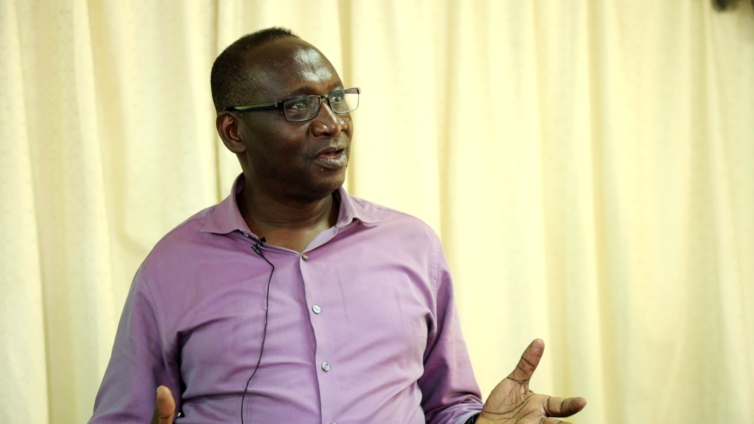
According to an associate professor of political science at the University for Development Studies, Professor Jasper Abembia Ayelazuno, the situation is becoming increasingly serious and requires a quick intervention because everyone wants to cook with processed ingredients and consume foreign food.
"…We're almost losing our food culture because everyone is interested in cooking with Maggie everywhere you go. So you go to the village - if there is no Maggie, the woman will not cook, and I generally question, what happened to dawadawa?" Professor Ayelazuno wondered.
“If you go to the grocery store in Toronto, you will notice organic food with very high costs and then inorganic food for the poor because they cannot afford the organic food. As a result, this kind of food is nearly toxic for the impoverished. The rich are the people who can afford to buy organic food, and I begin to wonder why those who saw some value in organic food are attempting to shift us into a culture of consuming inorganic food,” he stated.

Professor Ayelazuno, who has lived in Toronto, described it as a conundrum and one that scholars like himself are trying to solve.
“… You try to find out the root and try to find answers to the puzzle. I don't think there's anybody in this room who said this is not possible. On the other hand, inorganic food is very costly in the Western world and it's meant for rich people and then organic food is cheaper because it brings about all kinds of diseases because the poor have no choice, they have to just cope with that,” he indicated.
Speaking to researchers and lecturers in Tamale during a workshop on the complexity of nutrition at the university's Nyankpala campus, he emphasised the importance of pursuing long-term solutions to food nutrition and accessibility in the country.

The workshop, "Connecting and Building the Capacity of Rural to Urban Food Sovereignty Organisations in Ghana," is a collaboration between the Universities of Toronto and Waterloo, as well as the University for Development Studies (UDS).
The associate professor related his experience growing up in a village where the groundnut seeds that his grandmother used to plant suffered total loss - they are no longer there.
"This is related to the dispossession of people's food cultures. Because the next two or three generations may not know what food we used to consume, and we will reach a point when traditional cuisine will be lost, and you will have to rely on companies to select what you can eat," he bemoaned.
In the case of traditional Tuo Zafi, he stated that it is becoming something that only poor people choose to eat because rich people now eat fried rice and pizza.

"The middle class is almost afflicted with diseases that have to do with their lifestyle, so a lot of young people are getting diabetes - they're getting obesity, kidney diseases, and yet we keep saying we should promote the green revolution," he lamented.
Professor Ayelazuno encouraged small farmers and communities to grow indigenous food crops organically by promoting agroecological principles.
He stated that various techniques of saving and sustaining indigenous seeds must be used in order to achieve food security, which will increase community empowerment and self-reliance.

Dr. Siera Vercilo, Assistant Professor at the University of Toronto, explained that there is an emerging health, food, and environmental crisis around the world due to food globalisation, which is coded language for food westernisation, and that cheap foods and industrial foods are taking over people's diets - taking over people's landscape.
“Where I come from, in Canada, our food system has been transformed in the name of profit and not to feed people. So the only people who can afford food that is nutritious - that is not toxic - that is culturally appropriate are wealthier people. And all of the industrial foods in the West are considered cheap food, like KFC is a poor man's food in Canada. And even foods that come from my traditional background in Italy like Pizza have become fast foods in Canada where I live and in America and other places.”
She urged Ghanaians to preserve these cuisines based on history - foods that are satisfying to individuals, nutritious and diversified, and also in harmony with the current state of the environment.
“We see the emergence of the loss of traditional foods or food that tend to be more nutritious- more diverse more agro-biodiversity which is good for the environment.”
Latest Stories
-
Epstein survivors’ calls to meet King Charles and Queen harder to ignore as US visit approaches
26 seconds -
UN Secretary-General names Ghana’s Anita Kiki Gbeho as South Sudan envoy
2 minutes -
Mali withdraws recognition of Sahrawi Republic, backs Morocco’s autonomy plan
7 minutes -
Gov’t distributes over 8,500 laptops to One Million Coders project
8 minutes -
Julius Debrah, ‘man to beat’ as NDC’s James Agbey dismisses Musah Dankwah’s polls
14 minutes -
GPRTU in Savannah Region to protest alleged eviction in Damongo
43 minutes -
Re: Reinsurance does not replace process — A response to the SIGA–SIC defence
58 minutes -
Gender Ministry supports Harriet Amuzu in ongoing abuse case
1 hour -
AG joins plaintiff to scrap OSP ?: We should be mindful of the mischief in this – Bobby Banson
1 hour -
Samson Lardy Anyenini questions willingness of Attorneys-General to prosecute political colleagues
1 hour -
It is only fair the OSP is heard in Supreme Court case – Bobby Banson
1 hour -
Asiedu Nketia resumes Ashanti tour, second leg kicks off on Sunday
2 hours -
NLA denies salary cut claims, threatens legal action over reports
2 hours -
BoG Governor honoured for stabilising cedi, improve inflation
2 hours -
Kyebi Easter Homecoming 2026: A resounding success!
2 hours