

Audio By Carbonatix
Why Ghana's floods are not just a humanitarian crisis, but a Women, Peace and Security issue.
Every rainy season in Ghana, we brace ourselves for the headlines. Flooded homes. Lives lost. Families displaced. Roads cut off. Businesses destroyed.
And then, after a few days, the water recedes, the cameras move on, and life appears to return to normal. But for thousands of people, especially women, children, and young people, the flood is far from over.
The recent floods in Ghana are another painful reminder that disasters do not only destroy infrastructure they disrupt lives, interrupt childhoods, increase inequality, and leave invisible wounds that can last a lifetime. Current reports indicate that at least 12 people lost their lives, 7 people remain missing, and 7,761 households were affected by the floods, with rescue and recovery efforts still ongoing.
As someone who believes in the Women, Peace and Security agenda, I often find myself challenging the way we define insecurity. We tend to associate insecurity with conflict and war. Yet insecurity also exists when a mother no longer knows where her children will sleep. It exists when a young girl loses access to school because her books, uniform, and classroom have been destroyed. It exists when a family is forced into an overcrowded temporary shelter with little privacy, inadequate sanitation, and uncertainty about tomorrow.
Peace is not simply the absence of armed conflict.
Peace is the presence of safety, dignity, opportunity, and hope. Climate-related disasters threaten every one of these. Children are among those who pay the highest price. UNICEF's latest global analysis shows that at least 242 million students had their education disrupted by climate-related hazards in 2024 alone. Beyond education, nearly 1.1 billion children worldwide are exposed to at least three overlapping climate hazards, placing their health, development, and future at increasing risk. Behind every statistic is a child trying to understand why their world suddenly disappeared.
A child who wakes up in an evacuation centre instead of their bedroom. A teenager wondering whether school will ever feel normal again. A young person silently carrying fear, anxiety, or grief that adults may never notice. We often speak about rebuilding roads and houses after disasters, but rarely do we speak about rebuilding confidence, restoring emotional well-being, or protecting dreams.
Research consistently shows that disasters can have profound psychosocial effects on children and adolescents. Experiences of loss, displacement, uncertainty, and prolonged stress can contribute to anxiety, depression, behavioural challenges, and difficulties concentrating in school. Without appropriate support, these experiences can influence educational attainment, relationships, employment opportunities, and overall well-being later in Life.
Girls often face additional vulnerabilities. Disasters can increase the burden of unpaid caregiving, reduce access to education, healthcare, menstrual hygiene, and protection services, and heighten the risk of gender-based violence. Women and girls are frequently expected to carry the responsibility of holding families together while coping with their own trauma. These inequalities do not begin during disasters, but disasters often magnify them.
Young boys also deserve our attention.
Too often, we expect them to be "strong" without giving them space to process fear, sadness, or loss. Many learn to suppress emotion rather than express it. Over time, unresolved trauma can shape how they relate to others, how they cope with adversity, and how they understand masculinity itself. Disasters do not affect everyone equally.
Children living in poverty, persons with disabilities, older persons, single-parent households, and communities already facing social and economic challenges often experience the greatest losses and the slowest recovery. This is why disaster response must go beyond emergency relief.
Recovery must be child-centred, trauma-informed, gender-responsive, and community-led.
We need schools that can quickly reopen and provide safe learning environments. We need mental health and psychosocial support that is accessible, not months later, but alongside relief efforts. We need safe spaces for women, girls, and children in temporary shelters.
We need stronger early warning systems that communities understand and trust. We need resilient infrastructure, improved drainage systems, responsible urban planning, and stronger enforcement against development in flood-prone areas. We need young people not only to be beneficiaries of disaster response but also leaders in disaster preparedness, climate action, and community resilience. Above all, we must stop treating floods as isolated emergencies. They are increasingly becoming part of our reality.
Climate change is changing the way our children grow up.
If we fail to prepare, the cost will not only be measured in damaged buildings or lost livelihoods. It will be measured in interrupted childhoods, unrealised potential, declining mental health, and generations carrying the emotional weight of disasters they did not create.
When the waters recede, our responsibility should not. Recovery is more than rebuilding structures. It is rebuilding lives. And if we believe in peace and security, then we must recognise that protecting women, children, and young people from the long-term impacts of climate disasters is not simply humanitarian work; it is nation-building.
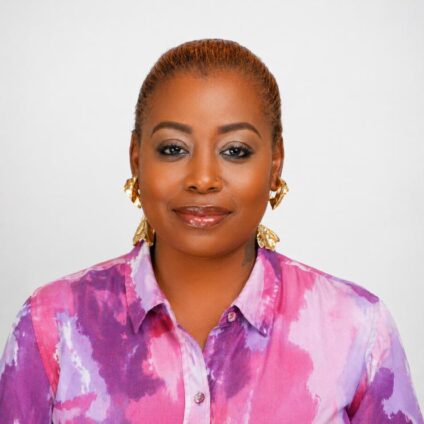
The writer, Patrice Robertson, is the Founder of Eclectic Love, a non-profit organisation into child protection and growth. She is also a women, peace, and security advocate, a climate action and youth development advocate. She can be reached via +14432486694, +233558194380, patr@eclecticlove.org
Latest Stories
-
We won’t return to the classroom without concrete solutions – NAGRAT
3 minutes -
Mahama urges Africa to invest in local pharmaceutical manufacturing
9 minutes -
Akufo-Addo giving Bawumia space to assert himself as NPP leader – Gabby Otchere-Darko
15 minutes -
NPP delegates, not social media, will decide election winners – Miracles Aboagye
32 minutes -
I have no interest in this election; I believe Bawumia will win 2028 election – NAPO
36 minutes -
Livestream: NPP National Delegates Conference underway in Kumasi
1 hour -
‘We are waiting for the delegates’ – NPP explains delay in voting at Kumasi conference
1 hour -
Drug fight will yield results as Mahama steps up action – Dzimega
1 hour -
‘It’s bizarre’ – Freddie Blay questions EOCO’s handling of Baffour Awuah case
1 hour -
NPP conference to reinforce support for Bawumia ahead of 2028 – Evans Nimako
2 hours -
France and Ghana’s Gender Ministry explore cooperation on women’s economic empowerment
2 hours -
Ghana’s growing drug trafficking links are deeply troubling – Victoria Bright
2 hours -
‘The MP’s tears are crocodile tears’ – Kofi Bentil on La Pleasure Beach demolition
2 hours -
Freddie Blay alleges Mahama ordered demolition of son’s Polo Beach Club at La Beach
2 hours -
‘We’ve complied with all the rules’ – NPP assures transparency in national elections
2 hours