

Audio By Carbonatix
The Executive Director of the Institute for Education Studies (IFEST), Dr Peter Anti Partey, has questioned the feasibility of the government's plan to eliminate the double-track system in Senior High Schools (SHSs) by 2027, arguing that the timeline does not align with the implementation schedule of the recently approved World Bank education support facility.
He said although the World Bank funding represented a significant boost to Ghana's secondary education infrastructure, procurement procedures and project implementation timelines made it unlikely that the programme could deliver the required infrastructure within the period announced by government.
His comments come after the Finance Minister, Dr Cassiel Ato Forson, announced in the 2026 Mid-Year Budget Review that the government had secured a World Bank facility to accelerate infrastructure expansion in second-cycle institutions as part of efforts to phase out the double-track system.
The government's plan is backed by a US$300 million World Bank-supported Transformative Secondary Education for Access, Results and Relevance for Jobs (STARR-J) project funding.
As part of efforts to boost education, the government plans to upgrade 50 major schools—elevating 30 Category C schools to Category B, and 20 Category B schools to Category A.
In addition, the government plans to expand dormitories, lecture halls, and dining facilities to increase student capacity and safely boost teacher-student contact hours.
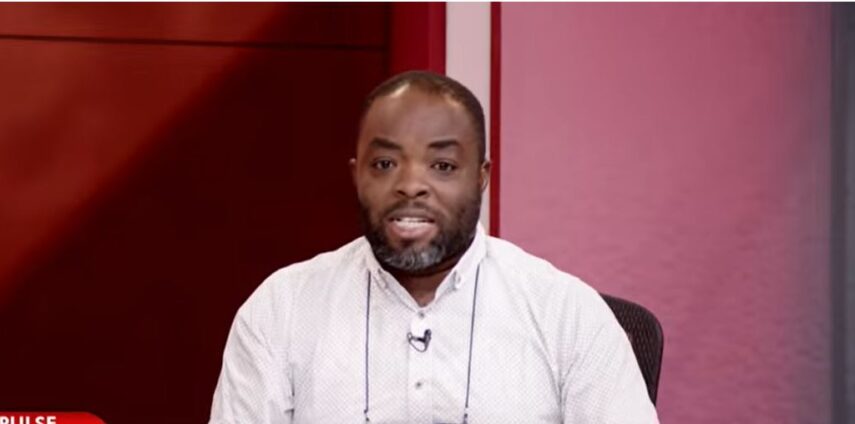
Speaking on JoyNews, Dr Anti Partey described the financing package as timely but cautioned against raising expectations that could prove difficult to fulfil.
Implementation timeline
"The World Bank facility is a very good intervention at this time of our secondary education. The unfortunate news is that the government roadmap seems not to be realistic. Because the facility was approved just this month. We know how our procurement process and other things go," he said.
He explained that major infrastructure projects financed through development partners typically undergo extensive procurement, contracting and execution processes before construction begins.
According to him, those procedures alone make it improbable for the infrastructure required to abolish the double-track system to be completed within a year.
Dr Anti Partey further argued that the implementation schedule outlined in the project itself points to a much longer completion period.
"And so targeting 2027 to end double track relying solely on the World Bank facility is not realistic. We think that the project plan itself pushed the end of the project to 2030. And so we should be estimating that Double Track would be ending somewhere around 2030 and not 2027. It is not going to be feasible to end Double Track by next year if the sole source of funding is the World Bank facility," he stated.
Need for realistic planning
The education policy analyst suggested that the government either revise its implementation timetable or identify additional funding sources and complementary interventions if it intends to meet the 2027 target.
He maintained that while expanding infrastructure remains essential to ending the double-track system, realistic timelines are equally important to ensure public confidence in education sector reforms.
The double-track system was introduced in 2018 to accommodate the sharp increase in SHS enrolment under the Free Senior High School policy while the government worked to expand educational infrastructure.
Although successive governments have pledged to abolish the system, education experts have consistently argued that achieving that objective depends largely on the timely provision of additional classrooms, dormitories, laboratories and other facilities.
Latest Stories
-
Imagination Africa, Mentors Chess Academy to host second African Genius Chess Championship at Ghud Park
47 minutes -
Nana B passport claims a diversionary tactic — Abu Jinapor
2 hours -
Pope Leo diagnosed with cancer as doctors remove lobe of lung, Vatican says
2 hours -
Legal Aid Commission takes free legal services to Techiman main lorry terminal
2 hours -
Nana B denies seeking passport favour, accuses Ablakwa of failing to account for GH¢16.4m
2 hours -
Young girls demand climate action, stronger protection against child marriage
2 hours -
Ex-gang boss sentenced to 40 years for orchestrating Tupac Shakur’s murder
2 hours -
From near-deferral to three awards: UMaT graduate’s academic journey
2 hours -
Atta Akyea denies seeking presidential pardon for Wontumi in galamsey case
3 hours -
Photos: Mahama commissions 85-bed Police Hospital ward, donates two ambulances
3 hours -
GTEC directs Ghana’s public universities to reopen by October 16 and begin lectures on October 19
3 hours -
Star Oil donates GH¢1million towards construction of new CID facility
3 hours -
Court hands Adjetey Sowah, two others lifetime bans after Amputee Football legal dispute
3 hours -
NDC appoints Julius Kwame Anthony as a Deputy Communications Director
3 hours -
Ghana repatriates 120 Nigerians rescued from suspected cybercrime centres
3 hours