


Audio By Carbonatix
Romeo Bugyei, the Chief Executive Officer of IT Consortium, one of Africa’s leading tech companies, has urged the media, private sector, and the government to collaborate to fight Artificial Intelligence (AI)-driven misinformation, which he said, can pose a national security threat.
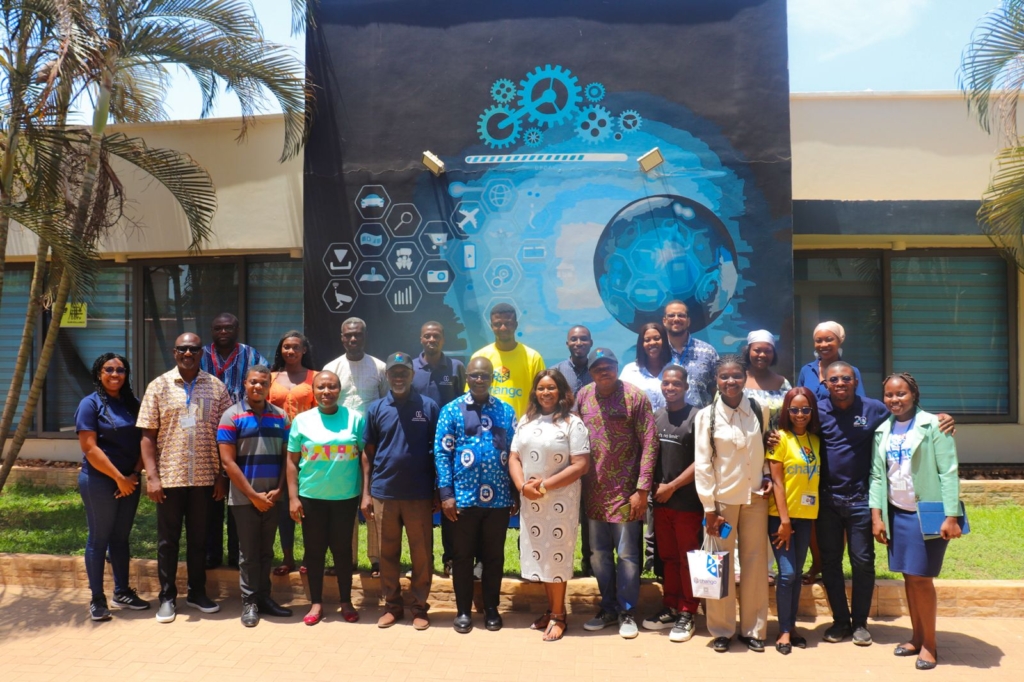
Speaking during a workshop organised by the UK-Ghana Chamber of Commerce (UKGCC) and the Institute of Financial and Economic Journalists (IFEJ) to commemorate World Press Freedom Day on the theme, “Reporting in the Brave New World: The Impact of Artificial Intelligence on Press Freedom and the Media,” Mr. Bugyei remarked, “We all know that journalists are not remunerated enough in this country, and since it is not possible to rely on free versions of AI tools all the time to combat AI-driven misinformation, it becomes more expensive to write and maintain the news".
"This implies that someone who has the money can cause grave harm to this country and its economy without us knowing, posing a threat to the nation’s security. I think, therefore, that there can be a lot of collaboration between the private sector and the media, that can help us create the kind of truth that we want to maintain. We can also get the government alongside, as we advocate”.
He also urged journalists to raise their journalistic standards by taking the initiative to understand AI and its impact on truth and its reportage.
“You hold a very critical position in safeguarding financial data and analysis that can help the country move forward. Therefore, if you are going to wait to be taught before doing what is necessary, then you are behind,” he said.
The Media and AI: Opportunities, Risks, and Challenges
AI was officially birthed in the 1950s as a field of academia. The rise of machine learning in the 90s allowed computers to learn from data without explicit programming and in late 2022, the release of ChatGPT by OpenAI brought generative AI into the mainstream.
AI has, arguably, enhanced the journalist’s productivity. Journalists are now able to use AI-powered tools to instantly generate insights, freeing them up to produce more nuanced stories, remove language barriers, and analyse audiences.
However, AI poses more risks and challenges to freedom and expression and the right to information. These include algorithmic bias in news delivery that can skew public opinion and limit exposure to balanced reporting, censorship through AI in authoritarian regimes to silence both local and foreign journalists, biased technology platforms, and deepfakes and misinformation campaigns.

Furthermore, AI has been used to monitor journalists and access their smartphones, their location, and expose sources, making it impossible for journalists to protect whistleblowers.
AI has also impacted advertising revenue, shifting it to tech giants and away from traditional news organisations that rely on advertising income to survive and maintain press independence.
Furthermore, AI’s ability to summarise news without attribution, leads to a loss of traffic and compensation for publishers, and the consumption of derivative content by readers.
Speaking on the risks and challenges of AI, Jerry Agudogo, Senior Research Engineer at IT Consortium, remarked, “What is true and what isn’t is not just under threat, but almost destroyed now.
We don’t know what the future will hold, and we don’t have all the solutions. But we do know that journalists and the free press are essential to solving this”.
According to Mr. Agudogo, “one of the most impactful things is to do everything we can to ensure that journalists are equipped with all the AI tools to uncover information. We also need legislation, especially when it comes to the areas of surveillance and algorithmic control of content.
“The journalist as an information verifier and digital guardian will be more relevant than ever, especially now that the world is about to be flooded with more disinformation than ever”, he concluded.
Worlase Afatsiawo, Head of External Relations at UKGCC, concurred with Mr. Agudogo that while a lot of concern remains at the intersection of AI and media practice, “we can see that there is a lot of hope for the future as well.”
Mrs. Afatsiawo assured Mr. Bugyei of the UKGCC’s continued support of IT Consortium as a member company of the UKGCC, and was expectant that UKGCC and IFEJ’s relationship, in force since 2021, would continue, especially in facilitating relationships between IFEJ and the business community.
For his part, Rayborn Bulley, the President of IFEJ, shared his hope that members of the media in attendance would utilise the information acquired from the workshop to their benefit.
Latest Stories
-
I assure Otumfuo, Mahama will join him to commission KNUST Teaching Hospital by end of this year – Haruna Iddrisu
17 minutes -
Gov’t to roll out free special education for persons with disabilities from July 1 – Education Minister
39 minutes -
“We used it to test our officiating officials’ readiness” – Bawah Fuseini after CAA Athletics event
1 hour -
Volleyball emerges as Ghana’s fastest rising sport
1 hour -
National Sports Fund needs strong leadership from the top – Administrator David Wuaku
2 hours -
JoySports Exclusive: Steve McLaren in talks with GFA after expressing interest in Black Stars job
2 hours -
Fire guts auto parts warehouse at Bubuashie, one fire officer injured
2 hours -
I owe my victory to coach Ofori Asare – Allotey after winning WBA Africa Gold Super Flyweight belt
2 hours -
Church of Pentecost supports over 2,000 BECE candidates in Obuasi with career guidance seminar
3 hours -
Brandon Asante and Coventry all but promoted to Premier League despite Sheffield Wednesday draw
4 hours -
GPL 2025/26: Late Kwartemaa strike downs Hearts in Tema
4 hours -
Ghana Faces Sierra Leone Moment as Prosecutorial Powers come under strain
4 hours -
Don’t consume fish or seafood from Tema Shipyard until further notice – FDA warns
4 hours -
Why volunteering might be Africa’s most underrated career accelerator
4 hours -
ActionAid Ghana raises concern over gender gaps in Feed Ghana Programme
4 hours