

Audio By Carbonatix
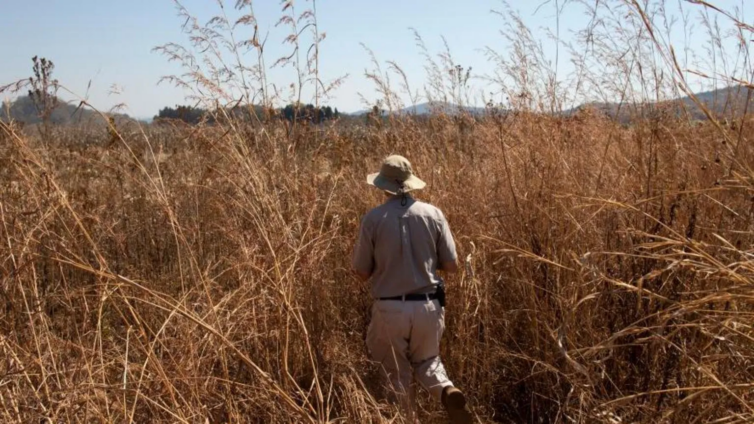
Zimbabwe's government has announced an initial payout of US$3m (£2.3m) to white farmers whose farms were seized under a controversial government programme more than two decades ago.
It is the first payment to be made under the 2020 compensation agreement signed between the state and the local white farmers, in which Zimbabwe committed to pay $3.5bn (£2.6bn) for seized farmland.
Thousands of white farmers were forced from their land, often violently, between 2000 and 2001.
The seizures were meant to redress colonial-era land grabs but contributed to the country's economic decline and ruined relations with the West.
The payment announced on Wednesday will cover the first 378 farms, out of a total of 740, for which compensation had been approved.
It represents 1% of the total $311m allocated for the first batch of payments.
The remainder will be paid through US-dollar denominated Treasury bonds, said Finance Minister Mthuli Ncube.
"One of our commitments as we try to reform the Zimbabwe economy, to clear our arrears, is really to compensate the former farm owners who lost their farms during the land reform programme," he said.
"We have now begun to honour that agreement."
Harry Orphanides, one of the farmers' representatives, told the BBC that more farmers have now indicated an interest in signing up for the compensation.
However, the majority of former farmers have not signed up to the deal, and are still holding onto their title deeds.
The government has only agreed to compensate former farm owners for "improvements" made on the land and refused to pay for the land itself, arguing it was unfairly seized by colonialists.
It had prioritised foreign-owned farms under separate negotiations.
In January, Zimbabwe began paying compensation for foreign investors whose farms were protected under bilateral investment agreements.
In 1980, Zimbabwe gained independence, ending decades of white-minority rule. At that time, most of the country's most fertile land was owned by some 4,000 white farmers.
Land reform was focused on redistributing white-owned land to black farmers, following colonial-era policies when thousands of black farmers were forced from their land and the country's most fertile areas were reserved for white people.
In 2000, then President Robert Mugabe supported land invasions by a mix of government forces and vigilante groups, sparking international condemnation.
President Emmerson Mnangagwa, who replaced Mugabe in a 2017 coup, has sought to engage Western governments to restore ties.
Mnangagwa has previously said land reform cannot be reversed, but committed to paying compensation as a key way of mending ties with the West.
The southern African country has been locked out of the global financial system for more than two decades, leaving the struggling economy with a huge foreign debt.
Analysts say the land payment marks an important step in repairing relations with Western nations and avoiding international judgements against Zimbabwe.
Latest Stories
-
‘Beating Ghana did not surprise me’ – Gambia boss
24 minutes -
OpenAI agents get rebrand – as ‘dots’ – while safety worries delay new model
31 minutes -
US ban on Canadian alcohol and dairy takes effect as trade war drags on
44 minutes -
Baffour Awuah’s EOCO case reopens Equity Savings & Loans file as SIC recovery battle emerges
44 minutes -
Ghana ranked 5th source of cocaine seized at Antwerp, Belgium in 2025
45 minutes -
‘We knew there was disruption’ – Gambia boss claims Ghana players clashed at half-time
46 minutes -
Bagbin adjourns Parliament indefinitely
1 hour -
African Most Beautiful USA Queen to host Community Zumba Dance session in Accra
1 hour -
Cocaine probe: Speaker got it wrong by blocking parliamentary inquiry – Minority Leader
1 hour -
FoSCel foundation calls for end to stigma and stereotyping against people living with sickle cell disease
2 hours -
Auditor-General to track audit recommendations as GH¢280.5m in surcharges remains unpaid
2 hours -
Walewale MP withdraws ‘rude’ comment on Bagbin’s Parliament recall, apologises
2 hours -
FoSCel founder urges curriculum reform to strengthen sickle cell education in Ghana
2 hours -
United States launches America.Gov for public services 5 years after Dr. Bawumia launched Ghana’s version Ghana.Gov
2 hours -
Cocaine probe: Majority used super majority with Speaker’s support to weaken Parliament – Afenyo-Markin
2 hours