

Audio By Carbonatix
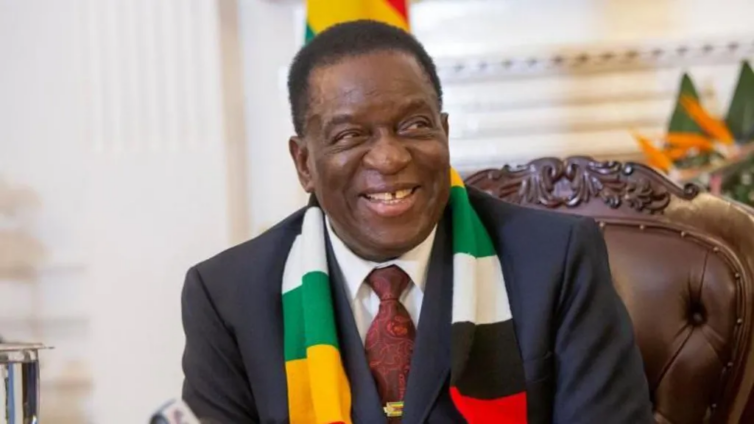
Zimbabwe's lower house of parliament has passed a bill to extend presidential terms from five to seven years, which would allow President Emmerson Mnangagwa to remain in power until 2030.
More than 200 lawmakers voted in favour of the draft legislation on Thursday, surpassing the vote threshold required for a two-thirds majority to amend the constitution.
The bill also scraps direct presidential elections, with future presidents chosen by parliament.
Mnangagwa, 83, took power in 2017 after ousting long-time ruler Robert Mugabe with the backing of the military, and went on to win disputed elections in 2018 and 2023.
The bill now heads to the senate, where it is also expected to secure approval, before being enacted by the president.
This is the culmination of a campaign by the ruling Zanu-PF party - in power since independence in 1980 - to amend the constitution and extend presidential terms, a plan that received cabinet backing in February.
The president had previously described himself as a constitutionalist and pledged to respect term limits.
During Thursday's vote, Speaker of Parliament Jacob Mudenda announced that 216 lawmakers had backed the legislation, surpassing the 187 votes required to amend the constitution. Forty-two lawmakers voted against it.
The amendment contains several provisions:
- Presidential elections - held since 1990 - are scrapped
- Parliament elects the next president
- Parliamentary and presidential terms extended from five to seven years
- Parliamentary elections scheduled for 2028 delayed to 2030
- President Mnangagwa, whose second and final term is due to end in 2028, remains in office until 2030.
Opposition parties, civil society groups and constitutional lawyers have argued that such fundamental changes should be put to a national referendum rather than being approved solely through parliament.
Initially hailed by supporters as a reformer who would restore economic growth and democratic governance, Mnangagwa's presidency has instead been marked by economic challenges, disputed elections and growing concerns over democratic backsliding.
The latest constitutional changes have intensified debate over Zimbabwe's political future, with opponents warning that the amendments could weaken democratic accountability, while supporters maintain they are necessary to ensure continuity and stability.
A new constitution adopted in 2013 restricted a president to serving a maximum of two terms, adding that any move to extend term limits would need to be endorsed by voters in a referendum and that a sitting president cannot benefit from any extension unless voters give their approval in a second referendum.
However, on Wednesday, the country's Constitutional Court dismissed a legal challenge seeking to block the bill.
Latest Stories
-
Dangote defends $16bn Kenya refinery as residents raise compensation, environmental concerns
49 seconds -
Work begins on 160-bed Western North Regional Referral Hospital – Kwakye Ofosu
2 minutes -
GPRTU says non-member commercial vehicles pose challenge to road safety enforcement
2 minutes -
Fuel transport licensing gaps could enable abuse and diversion – Transparency International Ghana
4 minutes -
Former Youth and Sports Minister questions Carlos Queiroz appointment process, alleges possible corruption
5 minutes -
NHIA targets 80% population coverage under 2026–2028 strategic plan
8 minutes -
MTTD must intensify enforcement against unregulated drivers – NRSA
8 minutes -
NRSA proposes separate registration and number plates for Okada riders
10 minutes -
National PTA backs striking teacher unions, urges Mahama to intervene
15 minutes -
Israel-bound flight diverted after fight between pilots
20 minutes -
EchoWave earns praise for sound quality at 10th Women in Worship
30 minutes -
Crackdown on South Africa’s unsafe streets ordered by president to keep women safe
41 minutes -
Banks are responding to improved monetary policy conditions – John Awuah
1 hour -
Judges’ conference forces further adjournment of Salomey Baffoe case to Oct. 5
1 hour -
Chorkor community joins AC4NCA clean-up to tackle marine and coastal pollution
1 hour