

Audio By Carbonatix
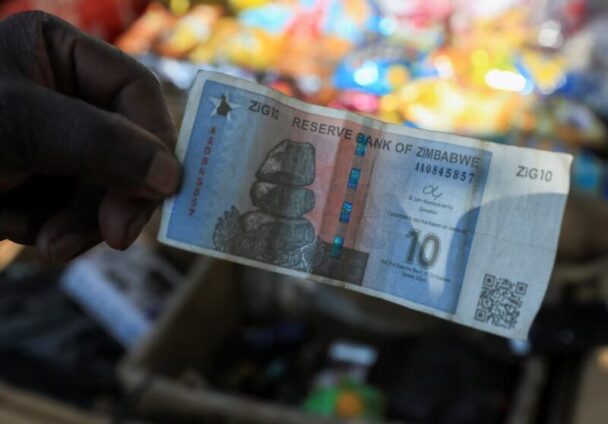
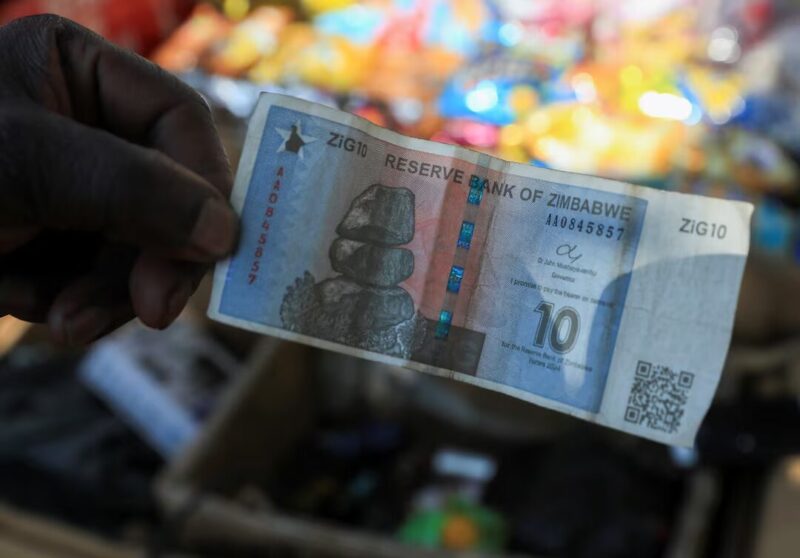
Five months after its launch, Zimbabwe's new currency is under pressure as increased grain imports eat away at foreign reserves, putting at risk the government's plan to make it the only currency in the market by 2026.
The gold-backed ZiG, which stands for Zimbabwe Gold, is the country's sixth attempt at a stable currency in 15 years. It was introduced in April at a rate of 13.6 ZiG per U.S. dollar and has since lost almost 80% of its value on the black market.
The country's central bank on Thursday said it had injected $64 million into the foreign exchange market this month to address dollar demand.
"Over the past weeks, the Reserve Bank witnessed a build-up in pipeline demand for foreign currency at banks, reflecting transitory foreign currency supply and demand mismatches, thus, exerting undue pressure on the foreign exchange market," central bank governor John Mushayavanhu said in a statement.
This was despite an injection of $50 million by the Reserve Bank in July, he said, adding that the bank would continue to intervene as needed to ensure the stability of the ZiG.
Independent economist Prosper Chitambara said the devaluation pointed to a lack of confidence in the new currency, which locals have been reluctant to embrace.
Persistence Gwanyanya, a member of the Reserve Bank of Zimbabwe's Monetary Policy Committee, told Reuters that although uptake had been slow, it was too soon to consider the new currency a failure.
Gwanyanya said the government could increase the use of the ZiG by charging more taxes in the local currency. "Government more than any other should show a preference for its own currency and there is a need for urgent intervention by injecting more foreign currency on the market," he said.
But market traders are not convinced.
"The ZiG has been getting weaker so it does not make business sense to transact with it. I do not have faith in the ZiG. We have been here before with the Zimdollar," Maynard Maketo, a street hawker selling candy and recharge cards said.
According to Pricecheck, a website that tracks the exchange rate, the ZiG is trading between 20 ZiG and 26 ZiG to $1 on the black market and 13.9 ZiG to $1 on the official exchange.
Carol Munjoma, a trader in downtown Harare who sells groceries, transacts exclusively in U.S dollars.
"Where I buy these groceries, they do not accept ZiG. So to protect my business I charge in U.S dollars. The ZiG would have to be stable to be accepted here," the mother of two said.
In July, central bank chief Mushayavanhu told Reuters that authorities would stick to promises to build trust in the new currency, a sentiment echoed by Gwanyanya.
"It is too early to consider that this may be the death of the ZiG," said Gwanyanya.
Latest Stories
-
Ghana ranked joint 6th in 2026 Absa Africa Financial Markets Index
55 minutes -
Demand and savings deposits decreased in August 2026, but currency outside banks increased by 4%
1 hour -
Fiscal policy implementation poses downside risk to inflation – BoG
2 hours -
Organised Labour should seek fair adjustment, not excessive pay rise – Labour consultant
2 hours -
BoG maintains medium-term inflation target of 8 ± 2%
2 hours -
Sammi Awuku urges NPP Germany to unite ahead of 2028 elections
3 hours -
The Inconvenient Truth: We cannot pray for the cure while protecting the disease
3 hours -
MTN Ghana trains civil society organisations on artificial intelligence
4 hours -
GoldBod FX framework aims to make dollar supply predictable – Acheampong
5 hours -
How does a Ghanaian team make it to the BAL?
5 hours -
Ghana’s investment climate presents opportunities for industrial growth and job creation.
5 hours -
‘I paid thousands to a company for jobs that never came’
5 hours -
SSNIT intensifies informal sector enrolment drive with Techiman float
5 hours -
Ghana seeks long-term mining investments that benefit local communities – Armah-Kofi Buah
5 hours -
GHATOF demands compensation for 85 businesses affected by La Pleasure Beach demolition
6 hours