

Audio By Carbonatix
Water is an essential component of human life.
Humans depend on water for sustenance, but most human activities affect water in one way or the other.
According to the World Health Organisation (WHO), at least 2 billion people use a drinking water source contaminated with faeces.
To curb this, the Water Safety Plan (WSP) was introduced by WHO as an effective way to ensure that water supply is consistently safe for human consumption.
To experiment with this, Aquaya, a non-governmental organisation, in collaboration with Kwame Nkrumah University of Science and Technology, will lead research to evaluate if WSPs result in better water quality.
In line with this, the Rural Evidence and Learning (REAL) for Water will investigate the effectiveness of WSPs for rural supplies in small towns in Ghana.
The study will monitor safe water implementations by Safe Water Network at 50 stations in 9 regions in Ghana to clarify a specific aspect of water system management and intervention delivery that lead to outcomes and impacts.
20 enumerators across Ghana will undergo a 10-day training to equip them with skills relevant for this study.
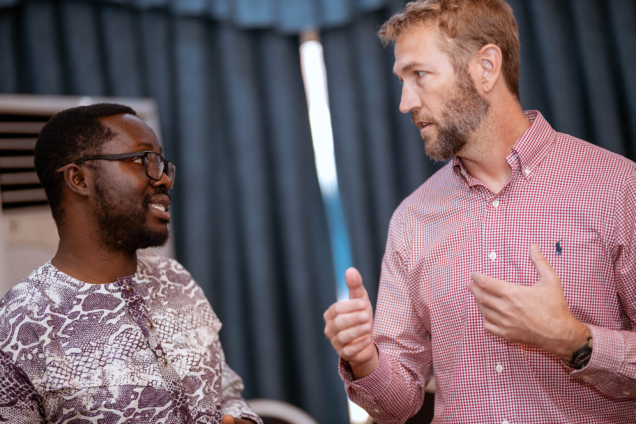
According to Dr. Eugene Appiah-Effah, a lecturer at the Department of Civil Engineering KNUST and the thematic lead for Water Quality Monitoring component of the project, the training aims to provide enumerators with the relevant skills to collect baseline data.
“This training is specific training for a water safety plan. Looking at the CVs of the enumerators, they have varying research experiences and are not specifically focused on WSP,” he said.
“We think that it is important that we take the enumerators through the research instruments and other research protocols that we have so that they can collect the relevant information that we require to respond to our research objectives,” he stressed.
The research Manager at Aquaya Ghana, James Edward Dotherow, added that the data would be collected from households, health care centres, and water stations.
“All this information will be collected at the beginning, and the analysis will be done afterwards. In about a year and a half, data will be collected again,” he said.
The trainees were enthusiastic about the project and believed it would help them collect appropriate research data.
“By the end of this training, I believe I will not just go to the field and collect any ordinary data. I hope I will be able to get more information and most of the protocols used in getting quality data,” said Ibrahim Mubarak, a trainee.
“Even though we have just started, I have learnt how to do interviews properly, the issues regarding confidentiality and community entry. I hope to gain more knowledge about research and gathering quality data,” Priscilla Aboagye Prempeh, a trainee, added.
The training was facilitated by Prof. Kwabena Biritwum Nyarko, Dr Eugene Appiah-Effah, Dr Charles Gyamfi and Godwin Armstrong Duku, all of KNUST and Valerie Bauza, James Edward Dotherow and Amanda Yahaya from Aquaya.
The REAL-Water project is funded by USAID to evaluate strategies for expanding access to safe, equitable and sustainable water in rural areas across the developing world.
Latest Stories
-
Let The Constitution direct Chieftaincy to deliver “All Development Is Local”
13 minutes -
Ghana explores centre of excellence for hearing, communication and cochlear implant care
2 hours -
Schizophrenia-related disorders lead mental health cases recorded in Ghana
2 hours -
Dutch authorities enlist Ghana in hunt for fugitive drug lord Bolle Jos
2 hours -
Ghana housing finance conference adopts communiqué to improve affordable housing access
7 hours -
Special Initiatives Minister urges Wa Technical Institute to enrol more girls as EU-backed solar training lab opens
7 hours -
In the matter of my first year at the Bar
7 hours -
ActionAid Ghana calls for an end to child marriage, greater investment in girls’ rights
8 hours -
Newsfile to tackle World Cup visa scandal, beach demolitions, education strikes, BRICS bid
8 hours -
UK-Ghana Trade & Investment Summit: Trade Resource Centre to help businesses maximise UK-Ghana trade opportunities
8 hours -
Embassy of Denmark celebrates World Maritime Day
8 hours -
Linking LEAP to productive inclusion could cut extreme poverty by 2030 – UNICEF
9 hours -
Trade Ministry backs use of creative arts to rehabilitate prison inmates
9 hours -
Negotiations with government to continue despite strike suspension – GNAT
10 hours -
‘Ghana cannot afford to waste public resources; every cedi has a job’ – Ato Forson
10 hours