

Audio By Carbonatix
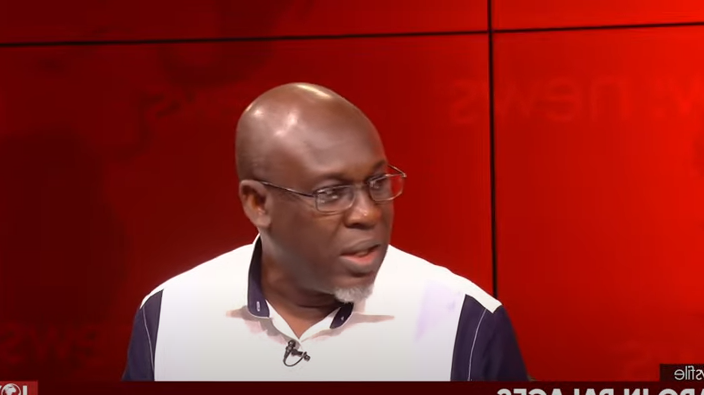
Vice President of policy think tank IMANI Africa, Kofi Bentil, has cast doubt on the feasibility of President John Mahama’s proposed 24-hour economy policy, warning that Ghana may achieve less than 30% of its targets if past governance trends persist.
Speaking on JoyFM’s Newsfile on Saturday, Mr Bentil likened the plan to previous “fanciful ideas” that yielded minimal results despite heavy spending.
Mr Bentil accused successive governments of recycling grandiose pledges without addressing core challenges.
He cited the 1D1F initiative, where over $541 million was invested in 169 enterprises, most of which now struggle.
“We create excuses for underdevelopment, then excuses for failed projects, and finally excuses for wasted funds,” he said.
The policy analyst dismissed the 24-hour economy’s proposed pilot phase, arguing it mirrors a pattern where “pilots” absorb funds but leave no tangible impact.
“They’ll access $300 million, dig a few trenches, and declare progress. By 2028, we’ll be probing where the money went,” he asserted.
Mr Bentil stressed that without fixing critical bottlenecks—water, energy, roads, and telecoms—no 24-hour economy can thrive.
He revealed that providing water to Accra-Tema alone would cost $2 billion over four years, far exceeding the policy’s $6 billion budget.
“Prioritise basics, and round-the-clock productivity will follow organically,” he urged.
The plan to establish a “24-Hour Economy Authority” drew sharp criticism.
“Ghana’s bureaucracy already consumes 80% of revenues. We don’t need new agencies; we need existing ones to work,” Mr Bentil said, referencing IMF warnings against bloated governance.
Mr Bentil’s critique aligns with Imani’s long-standing stance on Ghana’s “parallel systems”, where governments sidestep structural reforms with flashy policies.
His remarks come amid President Mahama’s pledge to formalise the informal sector through night-shift incentives, tax breaks, and enhanced security.
NDC representatives have defended the policy as “transformational”, but Mr Bentil remains sceptical, insisting, “When you process development this way, you end up with glossy magazines and empty achievements.”
Mr Bentil’s warning underscores a pivotal question whether Ghana will break its cycle of “branded underdevelopment” or whether the 24-hour economy will join the list of unmet manifesto promises.
Latest Stories
-
One of six inmates who escaped from Konongo police cells rearrested
2 minutes -
Sam George cautions ministers against reading unverified AI-generated speeches
6 minutes -
Ghanaian entrepreneur Mary Nyamekye Asamoah wins Africa Travel 100 award
8 minutes -
Obuasi SHTS abuse: Sanction all officials who failed to act – Moving Masculinity
14 minutes -
Lucy Agyepong honoured for excellence in engineering education at maiden GAAS Women’s Awards
16 minutes -
Harriet Afia Konadu Asiedu
23 minutes -
AFCON 2027: Sports Minister ‘convinced’ Black Stars will qualify despite losing opening two games
25 minutes -
CUTS welcomes VAT collection on cross-border digital services, urges fair treatment of Distance Learning students on overseas programmes
29 minutes -
Leave the Chiefs and fix the Galamsey Problem: Dr Solomon Owusu Advises President Mahama
32 minutes -
Pay attention to teachers and give them what is due – Ho District GNAT tells government
35 minutes -
Authorities knew of abuse allegations against Obuasi headmaster months before suspension – JoyNews investigation
40 minutes -
US teenager appears in court over alleged Hindu temple shooting plot
42 minutes -
Academic City donates paediatric rehabilitation staircase to Ga East Hospital
46 minutes -
Services drive 7.4% expansion in Ghana’s economic activity
58 minutes -
‘I don’t make music for awards, I make it to connect people’ – Rocky Dawuni
1 hour