

Audio By Carbonatix
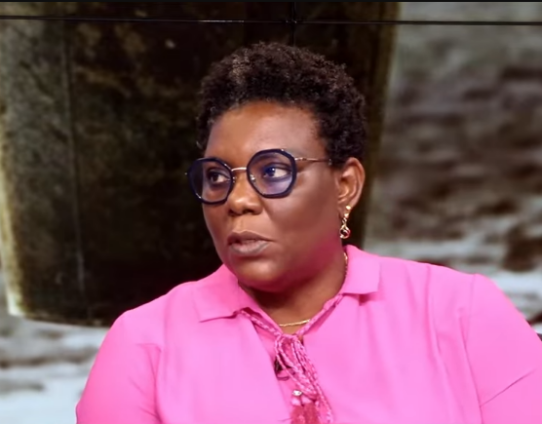
The Deputy Director for Adaptation, Climate Resilience, and Risk Management at the Environmental Protection Authority, Stella Okoh, says 39 districts have so far been covered under Ghana’s National Adaptation Plan (NAP).
Speaking on JoyNews’ National Dialogue on News Desk under the theme “Building a Climate Resilient Future,” on March 30 she stressed that climate change impacts will persist even if emissions are halted today.
According to her, the current effects of climate change are the result of years of accumulated emissions, which is a critical priority.
She explained that this necessity informed the development of the National Adaptation Plan, which was officially launched in December last year.
Ms. Okoh emphasised that the NAP is not just a policy document but a costed plan, with clearly defined financial requirements attached to each priority action.
She noted that the plan is structured along two levels: national and sub-national.
At the national level, she said five key sectors have been prioritised: water, agriculture, ecosystems and biodiversity, urban and city development, and health.
She added that gender has been integrated as a cross-cutting priority across all sectors, ensuring inclusivity in implementation.
Additionally, she highlighted the contribution of civil society, noting that a youth-led strategy was developed to promote inclusiveness as part of the NAP process.
“At the sector level, we have conducted climate vulnerability assessments to identify risks and guide interventions,” she said.
Touching on progress at the sub-national level, Ms. Okoh stated that 39 districts have so far been covered, exceeding the initial target of 10 districts under the NAP project.
She attributed this expansion to support from development partners, including WaterAid, the United Nations Capital Development Fund, International Institute for Sustainable Development, among others.
She said these collaborations have helped scale up climate adaptation planning at the local level, ensuring districts are better equipped to respond to climate risks.
Ms. Okoh reiterated that inclusivity and community engagement remain central to the success of the National Adaptation Plan.
Latest Stories
-
Vibes The Movie: Big Ghun’s Ghanaian film earns five nominations at 2026 REFFA
28 minutes -
MamaCare CEO warns unresolved conflicts among health workers could undermine maternal and neonatal care
52 minutes -
Health professionals urged to translate medical knowledge into practice to save mothers
58 minutes -
Conflicts among care providers linked to maternal, neonatal deaths – Expert
3 hours -
GIS marks 10th TIME conference, champions improved teaching practices
3 hours -
BRICS Or Balance? What Ghana’s bid really means
3 hours -
GPRTU wants full TRAFFITECH-GH implementation to start in 2027
3 hours -
Mahama announces plans to import electric wheelchairs for PWDs
3 hours -
KGL U17 Colts 2026: Western beat Prempeh Elite Academy to set up final final with Greater Accra Region
4 hours -
Late Solanke strike salvages 10-man Spurs draw at Man United
4 hours -
Gender Ministry to monitor welfare of Nana Akua Addo’s children amid domestic violence case
4 hours -
Benedict Okyere Yeboah: Ghana’s football problem goes beyond sacking a coach
4 hours -
GPL 2026/27: Darkwah Wiafe’s winner sees All Blacks beat Kotoko
4 hours -
ITF World Tour : Patel Wins Boys’ Singles Final at J100 Accra
5 hours -
Ghana must pursue BRICS partnership if it brings economic benefits – Kpebu
5 hours