

Audio By Carbonatix
A research by the University of Southampton on vaccine acceptance in Ghana has shown that 43.4% of Ghanaians hesitating to take the vaccines believe the serum is dangerous and could affect their health.
The research also shows 54.3% of this category of respondents say the vaccines may have harmful side effects.
However, 82.8% of Ghanaians also say they are willing to take the vaccine when offered the opportunity.
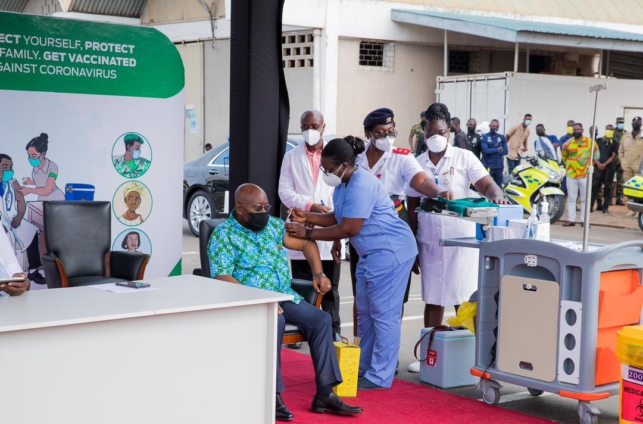
This research comes as the Ghana Health Service readies itself to inoculate more Ghanaians following the arrival of some three hundred and fifty thousand AstraZeneca vaccines on Friday.
"Among those who said that they were not willing to be vaccinated, reasons included believing that they would experience harmful side effects from the vaccine (54.3%), believing the vaccine to be dangerous (43.4%), and government mistrust (40.0%). Other reasons included not having enough information about the vaccine (23.2%), pharmaceutical mistrust (19.9%), believing that they would be allergic to the vaccine (17.2%), and believing that the vaccine would not work (16.6%)," it said.
The researchers also found out that " 82.8% of the Ghanaian respondents were willing to be vaccinated against COVID-19 when offered the opportunity. 9.7% said they were not and 7.5% were undecided ".
Speaking on the AM Show Monday, one of the researchers, Kirchuffs Atengble, was worried religious leaders weren't ready to accept the vaccines.
" Religious leaders have also shown they won't accept the vaccines. If they as religious leaders are unwilling to take it, then our target of inoculating 20 millions Ghanaians won't be met " .
The Executive Director for PACKS Africa also implored political leaders not to politicise the issue but rally their supporters to enable government to meet its target of inoculating 20 million Ghanaians by the end of 2021.
Latest Stories
-
A source of excellence across generations – Vice President Opoku-Agyemang lauds Mfantsipim
1 hour -
(Photos) Mfantsipim School launches historic 150th anniversary
2 hours -
Knights and Ladies of Marshall group backs Catholic Bishops’ stance on anti-LGBTQ+
3 hours -
Bright Simons writes: All the Filla in the Ibrahim Mahama/E&P – Gold Fields Saga
3 hours -
Monetise Idiocy In Ghana
3 hours -
ECG kicks off Phase Two of transformer upgrades at Lashibi; brief outages expected
4 hours -
The Ghanaian prophet and the mysterious death of his scottish wife Charmain Speirs
4 hours -
Nearly 400 sentenced in Nigeria for links to militant Islamists
4 hours -
Ghana’s recovery supported by gold strength despite global oil price pressures – Standard Bank Research
4 hours -
Methodist Church hails Mfantsipim@150; calls for “fresh consecration” to excellence
5 hours -
‘Excellence is our inheritance’ – Nana Sam Brew-Butler hails Mfantsipim’s 150-year reign in leadership
5 hours -
Kwaku Azar writes: A-G vs OSP
5 hours -
Mfantsipim–Adisadel rivalry built excellence, not division – Sam Jonah
5 hours -
Vice President launches Mfantsipim’s 150 years of shaping Ghana’s greatest mind
6 hours -
I assure Otumfuo, Mahama will join him to commission KNUST Teaching Hospital by end of this year – Haruna Iddrisu
6 hours