

Audio By Carbonatix
The Ahafo Regional Directorate of the Ghana Health Service is rolling out a Nutrition Friendly Schools Initiative (NFSI) to help improve the nutrition of school children and adolescents.
The implementation which will be led by the Ghana Education Service with the support of the Health Service and other stakeholders in the region will involve 50 basic and Senior High Schools.
The schools were selected from all 6 districts of the region.
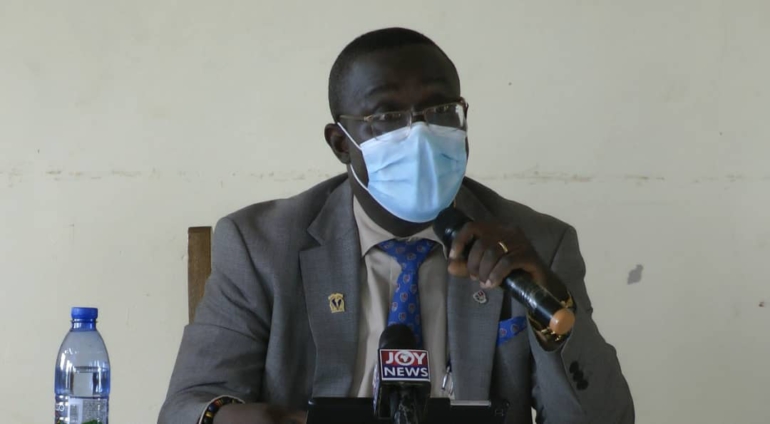
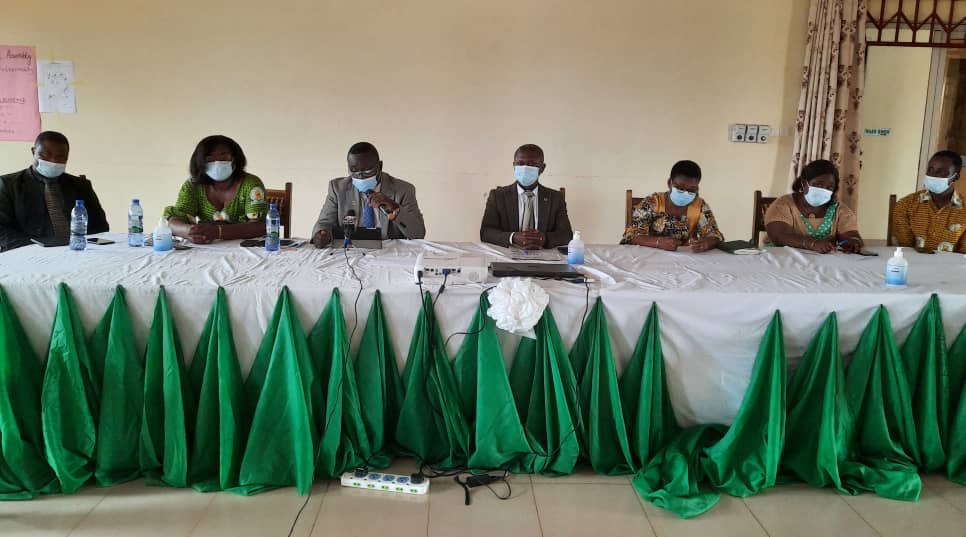
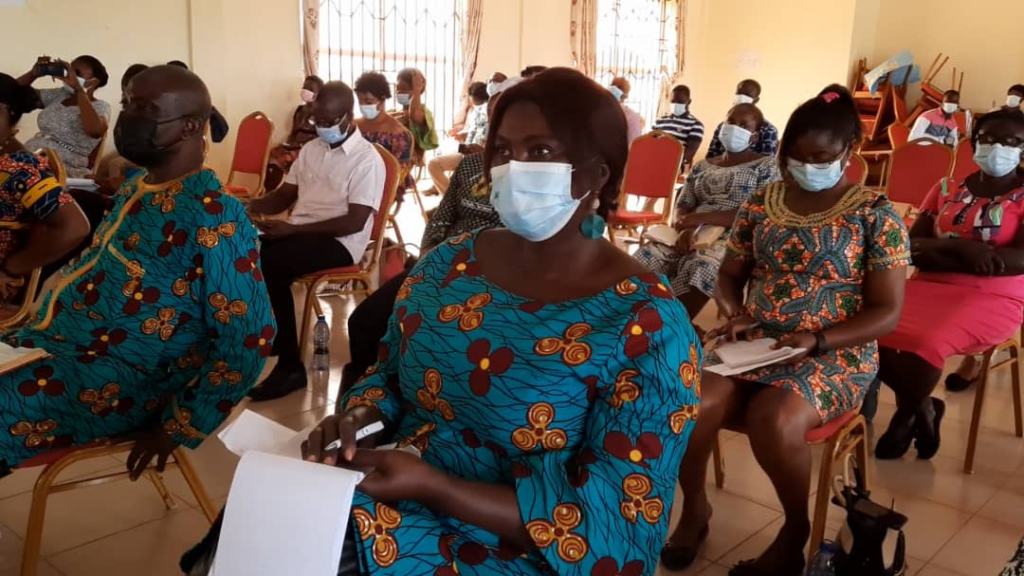
At a regional stakeholder’s engagement meeting at Goaso, the Ahafo Regional Director of the Health Services, Dr. Kwabena Boateng Boakye, said the meeting, aside from raising awareness on the implementation of the NFSI, was also to solicit the support of stakeholders for the effective implementation of the program in the various communities.
Dr. Kwabena Boateng Boakye explained that the NFSI specifically seeks to; Provide evidence to inform advocacy for strengthening policy for improved nutrition of school-age children and adolescents.
Again, the project will create an enabling environment for improving and maintaining all aspects of food quality and safety in the schools while developing a strategic partnership to implement and scale up proven interventions in schools, and strengthen the nutrition component of the curriculum for basic and second cycle schools.
He also defined the minimum package of health and nutrition services that will be implemented in schools to improve the nutrition and health of school-age children and adolescents.
According to him, despite the steady decline in most malnutrition indicators at the national level, the nation is currently faced with a triple burden of malnutrition; overweight or underweight, stunting, and micronutrient deficiency, such as iron deficiency, foliate, and iodine.
These, he explained notably affect school-age children and adolescents.
"Worrying available figures suggest that one out of 10 school-going children are either overweight or underweight, with almost half of adolescent girls within 15-19 years being anemic." Hence the need to roll out the NFSI to help break the intergenerational cycle of malnutrition.
The Ahafo Health Director, however, believes that prompt and swift response with interventions such as the NFSI will positively impact the current and future nutrition status of children, and give hope to school-age children and adolescents.
The Ahafo Regional Nutrition Officer, Kwadwo Ansong in his presentation said regional, district, and school-level teams would be formed to see to the implementation with specific tasks to achieve at each level.
He revealed that Asunafo North and South districts would have 9 schools each, while Asutifi North and South, and Tano North and South will have 8 schools each.
As part of the implementation strategy, the region would be zoned into three with 100 teachers, 50 education officers, and 50 health officers trained.
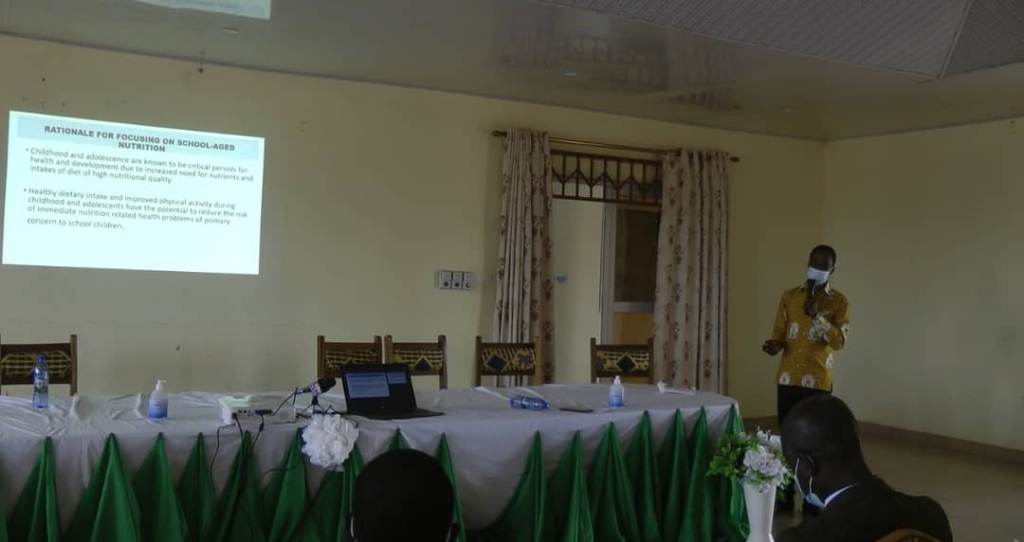
Kwadwo Ansong also said they will train, screen, and certify food vendors among others as part of the package.
He also said only a few students meet the recommended '30-minutes, 5 days a week' physical activity, and the teams would be working to improve it.
Ahafo Regional Education Director, Lucy Ama Ankrah, averred that more needs to be done to improve the nutrition levels of students in the region, especially those in the villages.
She explained that headteachers in non-school feeding schools should ensure foods are prepared and sold under good hygienic conditions, disallow the sale of junk foods to students and occasionally allow health experts to offer nutrition education during school worship periods.
She hoped spreading nutrition education will ensure schools have healthy learners at all times.
On his part, the Ahafo Regional Minister, George Boakye said investing in nutrition among school children contributes to the achievement of Goal 2 of the Sustainable Development Goals which targets ending hunger, achieving food security, and improved nutrition as well as sustainable agriculture.
"The Regional Coordinating Council, therefore, sees the NFSI as laudable and supports its successful implementation and sustainability in the region to ensure healthy children who are the critical human resource capital for future growth and development aspirations," he noted.
The Minister charged the Regional/District Directors of Education and Officers to partner with their counterparts in the Ghana Health Service to ensure a successful roll-out of the NFSI, and by extension, scale up the program to other non-participating schools across the region.
He also appealed to the traditional leaders to lend their unflinching support for the effective and efficient implementation of the interventions in the selected schools in their communities while urging parents to pay attention to the nutritional needs of their children.
The Regional Health Director, Dr. Kwabena Boateng Boakye, used the occasion to remind participants of the need to return to the adherence of the Covid-19 protocols with the 3rd wave in mind.
Latest Stories
-
Brandon Asante and Coventry all but promoted to Premier League despite Sheffield Wednesday draw
18 minutes -
GPL 2025/26: Late Kwartemaa strike downs Hearts in Tema
24 minutes -
Ghana Faces Sierra Leone Moment as Prosecutorial Powers come under strain
34 minutes -
Don’t consume fish or seafood from Tema Shipyard until further notice – FDA warns
39 minutes -
Why volunteering might be Africa’s most underrated career accelerator
45 minutes -
ActionAid Ghana raises concern over gender gaps in Feed Ghana Programme
47 minutes -
Windstorm wreaks havoc in Gushegu, displacing nearly 2,000 residents and damaging schools
49 minutes -
Friends of Bridget Bonnie Marks her 35th birthday with donation to Kasseh Model Health Centre
2 hours -
From Ekumfi Kokodo to the Pulpit Stage: Essi Donkor’s gospel journey takes shape
2 hours -
Landfilling waste management creates no value, it’s an economic waste
2 hours -
Photos: Speaker Bagbin Commissions MPs constituency office under parliamentary decentralisation programme
2 hours -
Black Stars technical advisor Winfried Schäfer sacked as GFA shakes up backroom staff
2 hours -
Wenchi water project almost complete, critical to gov’t agenda – GWL MD
3 hours -
Anti-LGBTQ+ bill not part of government’s legislative agenda – Inusah Fuseini
3 hours -
Anti-LGBTQ Bill: Forget the rumour mongers, I’m a man of action, and will pass the bill – Speaker
3 hours