

Audio By Carbonatix
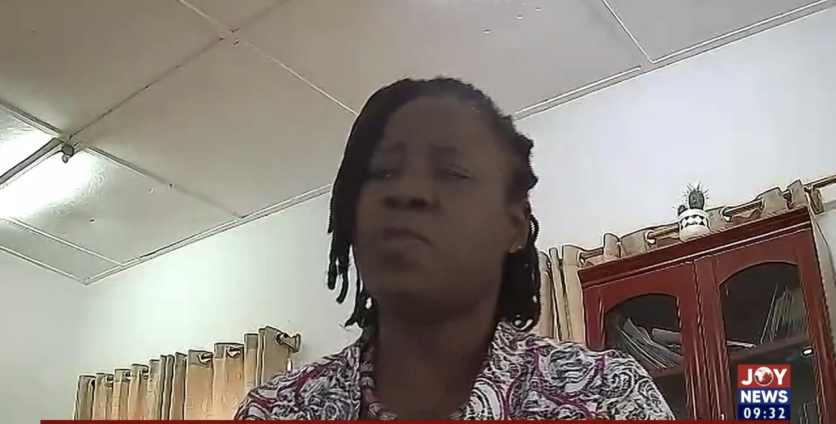
The Head of the University of Ghana's Department of Communication Studies has lamented about the negative impact of media companies owning many frequencies.
Dr Abena Animwaa Yeboah-Banin said 87% of the audience in the country is concentrated on platforms belonging to only four media entities.
According to her, Angel Broadcasting Company, Multimedia Group Limited, Despite Media Village and Media-General control the audience of the country.
Speaking on Joy Change-Speakers Series V on Saturday, July 8, Dr Abena Animwaa Yeboah-Banin said this does not allow for media pluralism.
She said this limits the circulation of news should these four entities decide not to carry out some stories.
“MFWA data shows that four media companies - Angel Broadcasting Company, Multimedia, Despite and Media General together hold a rated audience share of 87%.
"Across this country, 87% of the audience are concentrated platforms in the hands of four companies which may actually be in the hands of four individuals.”
“If we wanted plural media, I wonder whether we are there if this is actually the story of the group.”
Meanwhile, she has asked Ghanaians not to shy away from expressing their views on national issues.
According to her, there is an opportunity for everyone to be heard as enshrined in the 1992 Constitution of Ghana.
“Again when we have plural media, there is also an opportunity for the right of other voices to speak and to be heard and to also have the right of reply if they have been slighted.”
“But in such a media environment, the beauty of it I think is the opportunity it presents in our walk towards development for different ideas to be sampled from all corners of this country in a space of plural media.
"There is an opportunity for your voice to be heard as much as the opportunity for the most intelligent and the worse off to be heard and we all then get the opportunity to collaborate and to contribute to what we all want for Ghana.”
She was speaking on the State of the Ghanaian Media Report 2023 released by the Department she heads.
The report said the Ghanaian media is not financially viable.
According to the report, “the media industry is too heavily plagued by saturation, the cost of doing business in Ghana, dwindling advertising budgets [including capital fight onto social media platforms], the after-effects of the COVID-19 pandemic and fast-evolving technological changes to be considered financially healthy.”
The study noted that the financial health of the local media is patchy, at best.
It added that although there are clear signs of healthy indicators of financial potential, there are equally pressing challenges to viability.
“Factors situated within the structure of the local media scene, the COVID-19 pandemic, the state of the local economy and the fast pace of technological evolutions both hurt the financial health of the media in Ghana.”
It went on to state that while media strive to be financially viable, the efforts are also countered by the cost of doing business in Ghana’s post-COVID-19 economy.
“Like all businesses in the country, media organisations are finding themselves at the mercy of forex rate-induced rising fuel, utility and retooling costs which have become a constant drain on incomes. As these and other costs increase, the capacity for media to adequately resource and remunerate employees to engender professional practice reduces.
“The high cost of doing business also has implications for content diversity. Indeed, as we find, it costs more to generate local content than to import and do voice translation sound inserts.
"This explains the increasing levels of imported Asian and Southern American telenovelas which are gradually weaning local audience tastes off local films and drama. The long-term implications for financial viability are dire.”
Latest Stories
-
Sammi Awuku urges NPP Germany to unite ahead of 2028 elections
27 minutes -
The Inconvenient Truth: We cannot pray for the cure while protecting the disease
1 hour -
MTN Ghana trains civil society organisations on artificial intelligence
2 hours -
GoldBod FX framework aims to make dollar supply predictable – Acheampong
2 hours -
How does a Ghanaian team make it to the BAL?
2 hours -
Ghana’s investment climate presents opportunities for industrial growth and job creation.
2 hours -
‘I paid thousands to a company for jobs that never came’
3 hours -
SSNIT intensifies informal sector enrolment drive with Techiman float
3 hours -
Ghana seeks long-term mining investments that benefit local communities – Armah-Kofi Buah
3 hours -
GHATOF demands compensation for 85 businesses affected by La Pleasure Beach demolition
3 hours -
Bono Regional Minister calls for investor education to drive economic growth
3 hours -
Ghana’s Ambassador to China, Kojo Bonsu, presents credentials to Nepalese President
3 hours -
Fairtrade Africa’s Cocoa Hubs Project strengthens rural service centres in cocoa-growing communities
3 hours -
MPs are not development officers – Edem Kpotosu
3 hours -
SEC cautions investors against fraudulent investment schemes
3 hours