


Audio By Carbonatix
UK researchers have developed an early warning system to prevent the crops of African farmers from being devastated.
The Pest Risk Information Service (Prise) combines temperature data and weather forecasts with computer models.
It then sends farmers a mobile phone alert so that they can take precautions.
It is hoped that the system will boost yields and increase farm incomes by up to 20%.
Prise is being used in Kenya, Ghana and Zambia and will be rolled out soon in other parts of the world.
Prise is an upgrade of a highly successful UK Aid scheme run by the Centre for Agriculture and Bioscience International development charity (CABI). It uses a network of so called "plant doctors" and clinics to advise farmers when pests or diseases destroy their crops.
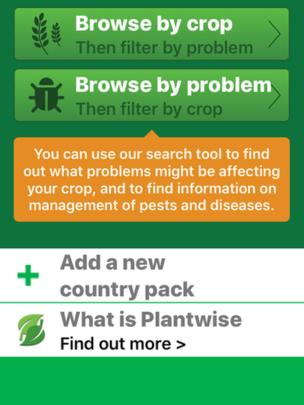
The "doctors" draw on a database using an an app to help them to diagnose the issue and then prescribe the right pesticide and other measures. Walter Wafula, who grows Maize in Bungoma in Kenya, told BBC News that the service had transformed his family's lives.
"Because of the increased income from my farm, my kids can now go to a better school and the life at home has improved because I can provide the basic needs for my family," he said.
So far, the scheme has helped 18.3 million farmers, in 34 countries across Africa, Asia and the Americas. On average farm incomes and yields are 13% higher for those using the service.

The data for the Prise system will be processed by the JASMIN supercomputer data cluster in Oxfordshire
But Prof Charlotte Watts, chief scientific adviser for the UK's Department for International Development, which funds the plant doctor scheme, says a new initiative with CABI and the UK Space Agency (UKSA) will use the network to prevent, rather than just mitigate infestations.
She says the idea is to use satellite data collected by the UKSA to develop a system that is able to predict when pest infestations will strike a week or more in advance.
Satellites can provide accurate land temperature information, which is one of the most important drivers of pest infestations. This, combined with weather data and computer models, can be used to give farmers enough time to spray pesticide and take other precautions.
CABI worked with the UK's Science and Technology Facilities Council, to develop the project. Prof Watts told BBC News that the early indications are that the system is working.
"Farmers are completely dependent on crops and the predictability of having a good yield to survive and also to send their kids to school," she said.
"So if we can reduce the impact of pests, if we can enable them to get better yields - which we are already seeing - it will mean that we can help them move out of poverty."
Latest Stories
-
Ampem Darkoa Ladies miss out on CAF Champions League qualification after penalty shootout loss
37 minutes -
Herbal Medicine: Less than 15% practitioners registered
3 hours -
Road inspections not a witch-hunt against contractors — Agbodza
4 hours -
HTU clinic upgraded to primary hospital after HeFRA inspection
4 hours -
“When I am gone, just like Kwame Nkrumah people will appreciate me” – Kurt Okraku
4 hours -
“I love people who are not only critical but constructive” – Kurt Okraku
4 hours -
TECNO’s Modular Phone and TAURUS win gold at IFA 2026, recognising breakthroughs in mobile and gaming technology
4 hours -
Youth Forum in Accra calls for debt cancellation, reparations and African economic independence
4 hours -
Dr Abu Sakara urges African youth to seize global upheaval for economic emancipation
5 hours -
Fulham booed off after third defeat in a row
5 hours -
Joy FM Back-to-School Fair 2026 ends in massive success after two days of discounts and one-stop shopping
5 hours -
Man City maintain 100% start with win over Coventry
5 hours -
Kwesi Pratt urges African youth to reject ‘Gen Z revolution’, reclaim Africa’s resources
5 hours -
Forest and Tottenham both still looking for first win after scrappy draw
5 hours -
Inter Milan mount stunning comeback to beat Napoli
5 hours