

Audio By Carbonatix
The Chief Executive Officer of Fidelity Bank, Ghana, Julian Opuni, says it will be fairly naïve of businesses to assume their mode of work post Covid-19 will remain as it was before.
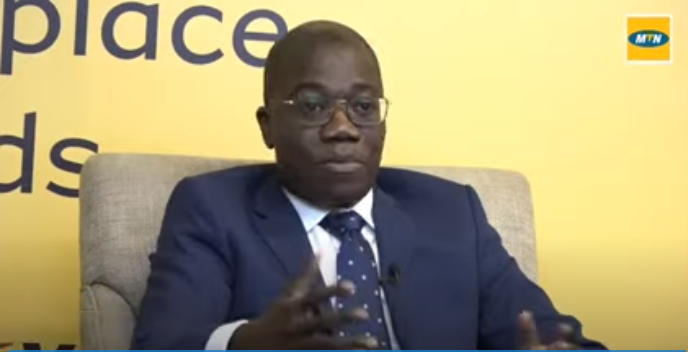
Speaking at the 28th MTN Business World Executive Breakfast Meeting, Thursday, Julian Opuni stated that the advent of the novel coronavirus has made relevant remote working and remarks that this new normal is here to stay.
“If you look at our environment if you like, the remote way of working is now effectively here to stay and certain capabilities that we didn’t think were available suddenly have become very evident.
“The ability to just do lots of meetings in a very short space of time has now become the way of work and we’ve had to create that capability and even the protocols around working remotely and having meetings and teleconference with your colleagues,” he said.
He, therefore, advised businesses to start thinking up new ways to effectively meet the demands of customers within the circumstances the coronavirus brings.
Julian Opuni said a sure way to do this is to scale up the mode of delivery of services to meet recent trends and to find innovative ways to measure the productivity of workers as they work from home.
“We now have to quickly scale up certain parts of the business that may not be seen as evidently critical to delivery of our services and you still have to do it in an e-learning kind of environment and train and get people ready to be able to do those services because the customers’ needs have been changed significantly as a result of what’s going on.
“It also means that we’ve had to establish, and all businesses would have to do it, establish new ways of measuring productivity and activity of your staff because when you have people scattered all over areas and locations and all over the place, do you still use your traditional ways of measuring output?
“And I think what is evident now is because of the rotation system and the facts that people are working from home etc. It’s no longer about hours worked, it’s really about output and you have to put in place those systems that will enable businesses measure output and see the productivity of their staff,” he quipped.
Latest Stories
-
Teacher unions strike: Gov’t presents fresh proposals as talks end inconclusively
1 minute -
51,000 teachers’ promotion arrears to be validated for October payment – Education Minister
32 minutes -
Kwabena Boamah appointed Board Chair for Impact Investing Ghana
39 minutes -
Striking teacher unions to meet Fair Wages and Salaries Commission on October 6
53 minutes -
EOCO working with AG to arraign Nana Baffour Awuah before weekend court
56 minutes -
Duraplast reassures customers after fire, announces October 5 reopening
1 hour -
Call off strike, gov’t will not renege on promotion arrears pledge – Haruna Iddrisu appeals to teacher unions
1 hour -
Committee set up to validate teachers eligible for 20% deprived-area allowance – Education Minister
1 hour -
Five-member committee to search for new Black Stars coach after Sports Ministry-GFA meeting
2 hours -
Pinktober: Breast cancer survival exceeds 90% when detected early – Breast Society of Ghana
2 hours -
TCDA to adopt Upper West’s MATCO mango farm as northern prototype, issues warning against felling shea trees
2 hours -
‘Fear delegates’ tag: Afoko touts genuineness among delegates ahead of NPP delegates conference
2 hours -
John Boadu: The leader our party needs at this time – Amb. Edward Akwasi Boateng
2 hours -
Baffour Awuah: EOCO arrested, detained MP after hours of waiting, questioning – Afenyo-Markin
2 hours -
EOCO court warrant authorised search of Baffour Awuah’s law firm, not residence – Afenyo-Markin
3 hours