

Audio By Carbonatix
The BBC is to increase diversity by investing £100m of its TV budget over a three year period to produce "diverse and inclusive content".
Director general Tony Hall has described the move, which will apply from April 2021, as "a big leap".
The BBC has set itself a mandatory target - 20% of off-screen talent must come from under-represented groups.
That includes those with a disability or from a BAME or disadvantaged socio-economic background.
There will also be three "tests" for diversity in the BBC's TV output, with programmes needing to meet two of them to qualify - diverse stories and portrayal on-screen, diverse production teams and talent and diverse-led production companies.
The announcement follows widespread Black Lives Matter protests, after the death of George Floyd while in police custody in the US.
'The stain of systemic racism'
"The senseless killing of George Floyd - and what it tells us about the stain of systemic racism - has had a profound impact on all of us," said Lord Hall.
"It's made us question ourselves about what more we can do to help tackle racism - and drive inclusion within our organisation and in society as a whole.
"This is our response - it's going to drive change in what we make and who makes it. It's a big leap forward - and we'll have more to announce in the coming weeks."
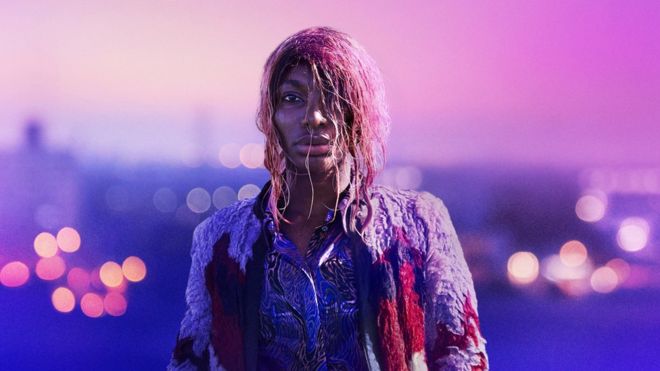
Recent BBC productions from ethnic minority creatives and featuring actors from BAME backgrounds include Michaela Coel's 12-part drama, I Will Destroy You.
It charts the fallout from a sexual assault and received rave reviews.
Elsewhere, the story of Anthony Bryan and the Windrush scandal was brought to our screens in the feature-length drama, Sitting In Limbo.
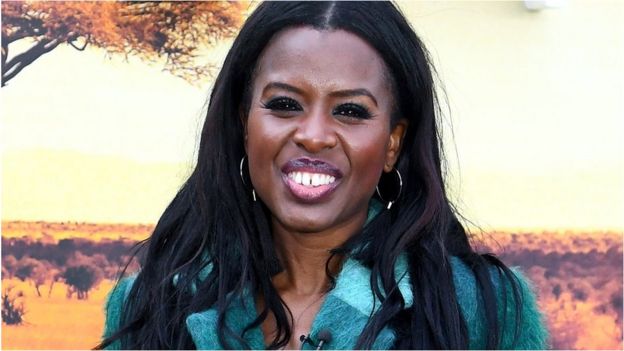
In October last year, TV presenter and campaigner June Sarpong was appointed as the BBC's director of creative diversity, as it pledged to ensure 50% of on-air roles will go to women by 2020, with targets of 15% for black, Asian and minority ethnic groups [BAME], 8% for disabled people and 8% for LGBT staff.
Off air, the BBC promised at the time to increase the proportion of leadership roles filled by women from 44% to 50% by next year, and raise the share of such senior roles held by BAME staff from 11.5% to 15%.
Reacting to Monday's latest package, Sarpong said: "I came to the BBC as an outsider. Before joining I had an idea of this being an organisation that did not want to change. What I found was something different: an organisation that had ambitious goals for diversity and inclusion but didn't know how to reach them."
She believes the commitment "will help to drive real change that will be felt by all audiences".
"I'm pleased that we're announcing this fund as the first of a series of bold steps that will help make the BBC an instrument of real change."
"As a black woman," she added, "I feel and share in the pain that so many are feeling worldwide.
"It makes it all the more important that we show up now not just with words but with meaningful action."
'Not healthy'
The cash injection will support diversity and inclusion across all genres of TV, including Children's, Education and Current Affairs.
The BBC is calling it "the biggest financial investment to on-air inclusion in the industry", declaring that "the media industry is not changing fast enough".
"The measures announced today are designed to accelerate the pace of change in increasing diversity and inclusion both on and off air," the statement read.
Speaking to The Observer on Sunday, director Steve McQueen led the attack on racism in the British film and TV industry and the lack of diversity.
"It's just not healthy," said McQueen. "It's wrong. And yet, many people in the industry go along with it as if it is normal. It's not normal. It is anything but normal. It's blindingly, obviously wrong. It's blatant racism. Fact. I grew up with it."
The BBC's director of content, Charlotte Moore, said McQueen challenged her and the organisation to "set meaningful targets and take proper action" last year during the making of his upcoming anthology series, Small Axe.
"He was right," said Moore. "Today's announcement represents a truly transformational commitment to both on and off screen representation.
"Concrete, tangible action is the only way we can bring about real sustainable change."
Latest Stories
-
NSMQ 2026: Botwe denies Wesley Girls’ seeded spot, secures quarter-final spot after fierce battle
2 minutes -
Zoomlion begins disinfection and disinfestation exercise across Upper East Region
10 minutes -
Ghana AIDS Commission strengthens community-level HIV data collection to track 2030 target
10 minutes -
Parliament approves three new Supreme Court Justices
17 minutes -
Zoomlion intensifies disinfection, disinfestation exercise across Ahafo Region
40 minutes -
GHASALC income rises 89% to GH¢1.84m as sector prepares for 2027 reforms
46 minutes -
‘Africa is being short-changed because we fail to negotiate well’ – Col Festus Aboagye
50 minutes -
NSMQ 2026: PRESEC Legon keeps 9th title dream alive as Mfantsipim looms in quarter-finals
51 minutes -
Zoomlion begins fumigation exercise across Eastern Region after floods
55 minutes -
Police suspend concrete mixer truck operations in Accra and Tema for 3 days
1 hour -
Parliament approves Mahama Ayariga and Zanetor Agyeman-Rawlings as ministers
1 hour -
NACOC, University of Ghana strengthen collaboration to tackle drug abuse on campus
1 hour -
NSMQ 2026: Presby SHS, Bompata dethrones OLAG to snatch seeded status, book quarter-final spot
1 hour -
Senyo Hosi calls for policy certainty, productive infrastructure and stronger human capital to transform Africa
1 hour -
Mali music star Salif Keïta cancels South African concerts over ‘xenophobic violence’
1 hour