

Audio By Carbonatix
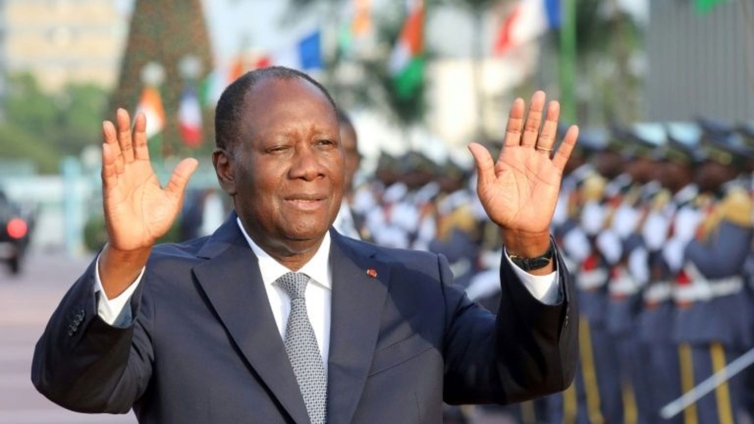
Ivory Coast President Alassane Ouattara was formally chosen by his ruling party on Saturday to run for a third term in an October election, despite furious opposition charges that the move is unconstitutional.
Ouattara, who has been in power since 2010, said in March that he would not stand again but changed his stance after the death of Prime Minister Amadou Gon Coulibaly - seen as his anointed successor -- of a heart attack in July.
Ouattara's decision has triggered outrage among opposition and civil society groups, who labelled it a "coup" that risked triggering chaos.
The constitution limits presidents to two terms, but 78-year-old Ouattara -- who has served two five-year terms since 2010 -- and his supporters argue that a 2016 constitutional tweak reset the clock.
After Ouattara's re-election announcement earlier this month, mass protests descended into three days of violence in which six people died and a hundred were injured.
His ruling Houphouetist Rally for Democracy and Peace (RHDP) party said Ouattara was nominated as its candidate at an event attended by 100,000 people in an Abidjan stadium.
"We remain focused on the election, with a record to defend and a project to propose to Ivorians," party spokesman Mamadou Toure told AFP, branding the street demonstrations against Outtara's candidacy a "dismal failure".
Ouattara's change of heart has heightened tensions before October 31 vote, which takes place in the shadow cast by violence following 2010's election that killed around 3,000 people.
On Friday, election authorities rejected appeals by former president Laurent Gbagbo and former rebel leader Guillaume Soro to be allowed to run in the election.
Gbagbo and Soro had appealed to the Independent Electoral Commission (CEI) against a decision to not include them in electoral lists for the ballot.
Gbagbo was freed conditionally by the International Criminal Court (ICC) after he was cleared in 2019 of crimes against humanity.
His return to Ivory Coast would be sensitive before the presidential election. His Ivorian Popular Front (FPI) party urged him to throw his hat in the electoral ring.
Soro, a former rebel leader, has been forced into self-imposed exile in France in the face of a long list of legal problems at home.
He was a leader in a 2002 revolt that sliced the former French colony into the rebel-held north and the government-controlled south and triggered years of unrest.
He was once an ally of Ouattara, helping him to power during the post-election crisis in 2010. The two eventually fell out.
Latest Stories
-
Netflix sued by band Demon Hunter over ‘KPop Demon Hunters’
2 hours -
Harvard to pay $53 million to settle lawsuits over theft of body parts
2 hours -
Mark Zuckerberg encouraged growth over child safety, ex-Meta executive testifies at trial
2 hours -
Amazon plans drone delivery expansion to about 500 US locales
2 hours -
Trump calls for Congress to pass crypto bill at White House event
2 hours -
ABC says intimidation by Trump’s FCC forced programming changes
2 hours -
Uber launches autonomous rides in Zagreb, its first in Europe
3 hours -
Ecuador intelligence chief and five Americans killed in Kenya helicopter crash
3 hours -
NMC reconstitutes boards of four state-owned media organisations
3 hours -
Keep abreast of new traffic regulations – Police
3 hours -
Police to prosecute commercial drivers for overcharging passengers
3 hours -
24-Hour Markets is not our responsibility – Goosie Tanoh distances Secretariat from project
3 hours -
Vaccine breakthrough stops cancer returning in trial
4 hours -
‘I was born in South Africa’, says beauty queen Chidimma Adetshina facing legal bid to deport her
4 hours -
Prince Harry and Meghan moving back to UK
4 hours