

Audio By Carbonatix
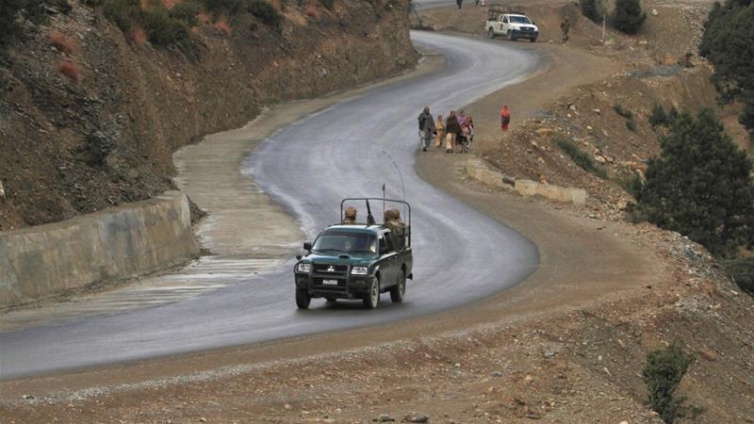
Rebels have stepped up attacks on security forces in northwest Pakistan, raising fears of a revival of their activity and a return of lawlessness near the border region with Afghanistan.
The ethnic Pashtun border region was for years a haven for rebels who fled the United States invasion of Afghanistan in 2001. But the Pakistani military cleared out the strongholds in a 2014 offensive, driving most of the fighters into Afghanistan.
But since March, the al-Qaeda-linked Pakistan Taliban, facing the risk of losing havens on the Afghan side of the border if its Afghan Taliban allies make peace there, has unleashed a wave of attacks on Pakistani security forces.
Bolstering its bid to re-establish itself in the borderlands, the Pakistan Taliban, or Tehreek-e-Taliban Pakistan (TTP), struck an alliance in July with half a dozen small rebel factions.
"The group's capability and military strength has increased, as has their reach," said Mansur Khan Mahsud, executive director of the Islamabad-based FATA Research Centre.
September has seen near-daily incidents, from roadside bombs to sniper attacks, to ambushes and the killing of residents accused of collaborating with government forces.
The rebels have killed at least 40 soldiers since March, according to a Reuters tally of official figures.
At least 109 people were killed in 67 attacks between January and July - twice the number of 2019, according to the FATA Research Centre.
"TTP's regrouping is concerning both because of its own activities and its links to groups like al-Qaeda," said Elizabeth Threlkeld, a former State Department official who served in Pakistan, now deputy-director for the South Asia programme at the Washington-based Stimson Center.
"It could again provide significant support to international terror groups if it continues to regain ground."
Unintended consequences
ebel violence surged in Pakistan after it was pressed to sign on to the US-led so-called "war on terror" after the September 11, 2001, attacks, even though it had for years supported the Afghan Taliban.
Soon the Pakistani government found itself under attack from home-grown Taliban but the military succeeded in pushing it out of the region in 2014, forcing the Pakistani Taliban into Afghanistan.
Millions of residents were displaced by the fighting but since then, rebel violence in Pakistan has largely ceased.
But now fears are growing that the surge of Pakistan Taliban violence is an unintended consequence of efforts to make peace in neighbouring Afghanistan.
In February, the Afghan Taliban and the United States struck a deal allowing for the withdrawal of US forces in exchange for Afghan Taliban guarantees they would not harbour other rebels.
The United Nations said in a report in July there were more than 6,000 Pakistani fighters in Afghanistan, most affiliated with the TTP, who could be heading home if they lose their refuge.
"It's a concern for everyone," a Western security official based in Pakistan told Reuters on condition of anonymity.
Pakistan's military did not respond to a request for comment on the violence but its spokesman said on Twitter recently that the attacks were "meant to derail (the) Afghanistan Peace Process".
For those living in the area, insecurity is again becoming a daily worry.
The TTP issued a statement this week telling residents to leave "until peace returns".
"Our war against Pakistan is continuing and you will continue to see daily attacks," the group said.
Latest Stories
-
Energy sector’s inefficiencies are deepening Ghana’s fiscal and social inequalities — Ben Boakye
14 minutes -
Ghana undertaking Africa’s largest road infrastructure programme – Agbodza claims
18 minutes -
Prospective homeowners troop to Day 2 of JoyNews-Republic Bank Habitat Fair, engage experts on homeownership
33 minutes -
Video: Medeama suffer preliminary round exit after losing to TP Mazembe
49 minutes -
Police interdict officer over death of 23-year-old law student, Ivan Baidoo
55 minutes -
BECE: ‘I’m happy we’re seeing our children’s true results because cheating is curtailed’ – Mahama
1 hour -
24-Hour Economy targets greenhouses, cold storage and air cargo to transform horticulture
2 hours -
Taxpayers’ money shouldn’t fund National Cathedral; Christians can contribute towards it – Mahama
2 hours -
U.S. Embassy launches Girls’ soccer initiative in Ghana to build leaders on and off the pitch
2 hours -
CAF Champions League: GPL champions Medeama eliminated at the preliminary round
2 hours -
HIDAH Foundation equips youth with future-ready skills at free 2-day development programme
2 hours -
Mahama: 24-Hour Markets will boost economic activity across districts
2 hours -
Ablakwa celebrates PRESEC’s 9th NSMQ triumph, rewards contestants, staff with MacBooks and cash
2 hours -
Free Primary Healthcare targets most deprived districts – GHS Director General
2 hours -
Gov’t unveils ambitious cut-flower export corridor from from Daboya to Europe, West Africa and Gulf
2 hours