

Audio By Carbonatix
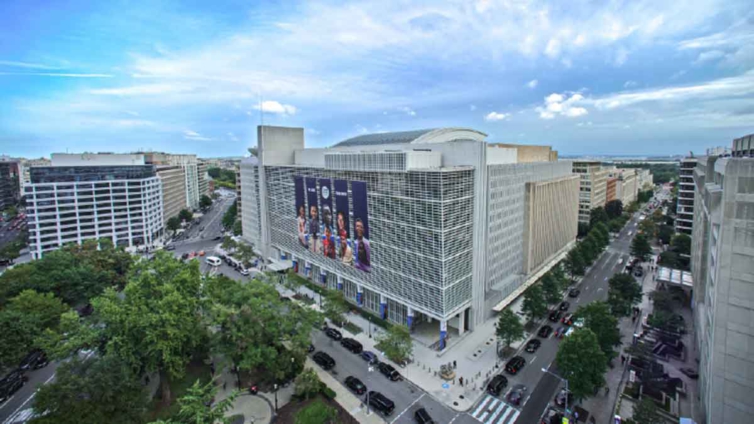
With less than three months to end the year, the World Bank is projecting a significant rise in Ghana's total public debt for this year.
According to the Bretton Wood's institution October 2020 Africa Pulse Report, this is due to the widening fiscal deficit as a result lower revenue and high expenditure brought about by covid-19.
The country’s debt has already hit GHS263 billion, about 68.3% of Gross Domestic Product in July 2020.
Ghana still remains a high risk debt distress country, according to the World Bank’s analysis. Neighboring Ivory Coast is however classified as having moderate debt levels and in the moderate risk category.
The Sub Saharan Africa region’s level of public debt will however hit 63.1% of GDP in 2020.
The World Bank said sustainability of post-COVID-19 will depend on the ability of Sub-Saharan African countries to alleviate their mounting debt burdens and create increased fiscal space.
According to volume 21 of the Africa’s Pulse, the World Bank said effective economic policies, which include macroeconomic and debt management, will increase a country’s capacity to repay its debts. “Enhancing debt management requires better debt transparency and improved efficiency in the use of borrowed resources to expand the fiscal space”, it said.
It also emphasized that creating fiscal space will help the economy cushion the effects of the pandemic crisis and avoid a deeper recession—including in countries with less diversified economic structures.
Additionally, managing a country’s borrowing patterns will reduce the risk profile of debt and may help alleviate the adverse growth effect of the pandemic shock, it added.
Components of Ghana’s debt
The external component of the GHS263 billion debt is estimated at GHS138 billion [$24.3bn], representing 35.8 percent of GDP.
The domestic component of the debt is also estimated at GHS125.1 billion, approximately 32.5% of GDP.
The financial sector resolution bond however constitutes GHS14.2 billion, which is equivalent to 3.7 percent of GDP.
Interest payments
Ghana is expected to pay about GHS26 billion on interest payments for this year alone.
This will be a little over GHS6 billion interest payments in 2019. Last year, interest payments cost the nation about GHS19.756 billion on loans borrowed.
Out of this, GHS4.60 billion was spent on the external debt, while GHS15.156 billion was used to service loans contracted from the domestic market.
Latest Stories
-
He entered at eight. He is now 16: Ghana’s children growing up in prayer camps
4 hours -
‘Development must not always begin from Accra’ — Anwelle Foundation launched in Jirapa
4 hours -
PKO trio eye victories at Odwira Festival
6 hours -
346 Ghana Navy recruits pass out after 26 weeks of intensive training
6 hours -
Newsfile to discuss EOCO-MP arrest, drug trafficking, speech arrests and $235m water debt
7 hours -
JoyNews gets results as listeners raise GH¢40,000 to help 17-year-old student with cerebral palsy attend SHS
7 hours -
Vice President calls for stronger local pharmaceutical production to reduce medicine imports
7 hours -
The brewing tension at KNUST; Beware the Ides of October….
8 hours -
Health Ministry moves to integrate traditional medicine into mainstream healthcare
8 hours -
550 pupils in Kintampo South get educational lifeline as ‘Seeds of Hope’ reaches farming communities
9 hours -
Opoku Mensah urges Christian Council, House of Chiefs to speak up on democratic freedoms
9 hours -
Teacher unions’ strike: Minority demands immediate payment of teacher arrears, 20% deprived area allowance
9 hours -
The Accra-Kumasi Expressway: Building it right
9 hours -
Beyond gold exports: Building value and economic resilience from Ghana’s gold
9 hours -
2027 AFCONQ: Ghana under pressure as Gambia beat Somalia 2-1
9 hours