

Audio By Carbonatix
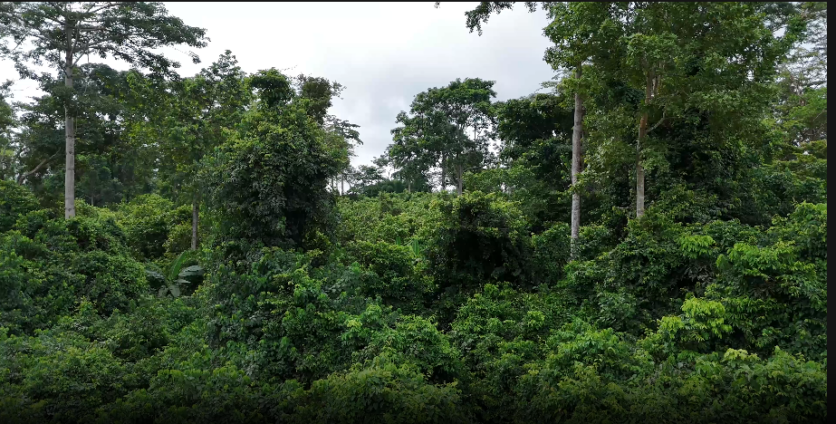
The Oda Forest Reserve in the Bekwai enclave of the Ashanti Region is facing what residents and traditional authorities describe as one of the gravest environmental crises in recent years, as illegal logging, unregulated mining activities, and widespread encroachment continue to devastate large sections of the once-thriving forest ecosystem.
Recent checks conducted by JoyNews revealed alarming levels of destruction across portions of the reserve, with vast stretches of formerly dense forest now transformed into barren landscapes marked by deep mining pits, felled timber, and heavily polluted streams.
The deteriorating condition of the reserve has sparked outrage among community members and chiefs, who are now calling for immediate and decisive intervention from government agencies to halt the rapid degradation before the situation becomes irreversible.
For decades, the Oda Forest Reserve served as a vital ecological buffer and economic resource for surrounding communities.
The reserve supported biodiversity, protected water bodies, moderated local climate conditions, and provided livelihoods for farmers, hunters, herbal medicine practitioners, and other forest-dependent residents.
Traditional authorities within the Bekwai area are increasingly vocal about the environmental crisis, warning that continued inaction could have severe consequences for future generations.
Some chiefs expressed concern that the destruction of the reserve is already affecting farming activities, water availability, and local livelihoods.
They argue that if urgent steps are not taken to reclaim degraded lands and enforce forestry and mining regulations, the region could face long-term ecological and economic damage.
The chiefs are calling on the Forestry Commission, the Ministry of Lands and Natural Resources, and security agencies to intensify surveillance and clamp down on illegal operators within the reserve.
They also want government to prosecute individuals and groups found culpable in the destruction, regardless of their social or political influence.
According to the traditional leaders, community members who attempt to resist the activities of illegal miners and loggers often feel powerless due to the sophistication and influence of some of the operators involved.
Latest Stories
-
Atta Akyea denies seeking presidential pardon for Wontumi in galamsey case
23 minutes -
Photos: Mahama commissions 85-bed Police Hospital ward, donates two ambulances
32 minutes -
GTEC directs Ghana’s public universities to reopen by October 16 and begin lectures on October 19
33 minutes -
Star Oil donates GH¢1million towards construction of new CID facility
37 minutes -
Court hands Adjetey Sowah, two others lifetime bans after Amputee Football legal dispute
46 minutes -
NDC appoints Julius Kwame Anthony as a Deputy Communications Director
47 minutes -
Ghana repatriates 120 Nigerians rescued from suspected cybercrime centres
51 minutes -
NPP rejects Emelia Agbenyo’s appointment as Deputy EC Chair, demands withdrawal
56 minutes -
EOCO grants Suame MP John Darko enquiry bail in GH¢27m SIC investigation
59 minutes -
NPP cannot question EC appointment after appointing own people to Commission – Kwakye Ofosu
1 hour -
BoG deepens public trust with regional stakeholder forum in Techiman
1 hour -
‘We have turned the tide’ – Ato Forson says Ghana is ready to take off
1 hour -
Police arrest man captured in viral video assaulting wife in Agona Nkwanta
1 hour -
KATH Mother and Baby Unit construction stalled for 14 months over unpaid contractor arrears
2 hours -
Government wanted to ‘tilt the balance’ with new EC appointments – Kwakye Ofosu
2 hours