

Audio By Carbonatix
It is interesting to find some Ghanaians shocked at the swift defense of the International Monetary Fund (IMF), strongly denying that Ghana has not been classified as a Heavily Indebted Poor Country (HIPC) based on information found on its website.
Our elders say, you don’t ask for a chair when you visit a place where the chief himself sits on the floor. I would have been extremely disappointed in the IMF, if they had not mounted such a defense for government, as they have always done.
The IMF is reported to state that, the HIPC initiative is essentially closed for countries that have already reached the completion point. It also added that Ghana successfully reached the completion point in July 2004.
The IMF was insistent that the list of countries that have qualified for the HIPC Initiative since its inception in 1996 is regularly updated on their website and must not be interpreted as a new HIPC list, it added that any such interpretation is flawed and may be deceptive.
But for the millions of unemployed young Ghanaian generations, our biggest concern is not to know the graduation point of our nation regarding the HIPC initiative rather many Ghanaians are deeply interested in knowing, if our nation deserves forgiveness of debts as a result of our accumulated sins in skillful excessive borrowing, bad leadership and corruption.
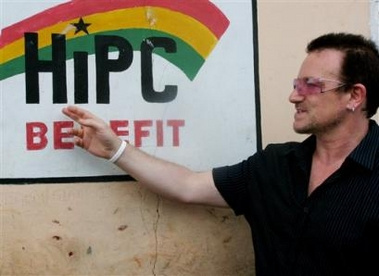
The HIPC Initiative focused on ensuring that no poor country face a debt burden it could not manage.
The initiative which was launched in 1996 by the IMF and the World Bank Group had Ghana joining in July 2001 and after three years of working with the Bretton Woods institutions and the African Development Bank to implement the HIPC initiative, eventually, about $3.7 billion of the country’s debt were forgiven under the momentous program.
The country also benefitted from other debt relief and economic opportunities from some of its creditors as a result of opting to be declined HIPC.
A letter from the heart can easily be read with on the face, if government radically continues our national sins of excessive borrowing and spend at the current rate, the post-2020 general election economy will not be able to hide the negative impact of these actions.
As the electoral competition becomes more intense, political parties have also intensified their promises to Ghanaians of all walks of life.
Will our future government be in a position to fulfill its promises, if our creditor decides not to forgive our burden of debt?
Latest Stories
-
Skytrain Trial: Court rejects Ameyaw Ekumfi’s bid to halt proceedings
2 minutes -
Aggrieved Gold Coast customers petition Mahama over GH¢3.6bn outstanding payments
8 minutes -
ECG loses about 27% of electricity through technical, commercial losses – Engineer
9 minutes -
Declare foreign currency before checking in luggage – Customs cautions travellers
16 minutes -
State of emergency is no ‘magic wand’ for galamsey – Lands Ministry
21 minutes -
Bringing 10 bags of clothes as gifts? Customs explains when duties may apply
22 minutes -
Precious Mawunya-ko appointed PRO for 5th Praise Achievement Awards
25 minutes -
Don’t let poor English define your potential – Prisons Service DG to Ghanaians
26 minutes -
GRIDCo’s operating profit plunges 89% despite net profit surge in 2025
28 minutes -
IGP summons Volta Police Commander over alleged extortion of traders on Aflao–Accra route
29 minutes -
Amin Adam: Gold programme lost money despite 62.9% rise in prices
32 minutes -
Amin Adam challenges GoldBod’s GH¢5.45bn surplus
41 minutes -
Ghana’s power sector losing 27% of electricity supplied – Electrical Engineer
45 minutes -
GH¢1.5m raised to renovate historic Wa Naa’s Palace
48 minutes -
‘Still a work in progress’ – Eric Tinkler admits Kotoko have plenty to improve
49 minutes