

Audio By Carbonatix
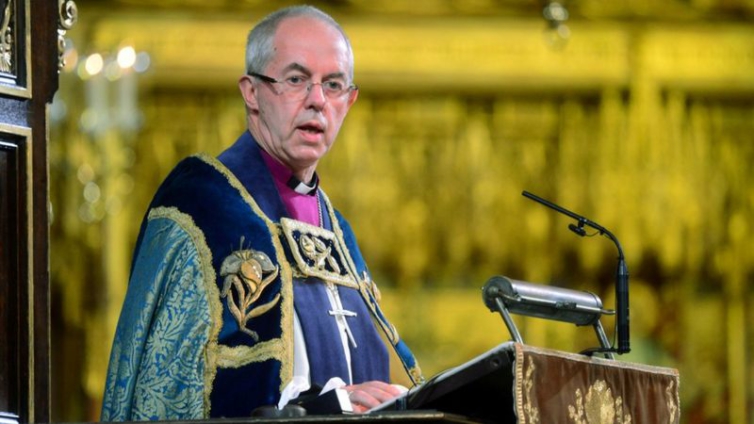
Archbishop of Canterbury Justin Welby has warned Boris Johnson against cutting the UK's overseas aid budget.
The government wants to reduce the annual spend from 0.7% of national income to 0.5%.
But Mr Welby said "helping the world's poorest is one of the great moral and ethical achievements of our country".
Archbishop of Canterbury: Justin Welby warns against foreign aid cut https://t.co/ao0myyacVQ
— Ursula Buston (@Ursulabuston) November 22, 2020
The archbishop, who will take a three-month sabbatical in May next year, said any recovery from the pandemic required "a global response".
"In his teaching, Jesus Christ tells us we mustn't limit our concept of neighbour simply to those close by to us. We need to heed that message in the tough times, as well as the good.
"Keeping our aid commitment is a strong signal that the UK is a reliable partner for long-term economic, social, environmental and educational advancement across the globe," the archbishop said.
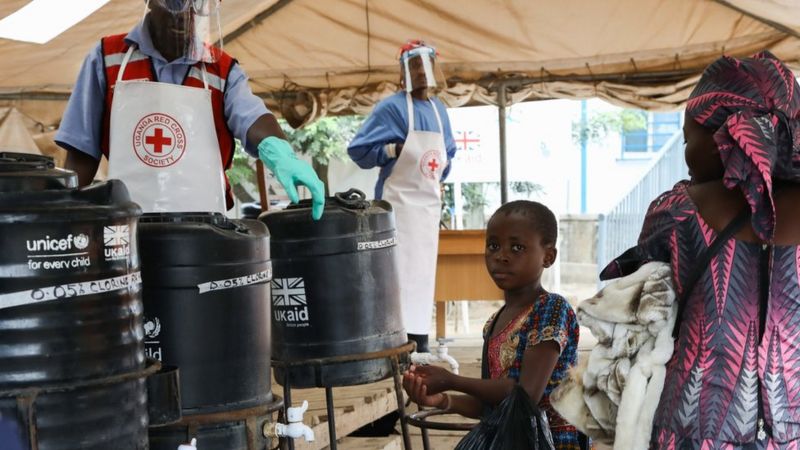
Reports earlier this week that the government was considering cutting £4bn from the overseas aid budget have met strong resistance.
In recent days, 185 charities, two former prime ministers, opposition parties and senior Tories have all urged the government to think again.
Microsoft founder Bill Gates is the latest public figure to call on the British government to protect the foreign aid budget at next week's spending review.
"It's never made less sense to cut foreign aid than right now," said the billionaire philanthropist.
"Covid-19 has reminded us viruses don't respect border laws; they don't check your passport before entering your lungs. The only way the UK - or any country - will be free of this virus is if every country is.
"This is a moment when what's good for the world - and what's good for the UK - are exactly the same thing."
Spending on foreign aid is linked to the UK's national income - its GDP - which has been badly impacted by the pandemic.
The government has already announced a £2.9bn cut from the budget for the rest of 2020 in order to avoid over-shooting the 0.7% target.
The 0.7% target, initially proposed by the United Nations in the 1970s, was first adopted in the UK by Tony Blair's Labour government in 2005. However, it was not actually reached until 2013 - under the coalition government, led by David Cameron.
Latest Stories
-
Mahama urges African governments to treat healthcare as an investment, not budget cost
34 minutes -
Bawumia congratulates John Boadu and new NPP executives, pledges support ahead of 2028
35 minutes -
‘No talent should be left out’ – Bawumia pledges inclusive NPP campaign for 2028
41 minutes -
Prof. Mike Oquaye recounts how he blocked Special Prosecutor’s attempt to arrest Bawku Central MP
57 minutes -
Make health sovereignty a priority for Africa – Mahama
1 hour -
Dorimon Naa, Wa West DCE lead massive clean-up exercise; threaten sanctions against recalcitrant residents
1 hour -
Photos From Adom FM Y2K Jam
1 hour -
Praye Tiatia steals the show at Adom FM Y2K Jam [Watch]
2 hours -
Boakye Agyarko congratulates John Boadu, pledges support for NPP leadership
2 hours -
Antwi HiMight thrills fans with Antwi ne Antwi hits at Adom FM’s Y2K Jam [Video]
2 hours -
Amb. Edward Boateng congratulates Boadu, Kodua on election wins
2 hours -
John Boadu pledges to rebuild NPP from grassroots and restore ‘winning machinery’
2 hours -
Ashaiman Assembly deploys monitoring system to curb dumping in storm drain
3 hours -
John Boadu must rebuild, unite NPP for 2028 – Edward Boateng
3 hours -
Executive intimidation of opposition undermines separation of powers – Prof Oquaye
3 hours