


Audio By Carbonatix
Volunteers are to be recruited from today for a world-first study that will mix and match Covid-19 vaccines.
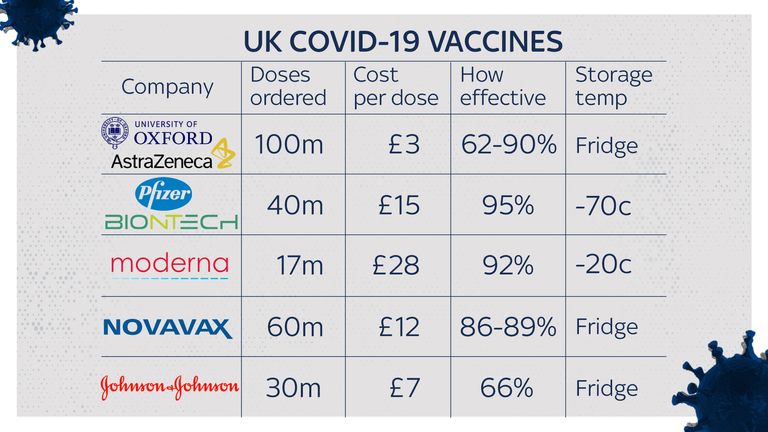
The trial on more than 800 people over the age of 50 will compare the effect of giving a dose of the AstraZeneca/Oxford vaccine followed a few weeks later by the Pfizer/BioNTech jab or vice versa.
The interval between the doses will be either four or 12 weeks to test whether giving the immune response a longer time to mature can improve the result.
Initial results should be available by the summer.
Professor Matthew Snape, a vaccinologist at Oxford University and part of the Oxford vaccine team, said the ability to use different jabs would guard against any supply problems.
He said: "If we do show that these vaccines can be used interchangeably in the same schedule this will greatly increase the flexibility of vaccine delivery, and could provide clues as to how to increase the breadth of protection against new virus strains."
The study, run by the National Immunisation Schedule Evaluation Consortium (NISEC), will be run at eight hospital centres around England. Volunteers will be recruited over the next two to three weeks through the Covid-19 Vaccine Research Registry.
They will have regular blood tests to assess their levels of antibodies and T-cells, which help to clear infections and act as an immune memory.
Further vaccines could also be added to the mix once they are approved by the medical regulator.
Minister for Covid-19 Vaccine Deployment Nadhim Zahawi said: "This is a hugely important clinical trial that will provide us with more vital evidence on the safety of these vaccines when used in different ways."
There are no current plans to alter the current vaccine schedule, which has a gap of up to 12 weeks between two doses of the same jab.
Dr Peter English, a consultant in communicable disease control at Public Health England, said: "Many vaccines work better if a different vaccine is used for boosting - an approach described as heterologous boosting.
"Examples include hepatitis B, where some people respond poorly to vaccination but better if a heterologous booster is given."
Latest Stories
-
GNFS launches 2026/27 National Anti-Bushfire campaign in Atebubu, records 62.8% reduction in bushfire cases
13 minutes -
I’ll vote for a female president; women are less likely to steal from the state – Okyeame Kwame
14 minutes -
More public education needed to stop vote-buying – Savannah Region MP
23 minutes -
Absa Bank commissions new head office, commits to strengthening operations in Ghana
26 minutes -
Republic Bank-JoyNews Habitat Fair clinic: Day 1 ends on positive note as patrons explore housing solutions at Junction Mall
29 minutes -
Vanderpuye: NDC welfare system needed to support former officials, cadres
34 minutes -
Chamber of Mines extends support to Akropong, Mampong Special Schools
37 minutes -
Tumu chiefs, MP back clearance of road corridor for Ghana-Burkina road corridor
42 minutes -
‘Democracy Is Not For Sale’: Monetisation of elections could lead to wrong people entering Parliament – UDS lecturer
52 minutes -
COCOBOD increases cocoa producer price to GH¢42,400 for 2026/27 season
56 minutes -
Atebubu College of Education receives GETFund boost after years of infrastructure neglect
58 minutes -
64 arrested over alleged unlawful possession of firearms at Achimota lounge
1 hour -
Savannah Regional Minister calls for clear rules to distinguish generosity from vote-buying
1 hour -
TOR secures 950,000 barrels of Sankofa crude from GNPC
1 hour -
NAGRAT calls for probe into alleged inflation of School Feeding enrolment figures
1 hour