

Audio By Carbonatix
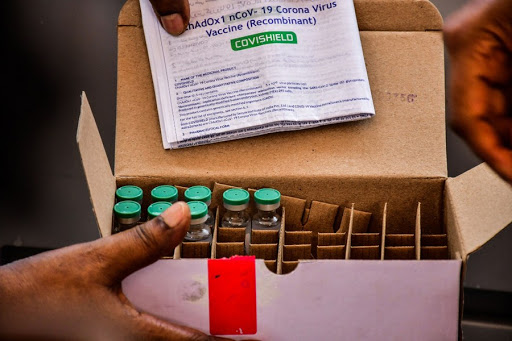
Pharmacist and Research Follow at the Ghana Center for Democratic Development (CDD-Ghana), Kwame Sarpong Asiedu says reports suggesting AstraZeneca vaccine causes blood clotting should be disregarded.
A cross-section of Ghanaians has raised concerns following news from Denmark that the AstraZeneca vaccine had caused blood clotting after vaccination leading to the death of some people.
Subsequently, countries such as Thailand delayed rolling out the AstraZeneca vaccine.
But, speaking on Joy News' Newsfile Saturday, Kwame Sarpong Asiedu said there is no evidence that shows any correlation to the claim.
According to him, a possible cause of blood clotting may be a breach of tissue during the administration of the vaccine.
“There has been no causal relationship that it is the vaccine that is triggering it, it’s rather the procedure of breaching the tissue that is triggering it.
“Once you inject the muscle, you are going to cause clotting irregularities because you’ve breached a tissue,” he explained.
He, therefore, encouraged Ghanaians to accept the opportunity to get vaccinated against the virus.
He added, “this adverse effect has been reported by all the vaccine developers including NOVAX, but in very few patients.”
The Pharmacist observed that regulators of the European Union are very sensitive to anything around the AstraZeneca vaccine, a reason Denmark had to pause vaccination for investigation following the report.
“Then suddenly, the press globally, without understanding the what goes on in the movement of drugs in international corners when it comes to biological agents, picked on it and started reporting that there had been a death.”
Mr Sarpong Asiedu stressed that the European Regulatory Authority had also stated that, “there was no causal relationship established then the Medicines and Health Products Regulatory Authority also issues a statement.”
According to him, there have been about 420 million first doses of vaccines given across the world, out of which 109 million is from AstraZeneca.
He, however, observed that “so far, severe adverse effects for the AstraZeneca vaccine is 0.00027 per cent, so 2 times 10 to the power negative 6 per cent.”
Latest Stories
-
Mustapha Hamid misses out on NPP Vice Chairmanship by 31 votes despite early poll lead
6 minutes -
Kojo Bamba, Henry Nana Boakye and Nana Akomea elected NPP Vice Chairmen
52 minutes -
From Delta Force to NPP First Vice Chairman – Kojo Bamba’s political journey
57 minutes -
Police restore calm at Larteh following Odwira festival disturbance
2 hours -
‘All the camps will dissolve’ – Bawumia demands one NPP for 2028
2 hours -
There is no time to waste – Bawumia orders NPP to begin 2028 work
2 hours -
Sarkodie visits MobileMoney Fintech LTD
2 hours -
John Boadu unveils new NPP strategy to win back youth and modernise party
2 hours -
Hawa Koomson elected NPP National Women’s Organiser
2 hours -
John Boadu begins NPP rebuild from grassroots ahead of 2028 election
2 hours -
Titus Glover wins NPP National Organiser race on second attempt
2 hours -
Winning 2028 election won’t be easy; we must work harder – Bawumia
2 hours -
You’ll be part of 2028 campaign; there’s enough work for all of us – Bawumia to NPP aspirants
2 hours -
John Boadu moves to unite NPP after heated leadership contest
2 hours -
Today is not a day of victory but a day of responsibility and great unity – John Boadu
2 hours