

Audio By Carbonatix
The human papillomavirus, or HPV, vaccine is cutting cases of cervical cancer by nearly 90%, the first real-world data shows.
Cancer Research UK described the findings as "historic", and said it showed the vaccine was saving lives.
Nearly all cervical cancers are caused by viruses, and the hope is vaccination could almost eliminate the disease.
The researchers said the success meant those who were vaccinated may need far fewer cervical smear tests too.
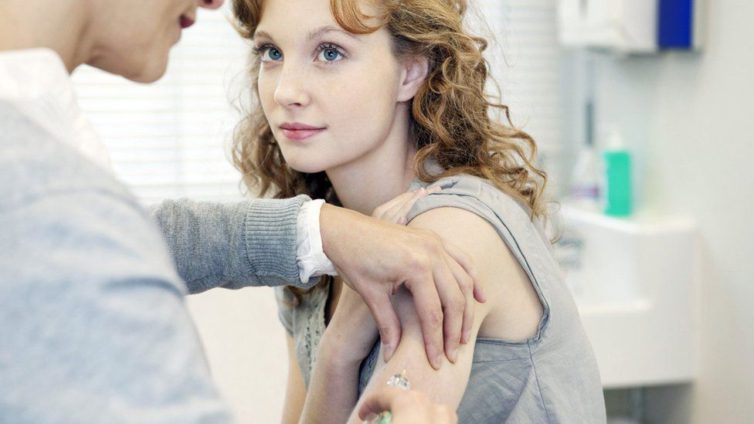
Girls are offered the vaccine between the ages of 11 and 13, depending on where they live in the UK. The vaccine has also been offered to boys since 2019.
The study, published in the Lancet, looked at what happened after the vaccine was introduced for girls in England in 2008.
Those pupils are now adults in their 20s. The study showed a reduction in both pre-cancerous growths and an 87% reduction in cervical cancer.
"The impact has been huge," said Prof Peter Sasieni, one of the researchers at King's College London.
The reductions were less dramatic when older teenagers were immunised as part of a catch-up campaign. This is because fewer older teenagers decided to have the jab and ideally it needs to be given before they became sexually active.
Overall, the study estimates the HPV programme has prevented about 450 cancers and 17,200 pre-cancers.
Prof Sasieni says that is "just the tip of the iceberg" because those vaccinated are still young to be getting cancer, so the numbers will only grow with time.
Screening
At the moment, women are invited for a smear test every three to five years to screen for cervical cancer.
But Prof Sasieni says there "definitely" needs to be a rethink after these results.
He told me: "It should be a wake-up call to policy-makers, women will read this and think 'why should I go for screening?'.
"I would hope we'd come back with a new screening programme, two to three times a lifetime and continue screening women who have not been vaccinated."
This is not the final say on the HPV vaccination. There are still questions about how long protection lasts and whether there needs to be a mid-life booster.
There are also more than 100 types of human papillomavirus.
The UK started using a vaccine that protected against two of them and is about to introduce one that protects against nine viruses, including the main causes of genital warts.
The cancer-causing versions lead to dangerous changes to the DNA of infected cells that transform them into cancer.
This can happen in any infected tissue. The viruses can be spread through vaginal, oral, and anal sex, so are also linked to anus, penis and some head and neck cancers.
However, 99% of cervical cancers are caused by human papillomaviruses. It is why more than 100 countries have starting using the vaccine as part of World Health Organization plans to get close to eliminating cervical cancer.
Dr Vanessa Saliba, a consultant epidemiologist for the UK Health Security Agency, said the findings were "remarkable" and showed the vaccine "saves lives by dramatically reducing cervical cancer rates among women".
Michelle Mitchell, the chief executive at Cancer Research UK, said: "It's a historic moment to see the first study showing that the HPV vaccine has and will continue to protect thousands of women from developing cervical cancer."
Latest Stories
-
You sounded like an NDC official – Arthur Kennedy criticises Chief Justice over SOE comments
11 minutes -
Lands Minister inspects Ankobra, cites progress in galamsey fight
18 minutes -
GRA clarifies phone, laptop duty rules; number of items not automatic trigger
37 minutes -
2026 U20 WWC: GFA Prez Kurt Okraku visits Black Princesses in Poland ahead of opener against Ecuador on Sunday
40 minutes -
Ghanaian Coaches dominate Ghana Premier League 2026/27 dugouts
1 hour -
Black Maidens drawn against Nigeria, Togo and Niger in WAFU B U-17 Cup
1 hour -
GMTF Administrator hails NHIA boss on first anniversary
2 hours -
Today’s Front pages: Friday, September 4, 2026
2 hours -
From Kantamanto to the TEDx Stage: How waste became innovation
2 hours -
MMDCEs charged to ensure Landing Beach Committees do not sell premix fuel beyond approved prices
3 hours -
The Inconvenient Truth: Democracy does not fail in The Chamber, it fails in the Committee Room
4 hours -
There is absolutely nothing wrong with what the Chief Justice said
4 hours -
App launched to help Ghanaians verify prospective partners’ marital status before marriage
4 hours -
‘I have gone through a lot these past 2 days’ – A-Plus reveals after New Winneba violence
4 hours -
DBG takes GH¢2.5bn development funding beyond Accra as it pushes industrial transformation
4 hours