

Audio By Carbonatix
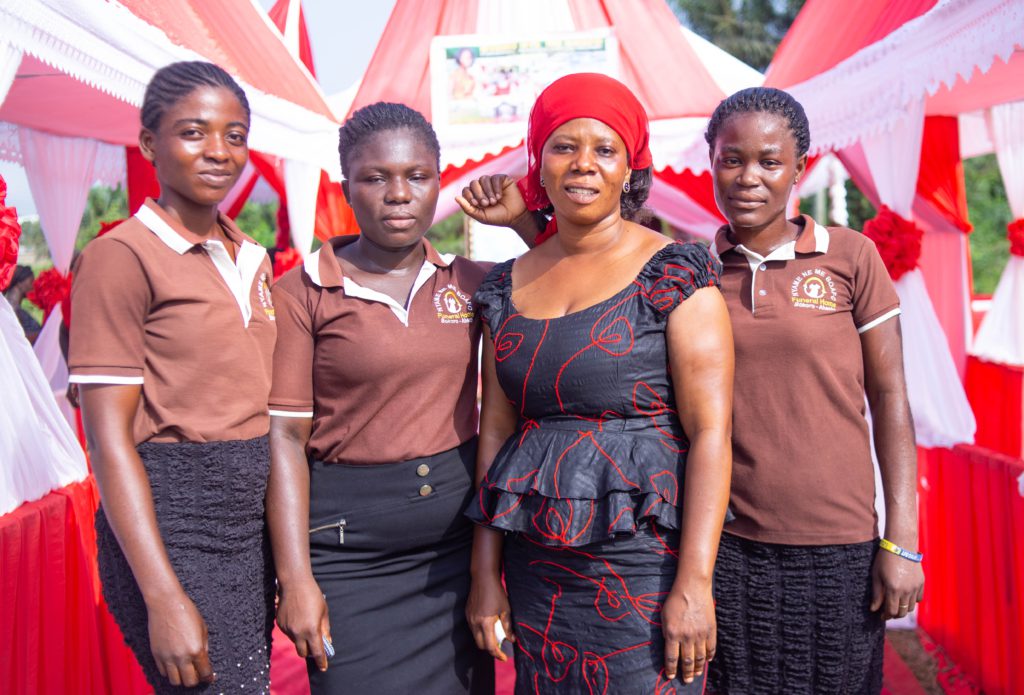
Elizabeth Faribah was only nineteen years when her grandmother died. It was the first time she saw a dead body being prepared for burial.
“I was the only person living with the woman and so her death hit me and when I saw the person who was preparing the body, I made a decision to also go into that profession,” she says.
She grew up seeing her father, a carpenter of over two decades, make coffins. When she made the decision to become a mortician, her father was happy and paid for her to enroll with a master-apprentice.
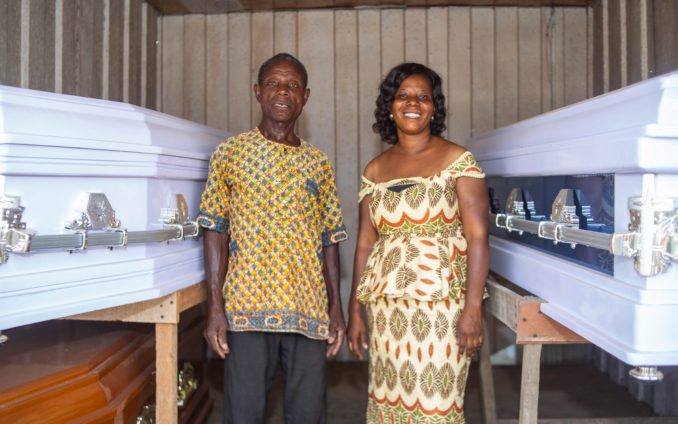
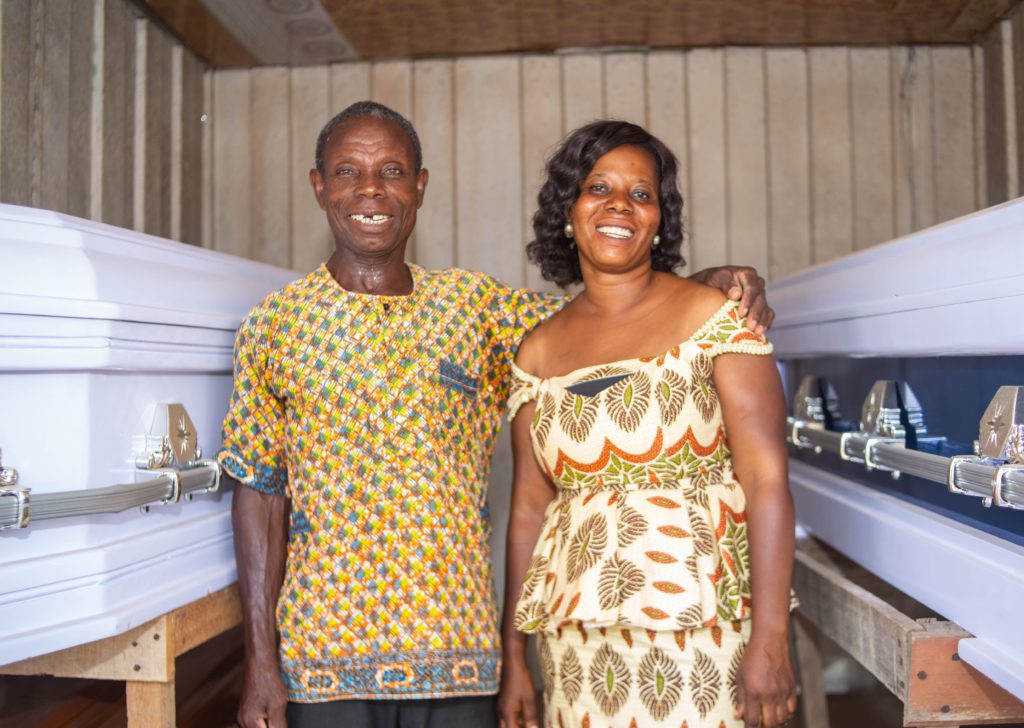
Elizabeth and her father, Egya Pitsir, live in Bokoro, a small town just on the outskirts of Takoradi- the western regional capital.
“I couldn’t go to school and learnt a trade in carpentry and so when my daughter brought the idea of being a mortician, I thought that would complement my job as coffin maker so I jumped on it,” says Egya Pitsir.
He says “in this world, you have to be smart”.
Elizabeth has now been doing this for more than ten years, charging an average of GHC1,000 for one corpse.
She is one of the most sought-after undertakers in her area, getting contracts to dress four different dead bodies on some weekends.
“I make like three coffins a week. Business booms because when you come to my daughter, you would definitely need a coffin too and if you do, my daughter will recommend me and we are in business,” says Egya Pitsir.
He works out of a small carpentry shop made with mud and roofed with tin aluminium sheets in the small community of Bokoro.
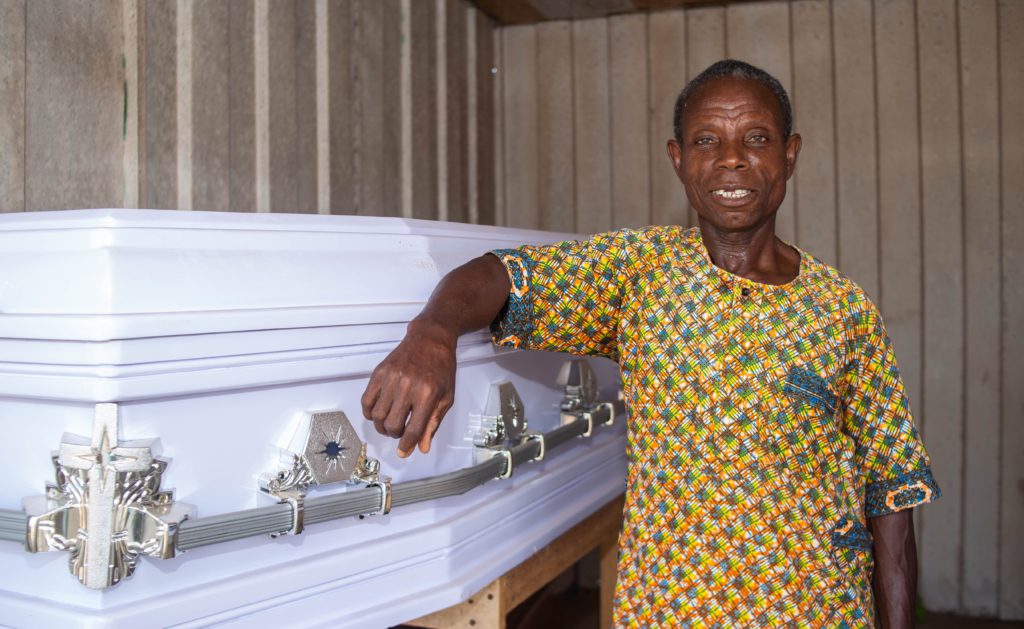
His, like many rural carpenters, is a basic workshop with some of the most ordinary tools like an old rig saw, hammers and tape measures.
“I built this myself. We grew up in a lot of poverty and it’s the reason why I couldn’t go to school. When I set out as a Carpenter, I had to take my destiny into my own hands and do everything for myself,” he says.
In a country where there still exists a superstitious belief in ghosts and life after death, working on dead bodies is a dreaded enterprise and not for the faint-hearted. I asked Elizabeth if she has had any scary moments in her journey so far. She shook her head and smiled.
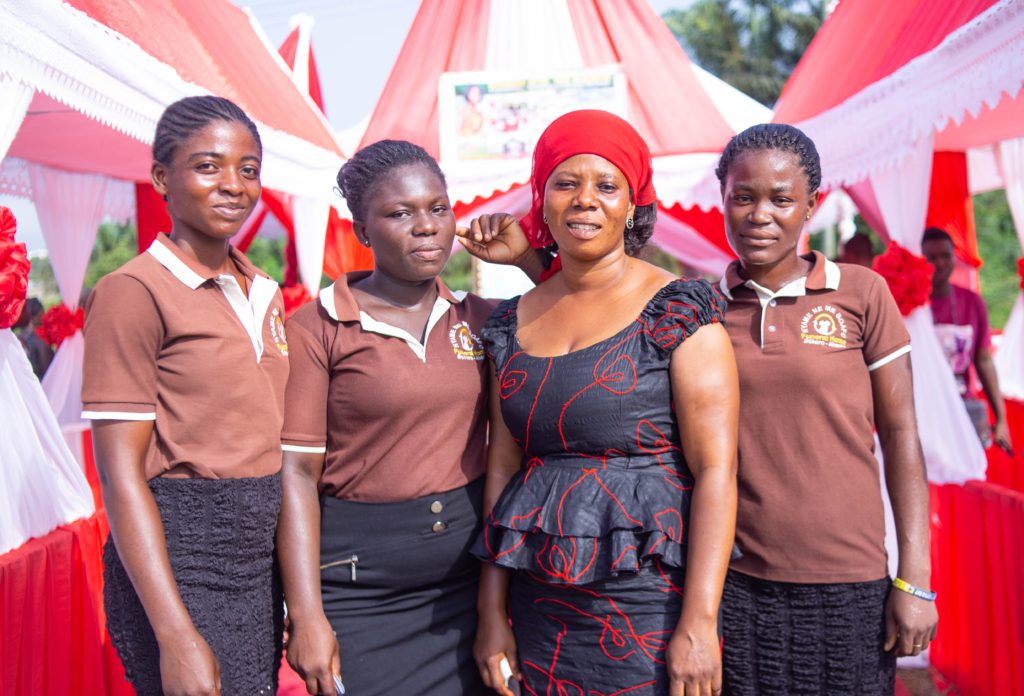
“There was one time we were preparing a body and trying to put on his dress. We were almost done. All of a sudden, the dead body open his mouth and yelled. I dropped the body and run away. It was a tormenting experience. I had to take a break from the job for about three months,” she says.
The few scary moments aside, Elizabeth says working on corpses is no big deal.
“Working on dead bodies is normal. It is just like working on normal humans. They are human beings who are sleeping,” she says.
On ghosts and whether she believed in them or had seen any before, working on corpses, she said “yes”. “Everything that has a name exists. There are times we would be working on a body and you can feel certain sense of heaviness around you. You can feel that the person who is dead has come around and looking over all the people crying around his body. It is so real you can touch the person sometimes.
The scary nature of the job means that she even struggles to get apprentices and people to work with. “They come in and a few days later, they leave.”
She says there was one time, an elderly woman walked into her shop to tell her that if she dies, she wanted to be dressed in a particular ‘kaba’ dress. “The old woman looked at the styles I had displayed in my shop and showed me the one she wanted and walked away,” she says. One week later, “her children walked into my shop with that same woman’s picture and it struck me that this woman had come in to tell me the way she wanted her body to be dressed,” says Elizabeth.
The old woman had apparently died a month earlier. “Ghosts do exist,” she says with a wry smile.
Elizabeth and her father have had gigs to work at funerals of some popular individuals in the Takoradi area. A few weeks ago, the National leader of the 12 Apostles Church, Bishop Hackman IV died and she was hired. She brought her father too along to sell the family a coffin.
Big jobs like that make her want to do more. She has now gone beyond funerals and ventured into wedding and event décor and has more than 5 people learning from her.
Her father, Egya Pitsir too wants to expand his business beyond Takoradi. He has recently acquired a new showroom where he plans to display his coffins and plans on learning new ways of making modern coffins so he could target a bigger market.
“So do you pray for people to die so you can get work?” I asked.
“Everyone would die. I even can die anytime and when I do, I would need a coffin and someone to prepare my body for burial. So, I don’t pray for death but death will happen to everyone and when it does, people like me get work,” Elizabeth says.
“A fisherman going to sea prays that there would be fishes in the sea so he can get a catch, a mason prays for people to make money to build houses so he too can get called to work, so I also pray every day that someone dies so they can buy my coffin,” says Egya Pitsir.
Latest Stories
-
NPP UK branch calls for independent audit into gold purchasing operations and parliamentary probe
18 minutes -
Zanetor Agyeman-Rawlings pledges decisive action on climate change, galamsey and environmental degradation
23 minutes -
Bawumia was brainchild behind Domestic Gold Purchase Programme – Samuel Jinapor
24 minutes -
Fuel prices set to go up from September 1, Petrol to sell at GHC 16.69 and Diesel, GHC 17.90 – COMAC
26 minutes -
Our World Our People withdrawn due to curriculum duplication, not politics – Adutwum’s spokesperson
29 minutes -
GANRAP is essentially a rebranding of Domestic Gold Purchase Programme – Abu Jinapor
36 minutes -
I am tired of being in opposition, my goal is to win in 2028 – Boakye Agyarko
46 minutes -
Ghana’s road maintenance funding gap deepens as only 37% of needs met – World Bank
46 minutes -
Roland Europe Group appoints Opoku Sanaa as Head of Sales, Middle East & Africa
48 minutes -
Sammyflex TV’s Roland Amartey girds up for 2026 Ghana Music Awards UK coverage
1 hour -
U.S. bank queried payments for Ghana ambassador’s residence renovated by company owned by embassy’s IT officer
1 hour -
GoldBod to generate US$1.4bn in FX in September
2 hours -
GAF 2026/2027 enlistment opens September 3 for degree holders
2 hours -
Reparatory justice: Mahama announces high-level UN side event in September
2 hours -
Bosome Freho Assembly invests first tranche Common Fund in water and education projects for 19 rural communities
2 hours