

Audio By Carbonatix
I recently came across a post while roaming the virtual streets of Facebook, and it quietly stirred something that has long troubled me, an issue I consider not just cultural drift but a growing national problem.
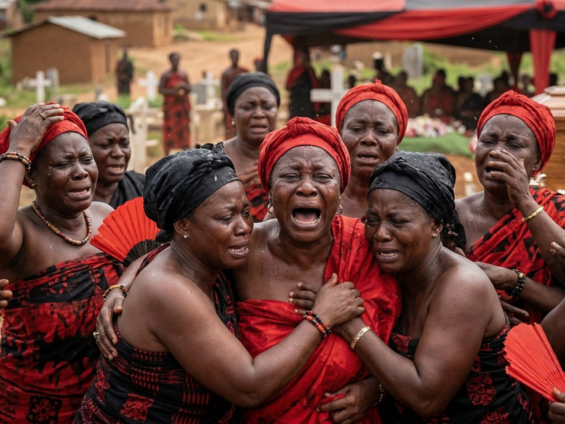
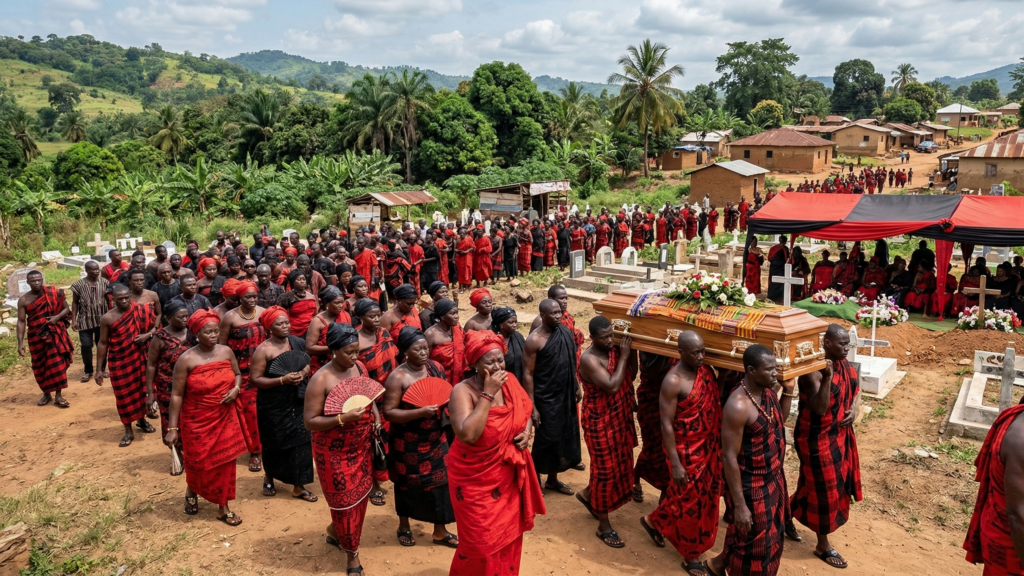
It was a post about funerals that were once simple and communal becoming costly spectacles that shift the burden from the community to grieving families. This observation is not nostalgia.
It is an alarm bell for social, economic and moral harm that is loudly playing out across Ghana and beyond.
Funerals in our communities were once protective rituals where relatives cooked and neighbours showed up. The bereaved were given space to mourn without logistical or financial pressure.
Grief was heavy enough and the community understood that.
Funerals in our communities used to be a protective ritual where relatives cooked, neighbours helped, and the bereaved were allowed space to mourn without logistical or financial pressure. Grief was heavy enough, and the community understood that.
Today, many funerals are staged as events that require sound systems, branded t-shirts, catering contracts, entertainers, souvenirs, elaborate coffins and curated aesthetics. What was once solemn has become performative.
The numbers are not insignificant. Studies and field reports show that funeral costs in major Ghanaian regions can run into thousands of cedis, with mid-level ceremonies often rivaling or exceeding the annual income of ordinary households.
For many families, the result is debt, asset sales, strained relationships and emotional stress at a time when compassion should be the priority.
How did we get here?
We didn’t get here by accident; several forces converged to bring us here.
Social media amplified spectacle and created templates that quickly became aspirational standards.
Once a few extravagant ceremonies went viral, the bar was raised for everyone.
Commercial interests also expanded. Event planners, caterers, decorators, videographers and fashion vendors built thriving businesses around funerals. An entire economy formed around mourning.
Layered onto this is status competition and fear of gossip. Families feel compelled to prove love and respect through expenditure.
The market sets expectations, and expectations harden into social obligation with consequences that are corrosive.
Families borrow at high interest rates, sell land, or take risky loans to finance burial ceremonies. Households that should be supported by community solidarity instead become financially exposed.
The funeral economy does create jobs and income, but it also traps vulnerable families in cycles of spending they cannot sustain.
In short, the ritual that should console has become a liability for the living.
This is not a call to erase cultural expression. Many communities genuinely celebrate life with music and dance as part of their belief systems.
The problem arises when celebration becomes coercion, where grief is monetised, when families face quiet shame for choosing simplicity, and when dignity is replaced with display.
The line between meaningful ceremony and enforced spectacle is where we must intervene.
Practical steps forward
- Reclaim cultural norms through leadership: Traditional councils, religious bodies and funeral committees must publicly restate expectations that protect grieving families. When respected leaders normalise modesty, behaviour shifts.
- Create communal safety nets: Community kitchens, emergency burial funds and structured support systems can reduce financial strain. Churches, civic groups and municipalities can lead this effort.
- Encourage modest funeral wishes: Individuals should be empowered to declare simple burial preferences in advance. Families must feel supported in honouring those wishes without external pressure.
- Discourage predatory finance: Policymakers and community leaders should challenge lenders who target grieving households. Transparency in funeral pricing must be standard practice.
- Engage the funeral industry responsibly: Businesses within the funeral ecosystem can offer affordable packages and clear pricing. Profit should not depend on emotional vulnerability.
- Shift media incentives: Bloggers and influencers should resist glamourising excess. Responsible storytelling can gradually reshape expectations.
At its core, this conversation is about values. When a household loses someone, our first duty is care. Bring food, offer help, and sit in silence, for presence matters more than spectacle.
If we truly honour the dead, we must stop punishing the living.
This is a call to restore dignity to mourning, to make grief a sacred pause rather than a competitive display and to protect families from financial harm disguised as cultural obligation.
We can preserve tradition, we can preserve creativity, but we must also preserve compassion.
That balance is not sentimental; it is necessary.
About the author
Amelley Djosu is a creative industry advocate, marketing communications strategist and journalist whose work interrogates the intersection of culture, business and society. She offers sharp, balanced insights that shape conversations in Ghana’s creative and cultural space.
Latest Stories
-
President Mahama ends Resetting Ghana tour of Ahafo Region
3 minutes -
African negotiators seek delivery of climate commitments at COP31
4 minutes -
BoG develops AI rules for financial sector
6 minutes -
‘Big Push’: Government assures contractors of prompt payments
10 minutes -
Court fines miner for breaking into gold buying shop
20 minutes -
Tarkwa court jails labourer for three years over GH¢123,000 theft
1 hour -
GAEC must retain nuclear scientists for Ghana’s nuclear ambitions – Minister
2 hours -
Man reportedly mistaken for game and shot by hunter dead in forest
2 hours -
19-year-old mason jailed 15 years for defiling seven-year-old pupil
2 hours -
Ghana’s banking sector assets rise 20.47% to GH¢500.2bn – BoG Governor
2 hours -
22 injured as Sprinter bus overturns at Sege after tyre burst
2 hours -
UN housing expert urges Ghana to strengthen Rent Control Department amid housing affordability concerns
2 hours -
Delta-BCI partnership reaches 166,000 people with breast cancer education
2 hours -
Power restoration fault suspected in Kumasi Central Market fire
7 hours -
The 7-foot giant of Ngleshie Amanfro: Seven-foot Ghanaian Ephraim Saawa dreams of joining the national basketball team
8 hours