

Audio By Carbonatix
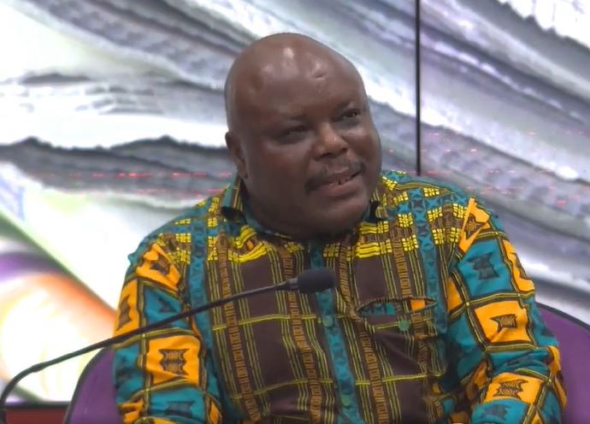
Minister for Public Enterprises, Joseph Cudjoe, has clarified why State-Owned Enterprises recorded losses in 2020.
Speaking on Joy FM’s Super Morning Show, on Wednesday, February 2, 2022, he explained that State-Owned Enterprises (SOEs) could not generate enough revenue due to the Covid-19 pandemic but had to pay salaries of their workers.
“What happened is what all of us know. Remember that in 2019 there was no Covid-19. In 2020, however, there was Covid-19. Enterprises perform in an economic environment so if 2019 was not a Covid year and [SOEs were operating normally and paying their staff that cannot be said of 2020 which was a Covid year],” he said.
According to the maiden edition of the State Ownership Report, SOEs and Joint Venture Companies (JVCs) reported net losses of GH¢1,375.33 million and GH¢2,341.37 million respectively in 2019.
However, the SOEs reported a ¢5.3 billion loss in their operations in the 2020 fiscal year, according to the Finance Ministry.
Asked by hosts Kojo Yankson and Winston Amoah why there was such significant increase in the losses within a one year period, the Minister stated that in 2020, when Covid-19 was having a ravaging impact on businesses, private-owned enterprises adopted various mechanisms to cut down cost, but, State-Owned Enterprises could not do same since they operate in the interest of the public.
”There are some companies that halved salaries to survive and some that even laid-off workers. Ghana's government didn’t do all these things. No public sector worker was sacked and public enterprises did not pay half salaries,” he said.
This he said significantly affected revenue generation.
"So they were operating in an environment where they were not having the opportunity to generate revenue as much as they would, but were paying salaries and were incurring all the utility cost. State enterprises didn't take the same actions because the state has a responsibility to ensure the welfare of our own citizenry as per our own constitution.
"The Public sector worker who was being paid, then, for the state to absorb the losses, may have been beneficial to somebody else who may have been sacked from the private sector. So if the state had joined the private sector action of downsizing, sacking, halving salaries, what would have been the conversation? But I'm saying all these things to explain that the jump in the losses reported is just as a result of these actions SOEs couldn't have taken," he said.
Latest Stories
-
Kodua dismisses rift fears, says he and John Boadu are focused on NPP victory
48 minutes -
‘There is no competition’ – Justin Kodua confident of NPP General Secretary re-election
2 hours -
J100 Accra Doubles Champions : Kolesolva/ Ndukwa, Agarwal/Patel seal title victories
2 hours -
Sydney Wright crowned J100 Accra Champion
2 hours -
J100 Accra Boys’ Singles: Verma denies Beckles back-to-back titles to claim crown
2 hours -
Two friends fined GH¢12,000 for stealing
2 hours -
Son jailed for threatening to stab mother
3 hours -
Drive constitutional reform – GJA urges journalists
3 hours -
NPP Delagates Congress: Confusion delays voting at Ashanti Region TESCON centre
4 hours -
Fire ravages shops, houses near Koforidua Central Police Station
4 hours -
NPP Delegates conference: The wisdom of the masses will prevail – Napo
5 hours -
Flydubai co-pilot attacked captain with axe, UAE official says
5 hours -
NPP Bosome Freho Constituency Chairman reportedly arrested over ballot paper incident
5 hours -
Medical plane with 6 on board missing off Massachusetts coast
5 hours -
Bolt driver jailed 25 years for robbing beautician
5 hours