

Audio By Carbonatix
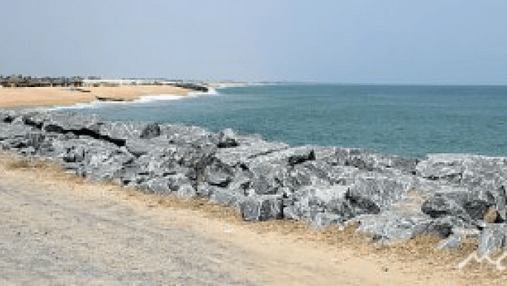
The Director of the Institute for Environment and Sanitation Studies at the University of Ghana has urged government to reconsider appropriate ways to deal with coastal erosions and the menace of tidal waves in parts of the country.
Prof Kwasi Appeaning Addo says more concerted efforts must be made to ensure the menace is brought under control.
Speaking on Joy FM’s Super Morning Show, on Monday, noted that engineering solutions over the years have proven to be ineffective; hence, the need to adopt a nature-based solution to deal with the phenomenon.
“The immediate solution is to relocate the people because we can’t afford to lose people but also we need to have a long-term plan. The long-term natural solution is to bring back the mangroves that we have overharvested.
"These vegetations play a key role in fighting the erosion that we experience. So we need to make a conscious effort to bring back these natural vegetations,” he emphasised.
He said this on the back of Sunday’s tidal wave which swept properties worth thousands of cedis and left many residents displaced in the Ketu South Municipality of the Volta Region. Fortunately, no life was lost.
Following this disaster and previous ones, there have been incessant calls on the government, especially from residents to hasten processes aimed at the construction of a sea defence wall.
However, Prof Kwasi Appeaning Addo believes a sea defence is not the best solution to deal with the tidal waves. According to him, this only compounds the problem.
“We have a very beautiful Keta Sea Defence which has worked beautifully but the truth is we just transferred the problem from Keta to the downgrade coasts. That is why we now have huge erosion problems around Blekusu and moving down to the Eastern side getting to the border with Togo.
“So engineering has never been the best solution. It gives you an immediate solution, but it does not help in the long term. That is why research has shown that we need to now manage erosion with nature because engineering cannot so we need to bring back nature and enhance the resilience of the natural ecosystem so as to be able to manage the hazards that we experience along the coast,” he said.
“You’ll realise that the fight against erosion is a fight you’ll never win because it’s a natural phenomenon so the language now is that we manage nature and how do we do that? Areas that we need to bring back our mangroves and our natural system, we have to so that we allow the natural system to evolve,” he added.
“Moreover, we don’t have the resources to engineer all the coasts. More so, when we do that, maintenance is at a very high cost,” he said.
Latest Stories
-
JoyNews-Republic Bank Habitat Fair finale turns homeownership dreams into real possibilities
29 minutes -
Bamiri chief commissions KG block, guest house to boost education and revenue
46 minutes -
NSMQ 2026: Yaa Asantewaa Girls’ going ‘beck’ to Tanoso after Bishop Herman deals them early exit
1 hour -
Data Protection Commission acquires two vehicles to strengthen data protection enforcement
1 hour -
NSMQ 2026: Holy Child School storms back from two-year NSMQ absence to book One-Eighth ticket
3 hours -
GNFS dismisses reports of unpaid 2025 rent allowance
4 hours -
Gordon Asare-Bediako steps down from NPP Communications Director race, backs Dennis Aboagye
4 hours -
GES dismisses requirement for newly promoted teachers to submit documents for salary adjustments
4 hours -
Meko Bono 2026: Vice President pledges agricultural revival as Atebubu hosts grand homecoming
5 hours -
Russian skydiver Sergey Boytcov sets world record with 11,551-metre stratosphere jump
5 hours -
Ablakwa-led committee submits five reports to Mahama ahead of 2027 AU chairmanship
5 hours -
Africa not seeking Western cash in reparations campaign – Ablakwa
6 hours -
Production decline, reserve depletion threaten Ghana’s upstream sector – Jinapor
6 hours -
Surveyors caution against treating compensation disputes as professional misconduct
6 hours -
Mahama calls for AU dialogue on migration after South Africa xenophobic tensions
6 hours