

Audio By Carbonatix
In the 2020/21 Women’s Entrepreneurship Report: “Thriving through Crisis”, the Global Entrepreneurship Monitor found that globally 30.2% of women entrepreneurs surveyed are expected to hire six or more employees in the next five years. It is indicated that women typically re-invest 90% of their income in education, health and nutrition for their family and community. For this reason, it is crucial that women have a meaningful and tangible part in Africa's economic development.
At the moment, an estimated US$42bn financing gap exists for African women across business value chains - US$15.6bn in agriculture alone - and if we cannot empower African women entrepreneurs and get them involved in supply chains, we will be doing the continent a disservice.
Make no mistake, the entrepreneurial spirit exists among women in Africa. More than 50% of the entrepreneurs in Africa are women but 70% of economically active women are in the informal sector, with limited access to financial services.
According to Diariétou Gaye, World Bank Director of Strategy and Operations for the Africa Region, female entrepreneurs tend to confine themselves to the traditionally female sectors, not because of a lack of skills or access to capital, but rather a lack of information. Many of these women, therefore, end up trading out of necessity in the informal sector and entering the world of entrepreneurship through retail – although not all of them.
When we look at a list of successful Entrepreneurs in Africa (like the Forbes 30 under 30 list or the Quartz Africa Innovation leaders list) it is evident that women are striving to thrive by building notable businesses with turnovers exceeding US$1m per annum. In recent years, Africa has witnessed an increase in women-owned businesses in fields such as aviation, fashion, farming, IT, mining, manufacturing, oil, and more.
The challenge, however, remains: How can we get these women upskilled to be included in the supply chain to build capacity in the African market?
At Absa Bank, we believe the answer lies within the framework of the following components:
- Raising awareness through education and providing access to supply chain opportunities
- Policies that support preferential procurement from women-owned businesses
Visibility and access to market opportunities in corporate supply chains for women entrepreneurs is an important departure point. Large corporates should do more to educate women in Africa on supply chain opportunities and how they can access them.
The Absa Young Africa Works Programme, for example, reflects a concerted effort by Absa to reach and empower female entrepreneurs across a wide spectrum of sectors in Ghana. The programme is a collaboration between Absa Bank Ghana and the Mastercard Foundation to deliver requisite resources such as funding, training, access to industry experts and access to players along the value chain to help scale up micro, small or medium-scale businesses.
Absa has noted that women are better at servicing debt than their male counterparts, and hence they have put together a product with better rates to accommodate these female business owners. The initiative will provide capacity building skills to 5,000 trained women-led MSMEs, who will, in turn, employ about 10 people by 2025. In all, a total of 50,000 jobs are expected to be delivered from the Young Africa Works programme by 2025.
Other companies across Africa are also actively engaged in similar ventures. In the telecoms sector, for example, Safaricom, a listed Kenyan mobile network operator is leading a mission called “Transform lives,” which seeks to provide capacity building skills to women-owned businesses while reducing inequality by increasing the procurement spending to women-owned businesses to 10% of total procurement spend in the East African country.
Another programme that supports this is the Affirmative Finance Action for Women in Africa (AFAWA). It’s a pan-African initiative by the African Development Bank Group, to bridge the US$42bn financing gap facing women in Africa. AFAWA adopts a holistic approach through three pillars: finance, technical assistance, and an enabling environment. AFAWA has entered into a partnership with the African Guarantee Fund (AGF) to unlock US$1.3 to US$2bn in loans to women-owned Small and Medium-Sized Enterprises(SMEs) in Africa, by working with financial institutions to enhance their ability to lend to women.
Alitheia IDF is another pioneering gender-lens fund focused on investing in scalable businesses to leverage the power of gender diversity for superior performance. Alitheia is a US$100m private equity fund that drives growth in African SMEs by leveraging gender-balanced businesses to generate high financial returns and social impact. They invest in sectors that engage a significant percentage of women, either as entrepreneurs, producers, distributors or consumers. Some of these sectors are Agribusiness, Consumer Goods, Health, Education, Creative Industries, and Financial and Business Services.
Empowering women addresses more than just the obvious sustainable development goals (SDGs). When put in motion it will: Reduce Poverty (SDG 1), contribute to zero hunger (SDG 2), reduce gender inequality (SDG 5), provide decent work and economic growth (SDG 8), reduce inequalities (SDG 10) and build sustainable cities and communities (SDG 11).
Absa Bank is a proud contributor to the success of women and the SDGs and I am cementing the twilight of this article with a call on all to celebrate women-owned businesses in Africa – but more specifically, the frontiers that empower and support these women. Here’s to those who move beyond talk and enable women to take a meaningful stake in the African economy.
*****
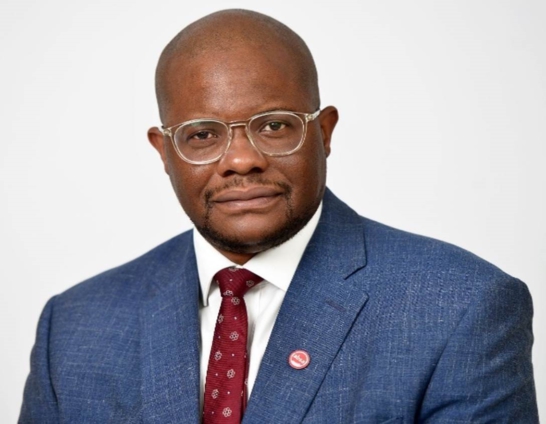
The writer is the Head of Enterprise and Supplier Development at Absa Bank, South Africa
Latest Stories
-
HTU partners Praise Export to boost student training, employability
2 minutes -
Samuel Abu Jinapor proposes independent body to fight galamsey
8 minutes -
Government moves to review Minerals and Mining Act to strengthen regulation
14 minutes -
Investors channel most funds into 364-day government securities
19 minutes -
Ghana is much safer this year than even 2025 – Interior Minister
25 minutes -
These allegations carry a lot of weight – Agalga concedes extortion claims are serious
26 minutes -
Opoku-Agyemang lauds peaceful co-existence, unity of Bono people
29 minutes -
$1.7bn gold loss is not a ‘cost of doing business’ – PAGA
29 minutes -
Gov’t, media must sustain partnership to safeguard Ghana’s democratic gains – Shamima
37 minutes -
Mahama congratulates newly elected Executive Presbytery of Assemblies of God, Ghana
42 minutes -
Work begins to reclaim Lafa basin to curb flooding in Mallam, Weija
48 minutes -
Mahama opens 28th AMCOA Conference
55 minutes -
Let there be a ceasefire – Agalga urges calm as extortion allegations rock Parliament
60 minutes -
Let’s satisfy everyone’s curiosity – Agalga backs early GoldBod probe
1 hour -
GoldBod is ready to account – Agalga defends Gold Board as calls for probe intensify
2 hours