

Audio By Carbonatix
With the right reform in our agricultural sector, we can grow the economy, create more jobs and attain food security. And while the government has and continues to achieve significant gains towards this vision, we can’t do it alone, but we need to ensure these partnerships are fit for purpose and make sense for the country.
An example of this is our partnership with AGRA, who has supported us to improve the enabling environment for smallholder farmers while delivering the technical, structural and reforms needed to help grow the agricultural sector.
AGRA arrived in Ghana in 2006, and during its first decade, it invested $12.8 million in our national agricultural sector. That this has borne fruit can be established by looking at some of the results of this investment.
The establishment of 11 seed companies has been supported, as was the development and release of 45 seed varieties of which 36 went on to be commercially developed. AGRA helped 20 people achieve PHDs and 27 to be awarded MSCs.
It trained 4,132 agricultural dealers, which meant the distances farmers had to travel to get access to inputs such as seeds and fertilizer were reduced. It educated 702,000 farmers on the techniques of Integrated Soil Fertility Management (ISFM), a process that mixes mineral and organic fertilizers and aims to maximize the utility of scarce nutrient resources.
As a result, 212,000 hectares have been cropped using ISFM technologies. AGRA’s intervention has resulted in 122,000 metric tonnes of harvests commercially gathered in, valued at $23 million.
AGRA contributed to the development and passage through the political process of regulations connected with the Plants and Fertiliser Act, a measure to ensure the efficient conduct of plant protection, to prevent the introduction and spread of plant pests and to regulate the import and facilitate the export of plants and plant materials.
It contributed also to Ghana’s National Fertiliser Policy and promoted the Seed (Certification and Standard) Regulation, which has been passed by Ghana’s Parliament.
All of this is of critical importance in a country where half the people reading this article work in agriculture. We cannot underestimate the challenge of enhancing a sector that accounts for more than half our gross domestic product.
AGRA’s initiatives are in no sense in competition with official Government policy. On the contrary, its work has been fully in line with the State’s two main programmes in this sector, the Food and Agriculture Sector Development Policy (FASDEP II) and the second phase of the Medium Term Agriculture Sector Investment Plan (METASIP II).
Like the Government, AGRA is committed to increasing incentives for private-sector investment in and participation in agriculture, while improving access for Ghanaian farmers to both finance and markets. We are both committed to encouraging the adoption of climate-smart technologies and the use of climate-adapted seeds and fertilisers.
AGRA has improved the incomes and the food security of at least $1.2 million smallholder households and has facilitated the development of a “smart subsidy” model to encourage the adoption of yield-enhancing technologies.
On the ground, 1,880 village-based advisers have been recruited and trained, and a partnership established to implement the National Rice Development Strategy, which aimed to increase the capacity of more than 128,000 farmers.
AGRA’s work takes it into many and complex areas, but its rationale is quite simple. It is to transform the working lives of primarily smallholder farmers, men and women typically cultivating staple crops on land measuring two hectares or less, by turning what had been a daily struggle to survive into a thriving small business. In this fine and praiseworthy endeavor, AGRA has been a true friend to Ghana.
****
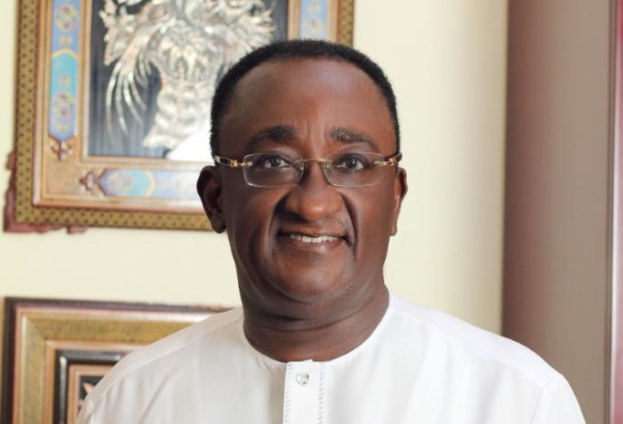
Dr Owusu Afriyie Akoto is Minister of Food and Agriculture in the Republic of Ghana.
Latest Stories
-
Zimbabwean author denies using AI to write award-winning story
2 minutes -
GTEC’s letter directing public universities to reopen by October 16 is unprofessional – GAUA
2 minutes -
Suspect in viral video assaulting wife jailed for 3 months
3 minutes -
GAUA insists strike will end only after Fair Wages addresses market premium issue
3 minutes -
Kpemka seeks compensation as he sues BOST over alleged unlawful termination
6 minutes -
GES asks applicants to check status of 2026 promotion applications on October 15
30 minutes -
Kobe Boujee joins Olympics.com team for Dakar 2026 Youth Olympic Games
38 minutes -
Slaty egret’s shifting nesting sites offer clues to changing ecosystems
45 minutes -
First phase of arrears for promoted teachers to be paid on Friday – Haruna Iddrisu announces
48 minutes -
Caveman Watches partners with Mfantsipim School for 150th anniversary
1 hour -
We’ll pursue GH¢15m defamation suit against Sammy Gyamfi to its logical conclusion – Afenyo-Markin’s lawyers
1 hour -
Martin Kpebu urges Afenyo-Markin not to return to court over Sammy Gyamfi lawsuit
1 hour -
GRA submits preliminary report on drug shipment case to Mahama – Commissioner-General
2 hours -
Sammy Gyamfi using ‘procedural roadblocks’ to dodge defamation case? – Afenyo-Markin’s lawyers
2 hours -
The illusion of a good deal: Why some everyday money-saving habits may be costing you more
2 hours