

Audio By Carbonatix
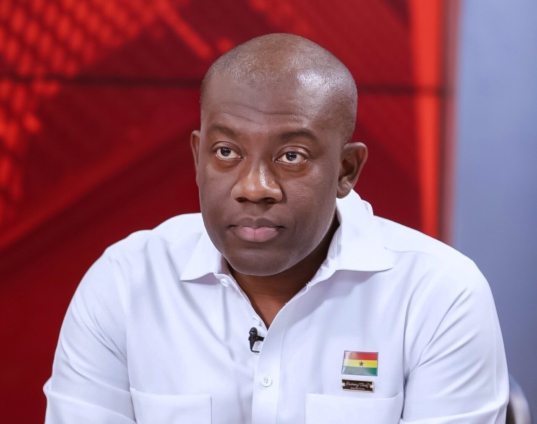
Information Minister, Kojo Oppong Nkrumah has explained some key measures government intends to adopt to improve the economy beyond seeking economic support from the International Monetary Fund (IMF).
In an interview on The Probe, Sunday, the Minister outlined the Balance of Payment (BOP) support, domestic resource mobilisation and extensive collaboration with industries and other private sector players as the measures likely to improve the country’s economy.
According to him, this trio will help the government to better respond to the current economic crisis as the IMF engagement happens on the sidelines.
“BOP support which is only a limited window of support for a particular purpose. Domestic resource mobilisation ensuring that we are able to move from just about 12 percent of GDP that we are contributing so that my brother can get his allowance.
“A broader economic challenge that also requires a deeper collaboration with industries and other private sector players who have some capital to find more space to operate and as they operate and there is more productivity we get back into the national curtain,” he said.
Responding to why government will not scrap the E-levy even if the IMF provides economic support, Kojo Oppong Nkrumah said government needs “to mobilise some more domestic resources” to respond to the economic crisis. Hence, not prudent for the government to scrap the levy.
Meanwhile, the Ofoase Ayirebi lawmaker says government is likely to receive about $2 billion from the International Monetary Fund (IMF) after deliberations on a specific support package are concluded.
He stated that considering Ghana’s quota and macroeconomic data, it is possible for the country to get that money to help shore up its reserves.
“Already, you recall that the Finance Minister initially indicated that there were arrangements to get about $2 billion, out of which there is $1 billion available. Parliament has to approve for us to receive so that the cedi does not depreciate further.
“We have a shore up of our reserves to be able to meet the liquidity and debt servicing obligations even as our domestic measures will get better. You have the window to start talking to the Fund.
“Today [Sunday, July 3], I saw a document that said looking at Ghana’s quota and our macroeconomic data, we could get anything, maybe around $2 billion to help shore up what we are looking for,” he told host, Emefa Apawu.
Latest Stories
-
Total expenditure as of July 2026 amounted to GH¢147.07bn, 16% below target – BoG
2 hours -
Total revenue & grants stood at GH¢144.5bn in July 2026, slightly below target – BoG
3 hours -
Ghana Sports Fund urges sports federations to submit credible proposals and measurable targets
3 hours -
Sally Rooney books withdrawn in UK over Palestine Action support
3 hours -
Musk says US government may be behind slowdown of Ukraine drone speeds
3 hours -
Picking Chief Justices nearing retirement could give Mahama immense power – Bentil
3 hours -
Netflix to shed 1,000 jobs in steepest cuts since 2022
4 hours -
Burnham had two hospitality dinners with Man City chairman, deleted records show
4 hours -
Semenyo ‘froze’ after alleged racist abuse, court told
4 hours -
‘Shameless’ – Mourinho critical of Vinicius Jr ban timing
4 hours -
Loyalty can outweigh competence in Chief Justice selection – Bentil
4 hours -
Man City suffer as PSG masterclass sets up Champions League win
5 hours -
Customer Service Africa CEO urges business leaders to observe staff and customer interactions
5 hours -
On night of mayhem for Liverpool, Barcola arrives in style
5 hours -
Muzic Mensah finds healing and renewed love in new single ‘WayƐ Late’
5 hours