

Audio By Carbonatix
During this year's United Nations (UNFCCC) 27th Conference of the Parties (COP 27) in Egypt, Ghana’s President Akufo-Addo has been teaming up with colleague African presidents to push rich countries who pollute the most to release the $100 billion in climate finance promised to poor countries to help them green their economies and adapt better to climate change.
The emphasis on an expedited release of billions of dollars to African economies both as reparations for loss and damage and as support to help Africa adapt to the inevitable effects of climate change however raises questions of accountability, transparency and the quality of governance. Africa has seen large flows of money for development purposes in the past that have been lost to corruption, poor policy design and mismanagement. How to prevent the new domain of “climate finance” from succumbing to old stereotypes?
Furthermore, African leaders are also busily using the climate talks to convince rich nations to continue investing in the continent’s fossil fuels, which they see as necessary to expand economies and boost electricity access. However, decades of investment in oil and gas have generally failed to deliver cheap and reliable electricity supply to Africa’s poorest consumers due to poor strategic choices, policy incoherence and outright corruption.
To probe these challenges, confusions and contradictions, a group of African think tanks and Civil Society Organisations (CSOs) convened by the Africa Centre for Energy Policy (ACEP) and the IMANI Center for Policy & Education (IMANI) held deliberations on the virtual sidelines of COP 27 on 9th November 2022. At the event, the partners launched a series of case studies intending to show how corruption, mismanagement and onerous offtake terms, have blunted the strategic flexibility of African governments by saddling them with mounting debts and poor response choices, in a time when rising energy costs are fuelling a cost of living crisis across the continent.
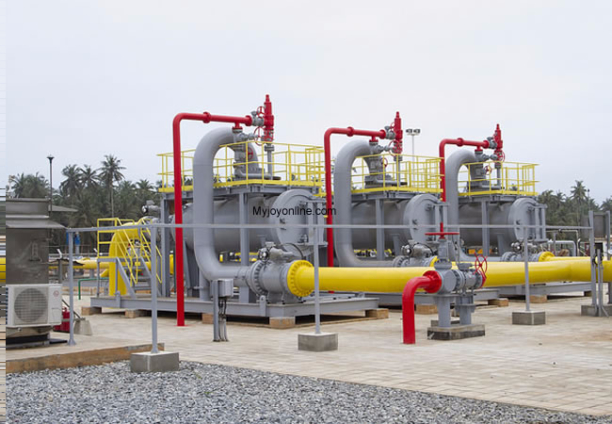
The first case study is presented in this short brief. It looks at Tema LNG Terminal (Tema LNG), a project led by Helios Investment Partners to import LNG into Ghana, supported by multiple development finance institutions.
The project was expected to start operations in 2020 but as at November 2022, it is still not online. Ghana’s national oil company, Ghana National Petroleum Corporation (GNPC), is committed to pursuing the project, despite officials admitting there is no demand for the gas. There are now serious doubts about the feasibility of the project even in 2023, or ever.
Tema LNG poses a major risk to the already strained finances of GNPC. Calculations by ACEP and IMANI suggest GNPC could be paying between $790 million - $1.357 billion a year (based on average 2022 Brent crude prices) for gas the country doesn’t need.
Whilst GNPC has contracted gas from the Tema LNG Terminal Company (TLTC) at more than $13/MMBtu in the current oil price environment, it is bound by regulation to on-sell the gas at $5.99/MMbtu to most power utilities in Ghana. Prices are even lower for opaquely-selected "strategic industries," which pay just $4.2/MMBTU for the gas. GNPC has even signed a contract to sell gas for as low as $2.79/MMBtu to Genser Energy Limited, an off-grid power supplier to Ghanaian gold mines, with plans for a further reduction to $1.72/MMBTU, on dubious pipeline-barter grounds.
Moreover, origins of the Tema LNG project in perverse bid-rigging and attendant procurement irregularities have heightened the corruption risk associated with the project.
Tema LNG is just one example of how mismanaged investments in gas and power capital projects in Ghana are financially crippling the country and failing to deliver affordable or reliable energy to consumers. Ghana’s power sector arrears, already in the billions of dollars, continue to mount. In November 2020, the ex-head of Ghana's Energy Commission estimated that the country was paying a combined $1.2bn annually for excess power capacity and gas supply it does not use.
These costly investments in oil and gas have been backed by the international community. Development finance institutions have spent at least US$2.8bn in direct project finance to support the development of upstream and downstream fossil fuel projects in Ghana since 2010. Meanwhile, Ghana’s vast renewable energy potential has generally been overlooked.
Ghana’s modern renewable generation capacity remains negligible, at less than 1% in 2020. This is despite renewable energy sources, such as solar, now being the cheapest form of energy in many parts of Africa, according to the International Energy Agency. Solar and similar renewable energy sources are in fact set to outcompete all other sources continent-wide by 2030.
In light of all the above, the Alliance of policy think tanks advocating for good governance to drive green growth in Africa proposes the following:
- A public release of all contracts, agreements, restated/amended agreements and constructive understandings entered into by GNPC, TLTC and all other actors connected in any commercial sense to the Tema LNG project.
- An immediate suspension of the Tema LNG project and a standstill arrangement in respect of all obligations of the Ghanaian state concerning the project.
- A complete renegotiation of the financial and commercial terms of the project to better reflect the current strategic situation in the global and domestic energy markets.
- A halt to further funding and financing for the project, particularly from DFIs, MDBs and international development agencies until a sound ESG framework is in place.
- An upgrade to the governance of the project and others like it by instituting a credible stakeholder participatory model and set of consultative practices.
Read the full brief here.
Africa Center for Energy Policy (ACEP) - www.acep.africa
IMANI Center for Policy & Education (IMANI) - www.imaniafrica.org
Latest Stories
-
UTAG-UG threatens strike on October 19 over unpaid allowance
2 minutes -
Let The Constitution direct Chieftaincy to deliver “All Development Is Local”
1 hour -
John Jinapor outlines renewable energy, nuclear power priorities for 2027
2 hours -
Ghana explores centre of excellence for hearing, communication and cochlear implant care
3 hours -
Schizophrenia-related disorders lead mental health cases recorded in Ghana
3 hours -
Dutch authorities enlist Ghana in hunt for fugitive drug lord Bolle Jos
3 hours -
Ghana housing finance conference adopts communiqué to improve affordable housing access
8 hours -
Special Initiatives Minister urges Wa Technical Institute to enrol more girls as EU-backed solar training lab opens
8 hours -
In the matter of my first year at the Bar
8 hours -
ActionAid Ghana calls for an end to child marriage, greater investment in girls’ rights
8 hours -
Newsfile to tackle World Cup visa scandal, beach demolitions, education strikes, BRICS bid
9 hours -
UK-Ghana Trade & Investment Summit: Trade Resource Centre to help businesses maximise UK-Ghana trade opportunities
9 hours -
Embassy of Denmark celebrates World Maritime Day
9 hours -
Linking LEAP to productive inclusion could cut extreme poverty by 2030 – UNICEF
10 hours -
Trade Ministry backs use of creative arts to rehabilitate prison inmates
10 hours