

Audio By Carbonatix
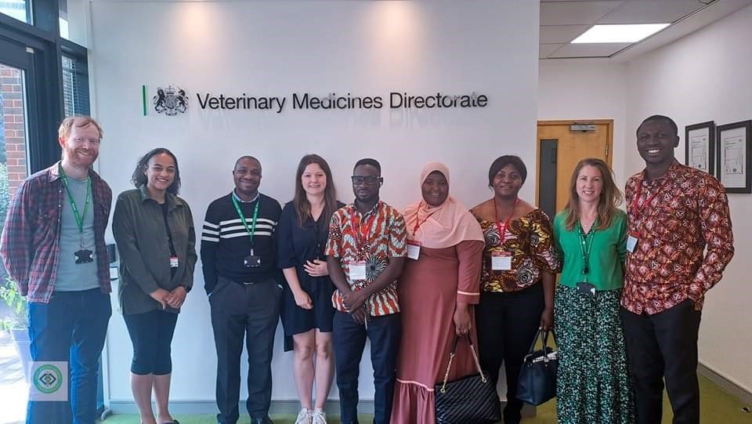
Four officers from the National Food Safety Laboratory (NFSL) under the Veterinary Services Directorate of the Ministry of Food and Agriculture, Ghana, have successfully undergone hands-on training in Salmonella serotyping in the UK.
This visit was facilitated through the Animal Health System Strengthening Project, an overseas development assistance initiative managed by the UK’s Department for Environment, Food and Rural Affairs.
The team included Dr. Benjamin Kissi Sasu, the Deputy Head of the Laboratory; Hawaha Korkor Ashong, the laboratory’s Quality Manager; Emmanuel Gameli Adzaworlu, a Technical Supervisor; and Lovelace Darko, a Veterinary Laboratory Technician. The team was hosted by the Animal and Plant Health Agency (APHA).
Salmonellas are a group of common bacteria that cause food poisoning, in humans. They are usually spread by inadequate cooking and through cross-contamination. Salmonella bacteria are most often found in raw meat, undercooked poultry such as chicken or turkey, eggs and unpasteurised milk; they can also be found in fruits, vegetables, and even processed foods.

More than 2500 types of Salmonella exist (although only 100 will make you sick). Serotyping is a type of test scientists can perform to identify the (sero) type of Salmonella present. Identifying which type of Salmonella is present in food produce, or in sick individuals, can help scientists to trace the origin of infection and potentially reduce the risk of an outbreak by limiting the risk of exposure. Serotyping can also inform which drug can be used to treat severely ill patients.
Currently, the NFSL is the only ISO accredited (a seal of approval from a third party that certifies the laboratory complies with international standards) Veterinary (Animal Health) Laboratory in Ghana.
Receiving training in Salmonella serotyping from THE Animal and Plant Health Agency (APHA) - a centre of excellence on the topic as recognised by the World Organisation for Animal Health- is an opportunity welcomed by NFSL staff.
The Animal Health Systems Strengthening project is now looking to provide NFSL with critical equipment to ensure application of the knowledge and skills acquired can be put into practice in Accra.
In time, the hope is to transfer the methodology to the three main NFSL Sentinel sites in Takoradi, Pong Tamale, and Kumasi. While in the UK, the team took the opportunity to further discussions with the Veterinary Medicines Directorate on the monitoring of residues, of veterinary drugs, and antimicrobial resistance in food products. The NFSL’s efforts are crucial in safeguarding the health of humans and animals in Ghana
Latest Stories
-
GNFS contains fire outbreak at Teshie Lekma Road near Lekma Hospital
3 hours -
Samia Nkrumah rejects the narrative that Ghanaians were happy after Nkrumah’s overthrow
4 hours -
A Mother’s pain: Tribute by Ivan Baidoo’s mother
4 hours -
‘Forgive us for staying away’ — Samia Nkrumah leads family back to Nkroful, pledges to preserve Nkrumah’s legacy
5 hours -
Ernest Nuamah scores twice as Lyon beat Rennes
5 hours -
‘My dear Ivan’ – A father’s tribute to a son tragically killed
5 hours -
GNPC Explorco advances Voltaian Basin drilling preparations with 13.5km access road
5 hours -
Cabinet approves facility manager for Borteyman Sports Complex – Kofi Adams
6 hours -
Sanitation is improving; critics may be ‘living in another world’ – Salaga South MP replies Bekwai MP
6 hours -
Government must do more to tackle sanitation crisis – Bekwai MP
6 hours -
World Cleanup Day: GFF begins sanitation education in local communities
6 hours -
EU Ambassador, IGP discuss stronger cooperation on policing and security
6 hours -
Africa Nations Volleyball Championship: Ghana set up quarterfinal clash with Cameroon after beating Chad
6 hours -
Meet Dr Benjamin Appiah Osei — Ghana’s three-time tourism awards winner
7 hours -
UEFA & CONCACAF demand Fifa pays $10m to all 211 members
7 hours