

Audio By Carbonatix
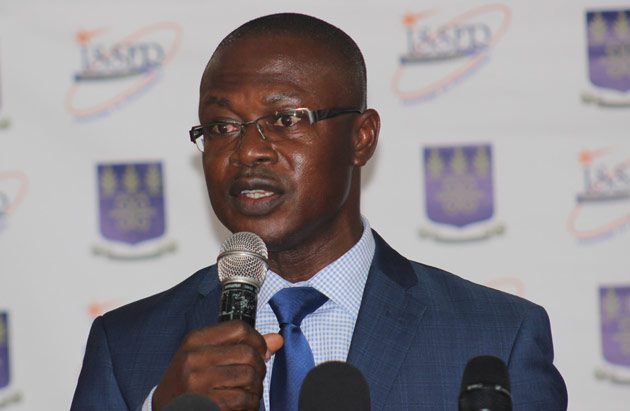
An economist at the Institute of Statistical, Social and Economic Research (ISSER) does not believe that the National Development and Planning Commission has been fully maximized.
According to Prof Charles Ackah, many policy decisions taken by successive governments have not adequately gone through the commission for deliberation and consultation on the best way forward.
"I feel we have underutilized the National Development Planning Commission," he said on Thursday, August 31.
He was commenting on Ghana's high tax regime and ways to ameliorate the situation.
"They're supposed to help us to plan where they're gonna want to go or be in the next 10 years, 15 years, and what are the kind of resources that we need, and what kind of tax policies do we need to implement to bring in this resources. What is the role of property tax, was the role of duties and fees and what's the role of income?"
He further explained that this results in the erratic implementation of these initiatives, leading to their lack of success.
Speaking on Joy FM Super Morning Show, he insisted that all these lapses could be avoided if critical issues were subjected to effective planning and deliberation to ensure their long-term sustainability.
"There has not been proper long-term thinking and planning and then having policies that are enduring and sustainable, that can be applied through various regimes. And I think that's something that we need to sit down have a national discussion, what is the role of the National Development Planning Commission," he added.
On Wednesday, the President of the Chartered Institute of Taxation Ghana (CITG), George Akwatia highlighted one aspect of the taxation regime that has been left unexplored for a while.
According to him, as government makes efforts towards raking in revenue for national development, it has to focus more on closing the tax gap.
Mr Akwatia believes that is the space that government must invest in as it has the potential to solve a chunk of the country’s revenue mobilisation problem.
“It is not about more taxes but it is rather an investment into making sure that we close the tax gap. And if we are able to do so for instance we should be able to double our tax revenues from the neighbourhoods of ¢180 million to the ¢250 and even more million cedis,” he said on Wednesday, August 30.
Latest Stories
-
Young woman found dead at Kasoa Peace Town
26 minutes -
Livestream: The Law examines lawful arrest in Ghana
51 minutes -
Mahama urges African governments to treat healthcare as an investment, not budget cost
1 hour -
Bawumia congratulates John Boadu and new NPP executives, pledges support ahead of 2028
1 hour -
‘No talent should be left out’ – Bawumia pledges inclusive NPP campaign for 2028
2 hours -
Prof. Mike Oquaye recounts how he blocked Special Prosecutor’s attempt to arrest Bawku Central MP
2 hours -
Make health sovereignty a priority for Africa – Mahama
2 hours -
Dorimon Naa, Wa West DCE lead massive clean-up exercise; threaten sanctions against recalcitrant residents
2 hours -
Photos from Adom FM Y2K Jam
2 hours -
Praye Tiatia steals the show at Adom FM Y2K Jam [Watch]
2 hours -
Boakye Agyarko congratulates John Boadu, pledges support for NPP leadership
3 hours -
Antwi HiMight thrills fans with Antwi ne Antwi hits at Adom FM’s Y2K Jam [Video]
3 hours -
Amb. Edward Boateng congratulates Boadu, Kodua on election wins
3 hours -
John Boadu pledges to rebuild NPP from grassroots and restore ‘winning machinery’
3 hours -
Ashaiman Assembly deploys monitoring system to curb dumping in storm drain
4 hours