

Audio By Carbonatix
Ghana’s waste sector contributes more than 7% of the country’s greenhouse gas emissions, catalyzing climate change and global warming.
With the government hoping to drastically reduce environmentally hazardous gases by 2030, researchers in the country have commenced a computational pilot study to convert the heaps of municipal organic wastes into cleaner fuel alternatives.
Across Ghana’s urban centres, heaps of garbage are indiscriminately sighted everywhere – at the market centres, in the drains, and at the dumpsites.
The waste is usually collected from various households and other sources within the city.
In the rubbish is a mixture of solid organic waste materials, scraps, plastics among others.
In Ghana, organic fraction of municipal solid waste accounts for 48% to 69% of the waste generation either disposed of indiscriminately or incinerated without energy recovery.
At the maiden International Conference on Circular Economy, Renewable Energy and Green Hydrogen in Africa, scientists uncovered the potential of converting these organic wastes into green hydrogen – a cleaner and emerging fuel alternative.
Ghanaian researchers at the Institute of Industrial Research under the Council for Scientific and Industrial Research, have commenced a pilot study at a hybrid waste-to-energy plant at Gyankobaa in the Ashanti region.
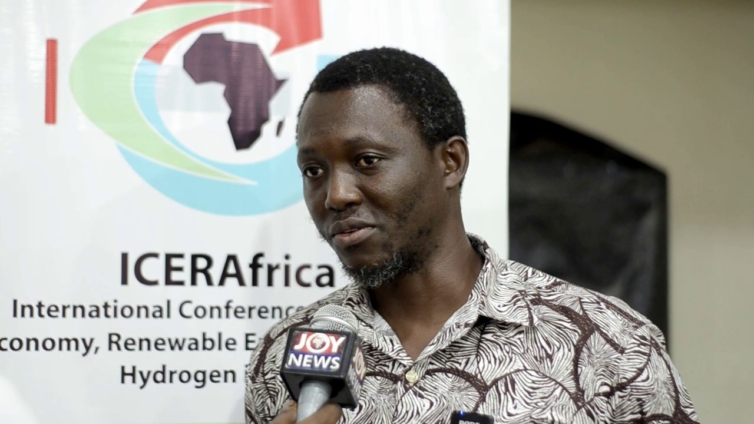
Principal Investigator, Dr. Mutala Mohammed says infrastructure has been put in place to commence the study.
“The project is supposed to produce about 100 Kilowatts (kW) of biogas from the organic fraction of the municipal waste. As researchers, we want to go further to investigate how we can convert the biogas from the organic waste into hydrogen gas,” he said.
Not only do they reek of bad scent, waste is a threat to the ecosystem.
According to the Environmental Protection Agency (EPA), the waste sector contributes 7.04% of the country’s greenhouse gases which are precursory elements for global warming and climate change.
The Ashanti region as the second largest city in the country is estimated to generate 1,780 tonnes of waste daily with the Kumasi Metropolis contributing the highest of about 29% of the total waste.
Through a steam reform process, the biogas gas is converted into hydrogen gas.
Under the project, between 3.62 – 1991 kt of green hydrogen could be produced annually from organic wastes, with daily generation of 0.10- 5.45 kt.
“Producing energy is sometimes economically not viable, but they will go a long way to impact the environment positively,” Dr. Mohammed added.
While aiming to contribute to the country’s greenhouse gas reductions of about 64 Mt by 2030, approximately 5,470 GWh/y of electricity could be available from hydrogen gas yield from biogas.
Research suggests that Africa has an untapped potential of producing 10 - 18Mt of hydrogen by the end of 2050.
But including South Africa, Kenya, and Egypt, only six African countries are harnessing the potential of green hydrogen with none of the remaining countries located in West Africa.
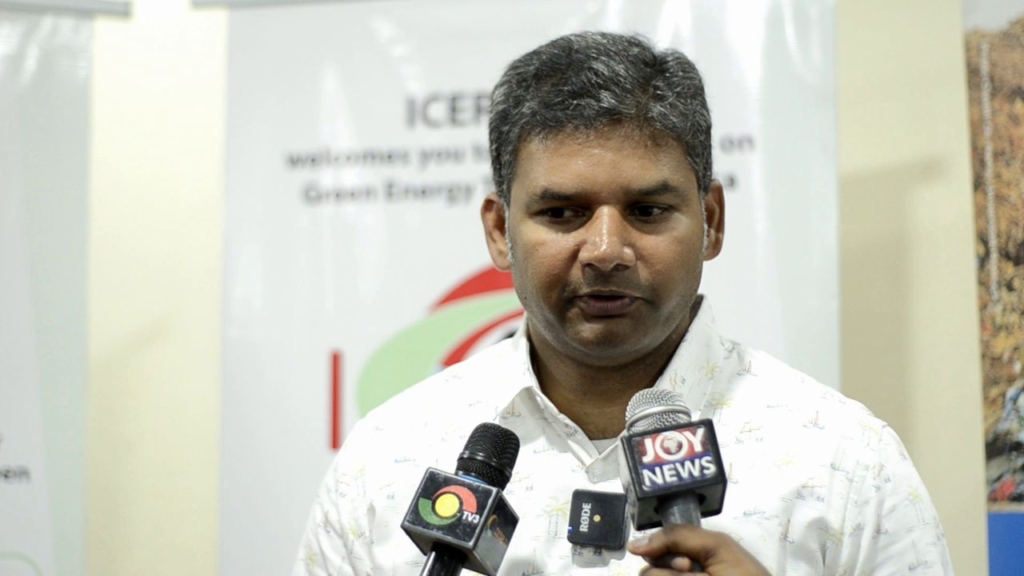
Prof. Dr. Satyanarayana Narra - University of Rocstock, Germany
Prof. Dr. Satyanarayana Narra who is with the University of Rostock, Germany believes green hydrogen is the “future” as climate change impacts bite hard.
“Even though West Africa has a rich amount of biomass, they cannot degrade our forest. Climate change is happening. We need to protect our natural resources and find an alternative,” he said.
As a natural decarbonizer, green hydrogen can be used as a fuel alternative, feedstock, and energy storage.
While the country races against time to harness waste into energy, an energy expert, Dr. Ayobami Solomon Oyewo is cautioning against the environmental impact of methane gas leakages through the process.
“Methane linkage is quite injurious to the environment. It’s best to get methanol, hydrogen, and liquid fuel. So rather go for hydrogen which is a precursor for ammonia – which is needed for the ship, methanol, amongst others,” he said.
Currently, it costs approximately 2.2 USD to produce a kilogram of green hydrogen.
But as scientists work to reduce production cost to less than 1.5 USD, a policy framework on green hydrogen production for the West African sub-region is being constituted, pending the implementation of actionable plans.
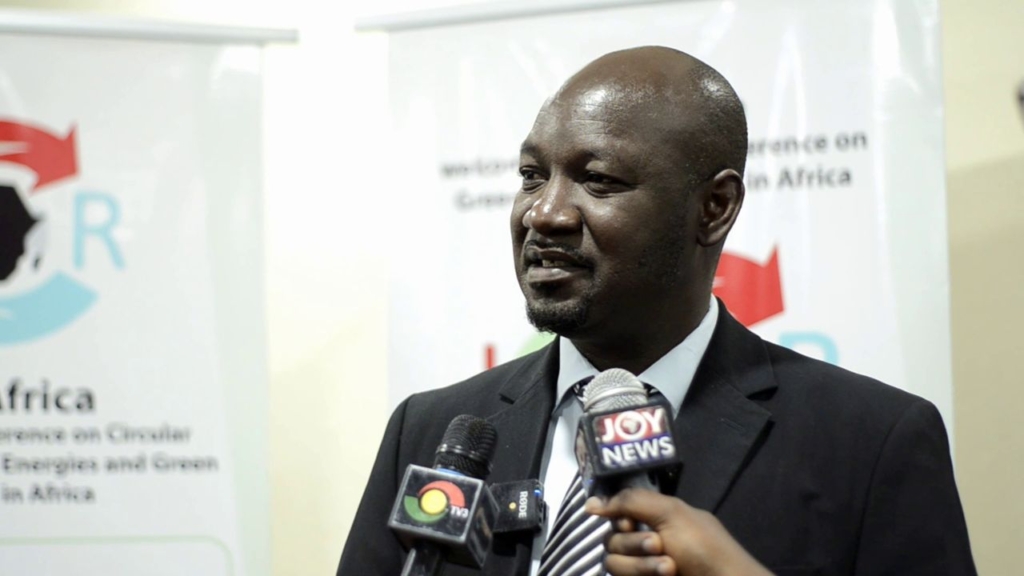
Dr. Bruno Korgo - Regional Director of WASCAL
Regional Director of the West African Science Service Centre on Climate Change and Adapted Land Use (WASCAL), Dr. Bruno Korgo says the policy would ensure the sub-region becomes a competitive producer of green hydrogen.
“The policy was adopted on 6th July, 2023 and has been endorsed by the heads of states of the various countries under ECOWAS. The objective is to position the ECOWAS as one of the most competitive suppliers of green hydrogen in the world,” he said.
Although the African continent has realized the potential and benefits of Renewable Energy, only 40% of the resource is fully harnessed by 22 countries in electricity generation.
With the continent contributing less than 4% of emissions but still bearing the brunt of climate change, an adoption of climate-resilient energy sources can mitigate the worsening impacts of the crisis.
The 2023 ICERAfrica is organized by the University of Rostock in partnership with WASCAL, SASSCAL and PERL under the Waste2Energy project – funded by the German Ministry of Education and Research (NMBF).
Latest Stories
-
Mobile Money Fintech LTD, UMB train hairdressers and beauticians
2 hours -
Asylum votes show people want help, says Kemi Badenoch
3 hours -
Badenoch welcomes expanded grooming gangs inquiry
3 hours -
GACL MD sues Samuel Buabeng over alleged Facebook defamation
3 hours -
Christa Pike in critical condition after surviving two lethal injections, lawyer says
3 hours -
Kemi Badenoch backs face covering ban at protest
4 hours -
Man City not ‘above the rules’, says No 10 after backlash to Burnham remarks
4 hours -
Real Madrid submit ‘substantial’ dossier in Barca payments case
4 hours -
Messi completes purchase of second Spanish club
4 hours -
Government must engage horticulturists on tomato crisis – GhIH
4 hours -
King Promise’s ‘Can’t Tame Us’ becomes official Chelsea anthem
4 hours -
Afenyo-Markin demands Baffour Awuah’s release from EOCO’s custody, end to alleged political intimidation
4 hours -
Rapper Rick Ross arrested on domestic violence charges
5 hours -
Minority demands security review of Ghana-Colombia visa waiver and port deals
5 hours -
Pursue drug kingpins, not persecute political opponents – Afenyo-Markin tells EOCO
5 hours