

Audio By Carbonatix
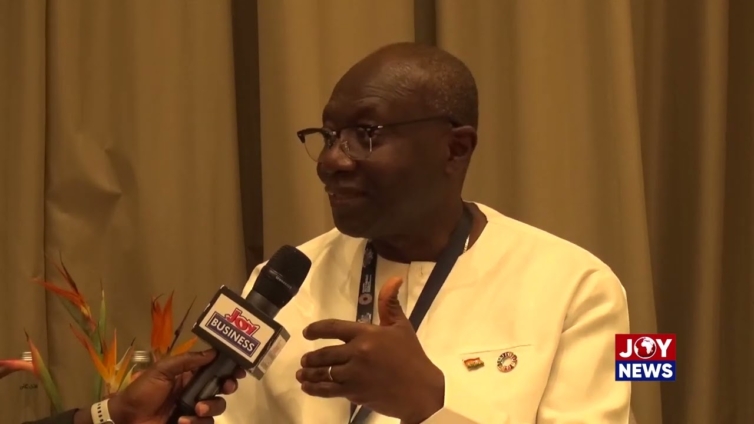
The Minister for Finance, Mr Ken Ofori-Atta, has launched a five-year strategic plan for the Securities and Exchange Commission (SEC).
The strategy, which starts from 2023 has five goals and 60 initiatives in line with the vision of making the Commission a top-tier securities market regulator in Africa.
The strategy is to deepen and expand markets, enhance market awareness and education, build the capacity and capability of SEC, strengthen market infrastructure, and develop a robust legal and regulatory framework.
The plan was launched at the SEC’s Ghana Capital Market Conference, which formed part of activities to mark the 25th anniversary of the Commission.
The theme for the event was, “Deepening and Diversifying Ghana’s Capital Market Towards a more Resilient Financial System.”
Mr Ofori-Atta said for a sector that contributed to about 14 per cent of the Gross Domestic Product (GDP) and impacted about 10 million of the country’s population, there was a need to ensure that the sector had a more positive impact on the economy.
He said government was committed to deploying targeted policy initiatives to diversify the investor base, reduce external dependency and broaden market participation within the sector.
“Among some of these initiatives is the development of the framework for domestic credit rating agencies, which will provide impartial assessment of companies and securities,” he said.
The Director-General of SEC, Reverend Ogbarmey Tetteh said the fast-changing financial landscape presented unique challenges to stakeholders of the capital market.
The situation, he noted, demanded the country’s financial markets to “evolve, innovate and develop versatile investment products”.
From the regulator's perspective, he said the SEC had over the last five years introduced 22 guidelines to ensure a more robust and resilient capital market.
“SEC is poised to churn out a series of new guidelines that support the deepening and diversification of the market.
“The forthcoming Guidelines on Crowdfunding, Green bonds, Financial Resources, Market Making, Margin Trading, Securities Lending, Borrowing, and Asset-Backed Securities will contribute to strengthening the market's resilience,” he said.
He said the Commission had started the implementation of a Risk-Based Supervision framework, which was a migration from the compliance-based supervision mode of operators.
SEC was established in September 1998 and had its name changed from the Securities Regulatory Commission to the Securities and Exchange Commission through a parliamentary decree in 2000 (Act 590).
Subsequently, the enactment of the Securities Industry Act, 2016 (Act 929), expanded the SEC's powers, thereby replacing the previous Securities Industry Law, 1993 (PNDCL 333).
Latest Stories
-
Government has improved sanitation in one-and-a-half years — Salaga South MP
2 hours -
Nkwanta North Assembly to appear before Parliament over DACF sanitation spending
2 hours -
Mourinho prints out ‘red card’ incidents after Real lose derby
3 hours -
Atletico beat 10-man Real in feisty Madrid derby
3 hours -
Twelve Tribes of Israel Ghana to mark 40 years with anniversary celebration
3 hours -
GPL 2026/27: Hearts held by Bechem as Kotoko, Samartex share spoils
4 hours -
My Story (Kwaku Antwi-Boasiako)
4 hours -
We expect growth rate to re-accelerate in second-half of 2026 – IC Insights
4 hours -
The ungodliness and unrighteousness underlying the National Cathedral mess!
4 hours -
T-bills auction: Government fails to achieve target; yield on 91-day-bill remains unchanged
4 hours -
It’s Ghana’s shame to denigrate Nkrumah when the whole world honours him as African of the Century – Asiedu Nketiah
4 hours -
No other nationalist can compare to Nkrumah – Asiedu Nketiah
4 hours -
Collateral Registry: Foreign banks accounted for GH¢19.9bn of secured credit in quarter 2, 2026
4 hours -
This government should expect scrutiny – Asiedu Nketiah
5 hours -
Two-year-old girl dies in domestic fire at Cantonments
6 hours