

Audio By Carbonatix
Would you take medication for an illness you didn’t believe you had? Or if you disagreed with healthcare workers about the cause of your condition?
This is the dilemma of many people who live in areas of Ghana where a mosquito-borne disease called lymphatic filariasis, often referred to as elephantiasis, continues to spread.
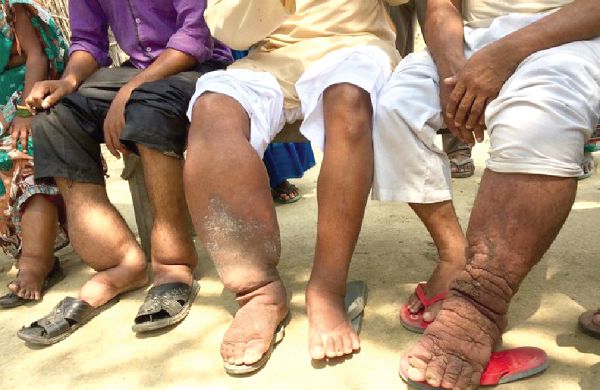
Lymphatic filariasis, or LF as it is commonly known, is a neglected tropical disease which spreads through repeated bites by parasite-carrying mosquitoes. This infection results in the painful and debilitating swelling of legs, arms and genitals, and increases vulnerability to injury and secondary infections.
Although little known, lymphatic filariasis is a significant and under-addressed global cause of disability. According to the World Health Organization, at least 51 million people are infected with lymphatic filariasis.
The World Health Organization’s Global Programme for Elimination of Lymphatic Filariasis has greatly reduced the burden of the disease through preventive mass drug campaigns, mosquito control, veterinary public health and sanitation and hygiene measures.
Despite this concerted effort, lymphatic filariasis continues to be endemic and require mass drug administration in 31 African countries. The challenges to eradicating it are not well understood, and may hinge on better understanding how people with this disease view their condition.
Our research team brings together specialists in epidemiology, public health and human rights. In our recently published paper in PLOS Global Public Health we take a different approach to the conventional medical focus that dominates research and interventions for this disease.
We examined the local perceptions and beliefs about the disease and the personal experiences of those living with it in three rural communities in Ghana’s Ahanta West district. This coastal district in Ghana’s Western Region has a high rate of lymphatic filariasis infection and many people living with advanced stages of the disease.
Members of our research team had worked in this area for more than a decade, establishing the trust relationships that made this research possible.
Our findings may help provide insight into why lymphatic filariasis persists in specific settings and how best to tackle it.
Cold, rain and curses
We found that only 18% of respondents understood lymphatic filariasis as a disease. Fewer than 7% believed it to be a disease spread by mosquitoes.
Instead, people held a range of alternative beliefs attributing the condition to other sources, including spiritual causes (curses, witchcraft, evil spirits), cold or rainy weather, and other illnesses. In subsequent interviews, people described how, from their perspective, they encountered the disease.
One person explained, “When you are cold, then your leg gets swollen.”
Another noted, “There are some who just get jealous of and develop hatred for people for just walking and going about their normal duties and decide that they do not want this person or that person to progress, hence they buy the disease for them spiritually.” They added, “I strongly believe and have the conviction that someone bought mine for me spiritually.”
In contrast to these beliefs, which show very limited overlap with medical explanations, nearly half (45.8%) of respondents reported receiving information about the disease from healthcare workers or drug campaigns.
These findings suggest we need to learn more about local beliefs in health and well-being in order to achieve more effective communication with patients.
Our research also demonstrates lymphatic filariasis is not only a medical condition, but also a social and economic one.
Ashamed and stigmatised
Almost 80% of respondents reported feeling ashamed or stigmatised by their condition. Some said it restricted their social lives and their willingness to mingle in public.
Infection also limited the ability to earn a living. More than a third (36.2%) said they could no longer work due to their condition. Many reported a need to depend on others for financial support.
Among those surveyed, less than 3% reported that they were “doing well”.
These findings show an urgent need to address the unmet social, mental health and economic impacts of lymphatic filariasis.
What needs to be done
Drug campaigns are important but cannot be done in isolation. Existing research shows us that these are more successful when offered in a broader context of care.
Healthcare workers must be trained to avoid stigmatising patients. But eliminating stigma is not a simple task, nor can it be left to healthcare workers alone.
Further research is needed to better understand local beliefs about lymphatic filariasis, and to understand how stigma affects patients’ access to treatment and quality of life. This must include the strong links between the disease and poverty.
Lymphatic filariasis follows the “social gradient”. Those who are poorest are most likely to be affected. Factors associated with poverty increase the chances of being infected and of developing complications. These factors include poor quality housing, limited access to methods of prevention (mosquito nets, good quality footwear), difficulty getting medical care, living in remote rural communities, and working as subsistence farmers.
The disease also pushes poor people further into poverty as it progresses.
As the number of people affected by it decreases, those who are left behind are more and more likely to be isolated, marginalised, stigmatised and impoverished.
As we argue in a recent book chapter, these factors underscore the need for interdisciplinary research teams who are able to address lymphatic filariasis holistically. We need an approach that merges healthcare, health promotion, health systems, spiritual beliefs, social and cultural context, gender dynamics and economic impact.
We must put people with lymphatic filariasis – and their dignity – at the centre of research.
The Authors are:
- Kristi Heather Kenyon, Associate Professor, Human Rights, University of Winnipeg
- Alexander Kwarteng, Senior Lecturer in Immunology of Infectious Diseases, Kwame Nkrumah University of Science and Technology (KNUST)
- Colleen McMillan, Scientific Co-Director and Associate Professor, University of Waterloo
- Mary Asirifi, Assistant Professor, Department of Nursing Foundations, MacEwan University
- Regiane Garcia, Research Associate, focus on health rights, laws and policies, Simon Fraser University
Latest Stories
-
Police commend Kpando MCE for rehabilitating District Headquarters
18 minutes -
Government adjusts border security and narcotics meeting invitations after Sammi Awuku raises concerns
23 minutes -
Zonda Tec expansion to create 1,000 indirect jobs – Mahama
31 minutes -
Kit Up Ghana Foundation donates jerseys to Achimota Basic School
34 minutes -
The Infrastructure of Resilience: Why Africa’s climate future is an engineering problem we are failing to solve
39 minutes -
I’m not contesting Tema Central in 2028 – TDC boss Nunekpeku
46 minutes -
One Week Observation – Obaapanin Julian Seiwaa Gyimah
54 minutes -
Withholding audit information or underreporting on COVID-19 fumigation is a serious offence—Domelevo
58 minutes -
Mahama urges banks to offer long-term financing for locally assembled cars
1 hour -
Accra set to go ‘All Out’ as Guinness Ghana DJ Awards 2026 Pub Fest comes off on September 25
1 hour -
Sterling admits dangerous driving after M3 crash
1 hour -
Vehicle assemblers must meet local content threshold to enjoy VAT exemption – Mahama
1 hour -
Health Ministry secures new US employment pathway for qualified Ghanaian nurses
1 hour -
GRIDCo completes 4km, 161kV transmission line linking Yendi Solar to Tamale-Yendi network
1 hour -
Government to regulate EV charging stations to protect power stability – Mahama
1 hour