

Audio By Carbonatix
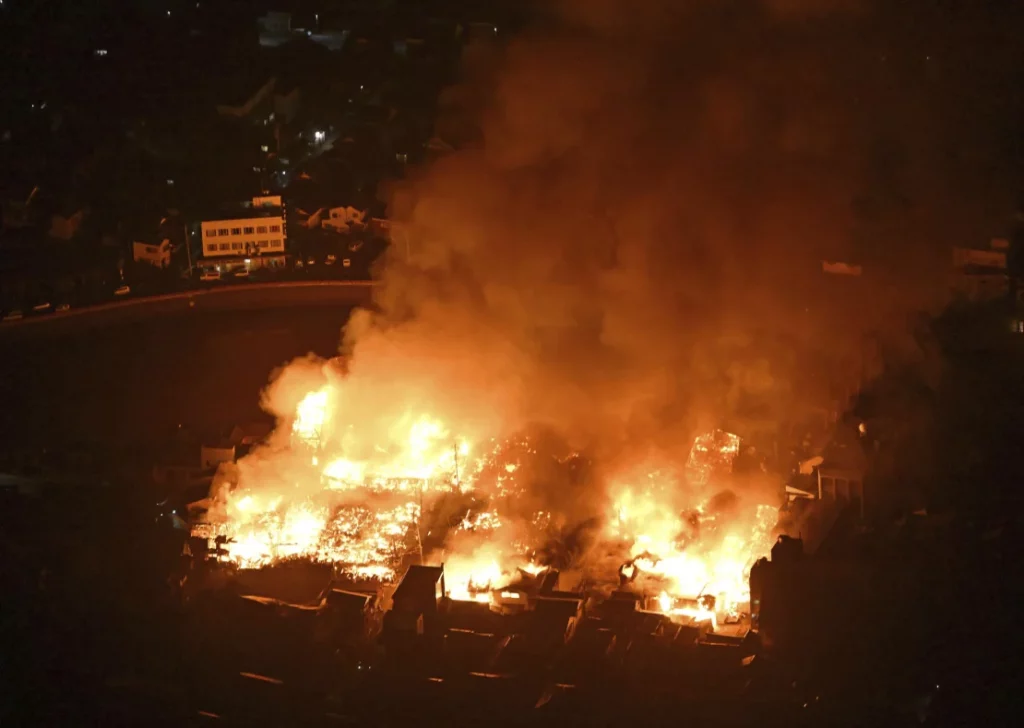
A 7.5 magnitude earthquake struck central Japan on Monday afternoon, collapsing buildings, causing fires and triggering tsunami alerts as far away as eastern Russia, prompting orders for residents to evacuate affected coastal areas of Japan.
The earthquake left six people dead in Ishikawa prefecture, and dozens have been injured in four other prefectures, including Toyama and Niigata, Japanese public broadcaster NHK reported, citing hospitals and local authorities.
The earthquake struck at 4:10 p.m. local time at a depth of 10 kilometers (6 miles) in the Noto Peninsula of Ishikawa prefecture, according to the United States Geological Survey (USGS).
The Japan Meteorological Agency immediately issued a tsunami warning along coastal regions of western Japan, and the first waves were reported hitting the coast just over 10 minutes later.
Some of the first reports came from the city of Wajima in Ishikawa prefecture, which saw tsunami waves of around 1.2 meters (3.9 feet) around 4:21 p.m., according to NHK. No immediate damage was reported. The tsunami warnings along portions of Japan’s western coast were later removed.
The defense ministry dispatched 1,000 military personnel to help the rescue and recovery efforts, Defense Minister Minoru Kihara told reporters earlier Monday.
Suzu city officials in Ishikawa told CNN that buildings have been damaged and there were reports of injuries. Police in the city said some people were trapped in damaged houses, according to NHK.
Hospital officials in Suzu said they received injured people, adding that some doctors were unable to make it to work because of damaged roads, NHK reported.

The Japan Meteorological Agency issued a “major tsunami warning” – the first since 2011’s devastating earthquake – for Noto but later downgraded it to a “tsunami warning.”
Tsunami warnings were later canceled as the threat of further tsunami waves diminished, though advisories for waves up to 1 meter (3 feet) continue.
Under Japan’s tsunami warning system, waves expected less than 1 meter fall under “tsunami advisory,” while those expected up to 3 meters fall under “tsunami warning” and waves expected above 5 meters fall under “major tsunami warning.”
‘The whole room was shaking’
Footage from NHK showed cameras shaking vigorously as waves slammed into the coastline when the quake hit Ishikawa prefecture.
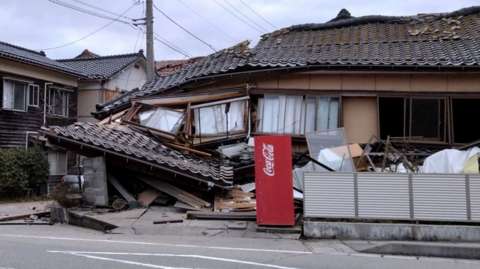
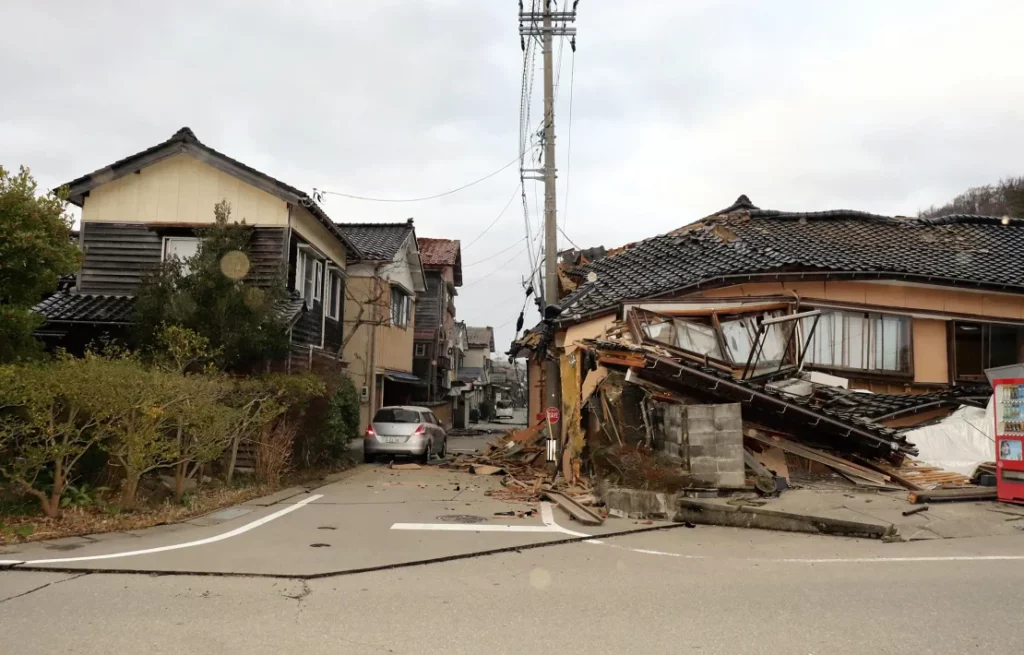
Houses were also rocked by the earthquake, with images showing collapsed roofs and shaken foundations.
An eyewitness reported seeing people “panicked” as the ground started shaking while he waited for a bus home in western Japan.
“You can see all the snow from the the electric wire goes down, and also (the snow) from the roof fell down and all the cars are shaking. And so everybody was panicked at that time,” Taiwanese tourist Johnny Wu told Reuters.
Meanwhile, Baldwin Chia, a 38-year-old tourist from Shanghai who was with a group of snowboarders when the quake hit, told Reuters: “The whole room was shaking, the TV was shaking. I had to keep everything on the table. … I did feel safe in my room, though. But everything else was shaking.”
Some services of Japan’s Shinkansen bullet trains were halted, and nearly 1,400 passengers were stranded inside the immobile high-speed trains for more than 11 hours, NHK reported, citing Japan Railways West.
Social media videos showed the aftermath of the quake, with store aisles strewn with goods. One clip filmed from inside a train showed signposts on the platform rocking intensely with the tremor.
More than 32,500 homes in Ishikawa prefecture were left without power following the quake, according to the Hokuriku Electric Power Company.
Japan’s Kansai Electric Power Company said in a statement on X that no abnormality had been reported at nuclear plants in the area.
Yoshimasa Hayashi, the chief cabinet secretary, said the power converter at the Shika nuclear power plant in Ishikawa had been affected but with “no major results.” Japan’s Nuclear Regulation Authority reported no problems were found with the reactors at the power plant, NHK reported.
The powerful quake was followed by a series of strong aftershocks, according to the USGS.
A 6.2 magnitude aftershock at a depth of 10 kilometers (6 miles) struck at 4:18 p.m. local time around 4 kilometers (2.4 miles) southwest of Anamizu, according to the USGS.
Some 58 kilometers (about 36 miles) away, tremors of 5.2 magnitude were recorded, and another 5.6 magnitude aftershock was reported closer to the initial quake, according to the USGS.
USGS seismologist Jessica Turner in the Golden, Colorado, office told CNN on Monday there have been 31 aftershocks since the quake. “Normally with quakes of this size, we can see aftershocks for the next several days to a week, but (they) can go as long as several months,” Turner said.
Japan’s weather agency warned that powerful aftershocks could continue over the next three days to a week, and cautioned of potential building collapses and landslides.
Japanese Prime Minister Fumio Kishida said authorities were working to assess potential damage in affected areas.
Tsunami waves reported
Waves of less than a meter were reported in a number of other areas along Japan’s western coast, including 80-centimeter waves in Toyama city, 40-centimeter waves in Kashiwazaki and Kanazawa port, and 20-centimeter waves in Tobishima island and Sado island.
The South Korean Meteorological Administration said it was watching for possible sea level changes in the east coast areas of Gangneung, Yang Yang and Goseong of Gangwon Province and Pohang City.
A tsunami threat was also declared in the eastern Russian cities of Vladivostok and Nakhodka and the island of Sakhalin – as the areas face the western coast of Japan – Russian state media TASS reported. No evacuations have been reported so far.
Latest Stories
-
‘It’s not a matter of evidence; it was a metaphor’ – Afenyo-Markin defends ‘drug lab’ comment
2 minutes -
Borrowing costs cut by more than half – Finance Minister
5 minutes -
KNUST students urged to look beyond Ghana for AI and robotics opportunities
8 minutes -
Odeibea Foundation extends energy equity initiative with solar streetlights in Akpato and Worwonyo
9 minutes -
Customs increases surveillance at ports, warns importers against concealing restricted items
11 minutes -
WERise urges women entrepreneurs to scale businesses, increase revenue and create jobs
13 minutes -
POWA calls for end to gendered attacks on Lordina Mahama, Samira Bawumia
18 minutes -
Zigx Foundation supports 50 vulnerable mothers in Akwapim North
18 minutes -
Nhyiramma Foundation calls for greater support for widows and single mothers
20 minutes -
Ghana must stop turning rivers into gutters through encroachment – Kwadwo Poku
22 minutes -
‘We’ll never compromise on quality’ – Agbodza tells Accra-Kumasi bypass supervisors
27 minutes -
Roads Minister urges motorists to drive cautiously on Accra-Kumasi Highway
28 minutes -
Hohoe MCE appeals for more relief supplies as flooding displaces residents
29 minutes -
‘Free Salomey now!’ – Women march to EOCO over Salomey Awitey Baffoe’s continued detention
31 minutes -
GES appeals to teachers to rescind strike and return to class as efforts to resolve concerns intensify
31 minutes