

Audio By Carbonatix
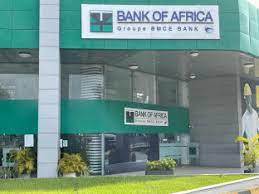
Ratings agency, Fitch, has affirmed Bank of Africa's (BOA) Long-Term Foreign- and Local-Currency Issuer Default Ratings (IDRs) at 'BB' with Stable Outlooks.
Fitch also affirmed BOA's Viability Rating (VR) at 'bb-' and National Long-Term Rating at 'AA-(mar)' with a Stable Outlook.
According to Fitch, BOA's IDRs are driven by potential support from the Moroccan authorities, as reflected in the bank's Government Support Rating (GSR) of 'bb'.
The Stable Outlook mirrors that of the sovereign rating. BOA's VR considers its solid franchise in Morocco and its pan-African presence, which brings diversification benefits to the business model but also exposes it to less developed markets and more volatile operating conditions. BOA's stronger performance and fairly strong funding and liquidity are balanced by weak capital and asset quality.
Government Support Rating:
BOA's GSR of 'bb' considers the bank's systemic importance as the third-largest Moroccan bank - but also the limitations of the sovereign's financial flexibility.
Fitch therefore views BOA as a domestic systemically important bank (D-SIB) in Morocco based on its 14% market share of loans and deposits.
Moderate Risk Profile
Fitch said BOA’srisk profile has improved with a greater harmonisation in risk controls across the group, a cautious approach to growth in recent years in a drive to preserve capital, as well as several rounds of capital increases, including rights issues.
The bank's loan book is less concentrated than the peer average; the largest 20 exposures were 14.5% of total gross loans end-half-year 2023.
Asset-Quality Weaknesses
Fitch again said BOA's Stage 3 loans ratio (end-1H23: 9.9%) is higher than at other major Moroccan banks, which is partially driven by higher impairments at its African subsidiaries.
Stage 2 loans are high at 8.1% of gross loans, although roughly in line with the peer average of 9%. Reserve coverage of Stage 3 loans by total allowances (85%) is reasonable.
Healthy Profitability
Again,BOA's operating profit improved to 2.0% of risk-weighted assets (RWAs) in first-half of 2023 (2022: 1.6%) owing to strong fees and commissions income as well as net interest income, and is broadly in line with the sector average. BOA's cost efficiency has improved but remains weaker than peers' primarily due to its foreign operations. In 9M23, net income was up 17% year-o-year, primarily due to a solid 18% growth in net fees and commissions and 10% growth in net interest income
Latest Stories
-
Government has improved sanitation in one-and-a-half years — Salaga South MP
2 hours -
Nkwanta North Assembly to appear before Parliament over DACF sanitation spending
2 hours -
Mourinho prints out ‘red card’ incidents after Real lose derby
3 hours -
Atletico beat 10-man Real in feisty Madrid derby
3 hours -
Twelve Tribes of Israel Ghana to mark 40 years with anniversary celebration
3 hours -
GPL 2026/27: Hearts held by Bechem as Kotoko, Samartex share spoils
4 hours -
My Story (Kwaku Antwi-Boasiako)
4 hours -
We expect growth rate to re-accelerate in second-half of 2026 – IC Insights
4 hours -
The ungodliness and unrighteousness underlying the National Cathedral mess!
4 hours -
T-bills auction: Government fails to achieve target; yield on 91-day-bill remains unchanged
4 hours -
It’s Ghana’s shame to denigrate Nkrumah when the whole world honours him as African of the Century – Asiedu Nketiah
4 hours -
No other nationalist can compare to Nkrumah – Asiedu Nketiah
4 hours -
Collateral Registry: Foreign banks accounted for GH¢19.9bn of secured credit in quarter 2, 2026
5 hours -
This government should expect scrutiny – Asiedu Nketiah
5 hours -
Two-year-old girl dies in domestic fire at Cantonments
6 hours