

Audio By Carbonatix
The World Meteorological Organisation (WMO) aims to strengthen its partnership with space agencies to bolster cooperation in an era marked by rapid climate, societal, and technological transformations, recognising the critical importance of satellite observations.
Space-based monitoring systems, which constitute around 90 per cent of the data utilised in global weather prediction models, serve as the cornerstone of operations for National Meteorological and Hydrological Services, offering invaluable insights crucial for safeguarding lives and property worldwide on a 24/7 basis.
The WMO community has a longstanding history of collaboration with space agencies, playing a pivotal role in facilitating data sharing, establishing common standards, and enhancing capacity-building efforts, particularly in less developed nations.
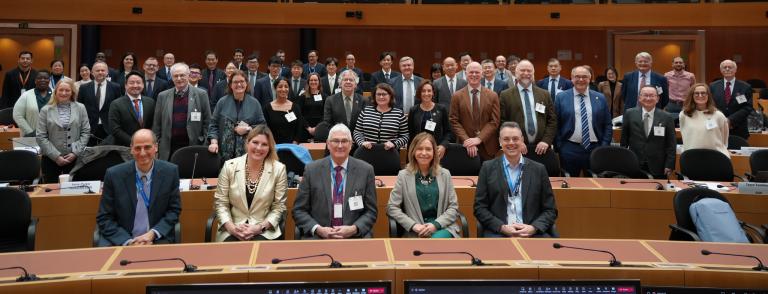
Delegates attending the 15th Session of Consultative Meetings on High-Level Policy on Satellite Matters reached a consensus to advance the relationship to a higher level.
WMO Secretary-General Celeste Saulo emphasised the increased importance of collaborative efforts amidst emerging challenges like climate change, water resource management, and space weather forecasting.
“Today, as we confront emerging challenges such as climate change, water resources management, and space weather forecasting, our collaborative efforts are more vital than ever,” said WMO Secretary-General Celeste Saulo.
The event, the first convened in over five years, united high-ranking officials from space agencies and the meteorological sector, including the presidents of WMO's Infrastructure and Services Commissions.
Discussions centred on how WMO can assist space agencies in fulfilling members' requirements for data and information, while also improving accessibility and utilisation of data from current and upcoming satellite systems.
The meeting also delved into the capacity of space-based observations to advance critical WMO strategic objectives, such as Earth System monitoring and prediction, Early Warnings for All, and the Global Greenhouse Gas Watch.
Celeste Saulo said that by harnessing improved Earth observations, the world can significantly enhance the efficacy of these initiatives, providing more timely and precise warnings for at-risk communities and enabling informed decision-making in tackling the challenges of climate change.
“Today, we embark on a journey of cooperation and innovation, leveraging our collective expertise to overcome challenges and achieve our shared vision of a safer, more resilient world,” she said.
WMO Infrastructure Commission President Michel Jean noted that the timing of the meeting is ideal not only from scientific and technological angles but also from a governance standpoint.
“The timing of this meeting is perfect from a scientific and technological perspective but also from a governance perspective,” said WMO Infrastructure Commission President Michel Jean.
He mentioned that upcoming WMO constituent body sessions will focus on enhancing the dynamics of the relationship with space agencies.
Mr Jean also indicated that this emphasis will be evident in the plenary sessions of the Coordination Group on Meteorological Satellites scheduled for June and the Committee on Earth Observation Satellites planned for October.
The meeting specifically addressed various topics, including how to assist Members with limited capacity, particularly concerning Early Warnings for All and strategies for integrating data and users amidst increasing data volumes and capabilities.
It also addressed effective practices and emerging opportunities in collaboration with the commercial satellite sector to advance the Global Greenhouse Gas Watch initiative; the evolving impact of Artificial Intelligence on weather and climate forecasting and its implications for satellite data utilization; the advancement of WMO's space program and its alignment with the WMO Integration Global Observing System Vision (WIGOS) for 2040; and the implementation of the WMO Unified Data Policy, including the definition of core and recommended space-based observations across all application areas.
Latest Stories
-
Mobile Money Fintech LTD, UMB train hairdressers and beauticians
2 hours -
Asylum votes show people want help, says Kemi Badenoch
3 hours -
Badenoch welcomes expanded grooming gangs inquiry
3 hours -
GACL MD sues Samuel Buabeng over alleged Facebook defamation
3 hours -
Christa Pike in critical condition after surviving two lethal injections, lawyer says
3 hours -
Kemi Badenoch backs face covering ban at protest
4 hours -
Man City not ‘above the rules’, says No 10 after backlash to Burnham remarks
4 hours -
Real Madrid submit ‘substantial’ dossier in Barca payments case
4 hours -
Messi completes purchase of second Spanish club
4 hours -
Government must engage horticulturists on tomato crisis – GhIH
4 hours -
King Promise’s ‘Can’t Tame Us’ becomes official Chelsea anthem
4 hours -
Afenyo-Markin demands Baffour Awuah’s release from EOCO’s custody, end to alleged political intimidation
4 hours -
Rapper Rick Ross arrested on domestic violence charges
5 hours -
Minority demands security review of Ghana-Colombia visa waiver and port deals
5 hours -
Pursue drug kingpins, not persecute political opponents – Afenyo-Markin tells EOCO
5 hours