

Audio By Carbonatix
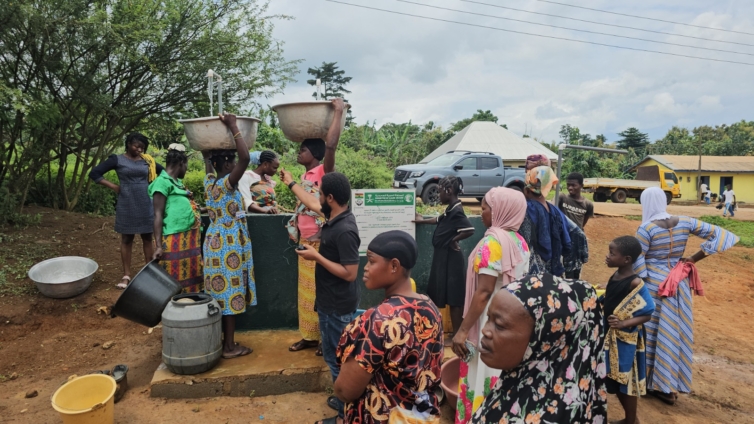
The Ghana Statistical Service’s (GSS) 2022 Ghana Demographic and Health Survey (GDHS) has revealed that, approximately one in every five individuals (19.1%) in Ghana faced inadequate access to drinking water in the month before the survey.
The Northern Region recorded the highest percentage with one in every three individuals (32.1%) lacking sufficient drinking water.
Following closely were the Oti (31.2%) and North East (26.2%) regions.
The Upper East (14.0%) and Ashanti (14.5%) regions reported the lowest percentages of individuals without enough drinking water, each with figures less than half of those recorded in the Northern and Oti regions.
The GSS made this known in a statement on this year’s World Water Day celebrated annually on March 22nd, under the theme ‘Water for Peace’.
The Service also highlighted that nationally, 6.5 percent of the population had to travel more than 30 minutes round-trip to access drinking water.
“More than a quarter (27.5%) of the population in the North East Region reported travelling more than 30 minutes to access water, the highest recorded, followed by the Northern (18.6%) and Upper West (18.6%) regions.
“Three in every five (59.9%) persons in Ghana did not have water on their premises. Nine in every ten persons (89.8%) in the Savannah Region did not have water on their premises, the highest recorded and 1.5 times higher than the national average. North East (86.5%) and Oti (83.5%) regions have the second and third highest percent of the population without water on their premises.”
“Greater Accra (22.0%) recorded the lowest percentage of the population without water on the premises. Volta Region (47.1%) is the only other region where less than half of the population does not have water on the premises. More than 90.0 percent of the population in the lowest wealth quintile (93.6%) were without drinking water on their premises, more the five times the percentage recorded for those in the highest wealth quintile (17.5%),” it stated.
“The percentage is lowest in the North East Region (43.4%) where less than half of the population has access to basic water services. Savannah (54.2%), Oti (57.8%), and Northern (64.4%) regions have the next highest percentage of the population with access to basic water services.
Greater Accra (97.7%) and Ashanti (94.8%) were the regions with the highest percentage who have access to basic services, recording figures that are more than twice that of the North East Region.”
“Persons in the poorest wealth quintile have the lowest percentage with at least basic water services (52.1%), almost half the percentage for persons in the highest wealth quintile (97.9%). Eight in every 10 (82.3%) of persons using unimproved water sources did not treat their water. Unimproved water sources refer to unprotected dug wells or unprotected springs,” the statement read.
The 2022 Ghana Demographic and Health Survey report, resources, and microdata are available to download at no cost from www.statsghana.gov.gh.
Latest Stories
-
ICU urges GHABA members to transform hairdressing skills into sustainable enterprises
11 minutes -
Ghana eyes stronger trade ties as Australia hosts multicultural trade and investment forum
20 minutes -
Margaret-Marie Krakue
23 minutes -
Ayariga announces plans for live broadcast of MMDAs’ meetings on local radio stations
26 minutes -
Mrs Anna Tackie
28 minutes -
Ghana links Afghan heroin and Brazilian cocaine to global drug markets – Global Organised Crime Index
35 minutes -
NHIA launches nationwide inter-school quiz to deepen students’ knowledge of NHIS
42 minutes -
Political protection could be masking Ghana’s cocaine trade – Global Organised Crime Index
47 minutes -
AFCON 2027Q: ‘We have to dissolve the GFA’ – Effia MP after Black Stars lose to Gambia
49 minutes -
NPP announces voting schedule and ID requirements for October 3 national elections
51 minutes -
Lupus can mimic HIV symptoms and damage kidneys if untreated – KNUST expert
54 minutes -
Focus on Sickle Cell Foundation seeks to introduce sickle cell education through comics in Ghanaian schools
60 minutes -
NPP rewrites the campaign playbok as opposition reality shapes National Executive contest
1 hour -
Road safety education will fail without enforcement – NRSA boss
1 hour -
Daily Insight for CEOs: Finishing Q3 strong and entering Q4 with purpose
1 hour