

Audio By Carbonatix
"Some German people drink their beer after work. We just want to smoke our weed."
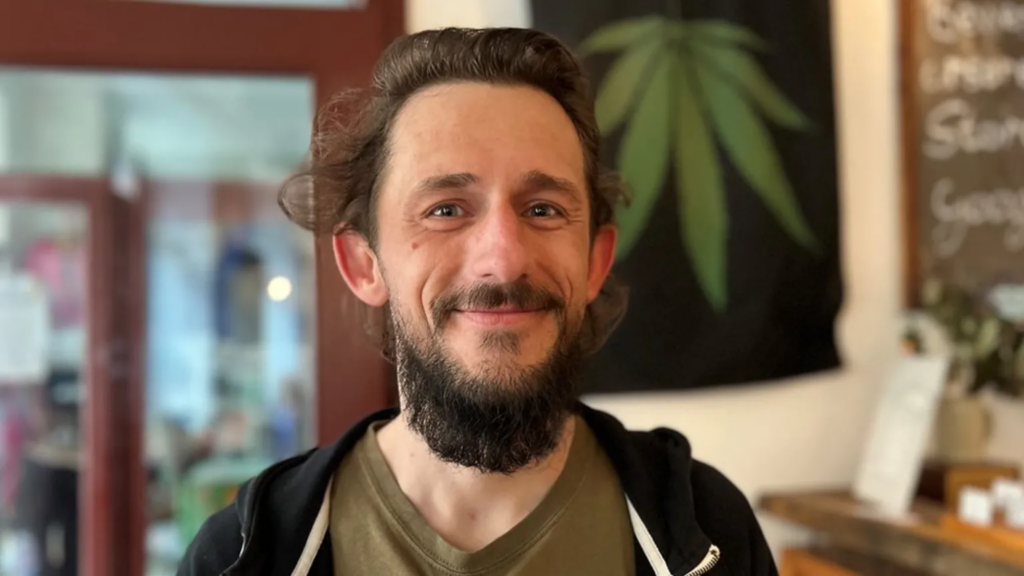
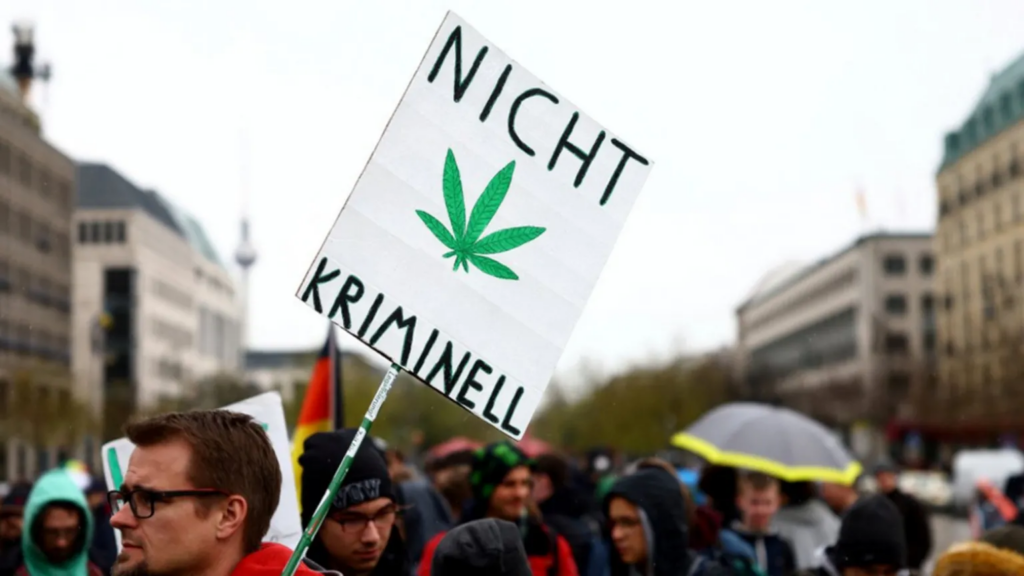
So says Marcel Ritschel who's celebrating as Germany - traditionally "beer land" - becomes a more cannabis-friendly country.
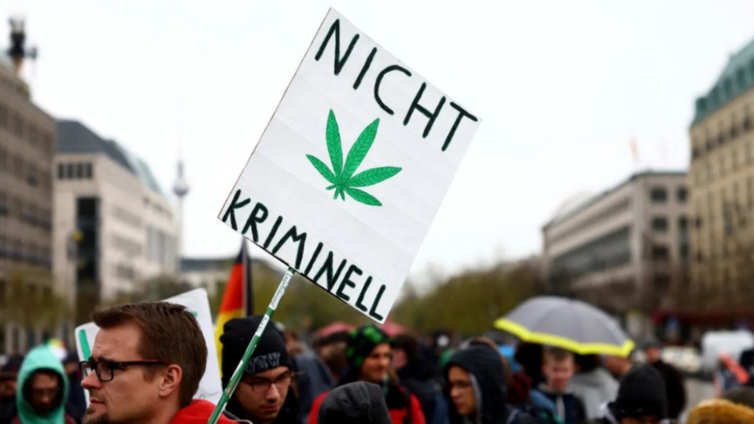
Germany has, as of 1 April, partly decriminalised marijuana use.
But police unions are warning of real-world harm. The law-change may have come on April Fool's Day but for them it is no joke.
We meet Marcel Ritschel in the Neustadt area in Dresden, the heart of the city's alternative scene.
Here, as in other places, it wasn't hard to find people openly smoking joints even before the rules were relaxed.
That's one of the arguments behind decriminalisation; millions of people were smoking the stuff anyway.
It will help kill the black market and improve quality control - say supporters.
Mr Ritschel is planning on setting up a growers association or "cannabis social club" that will be allowed under the law, from July.
"A gardening club but for hemp," as he describes it.
"Every gram that goes from the cannabis social club is one gram that's not on the black market," he says. "So it's a win-win situation."
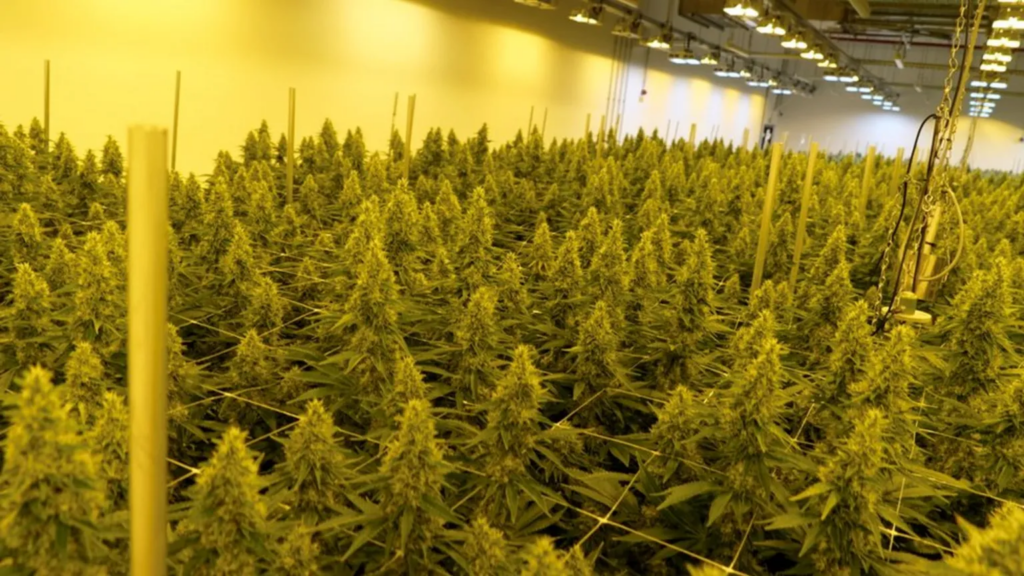
These places won't be like the famed Amsterdam-style cannabis coffee shops, which have themselves been hotly debated in the Netherlands.
The not-for-profit clubs in Germany are supposed to be only for people who actually live here, in order to stop a wave of tourists pouring in to enjoy liberal cannabis laws.
There are many caveats and complexities within the legislation; a product of the political controversy that's forced the plans - as originally envisaged - to be watered down.
The halfway house has left people disgruntled, on both sides of the debate.
There are warnings that 1 April will mark the start of a "chaos phase" for Germany.
"We assume that the black market will be strengthened," says Alexander Poitz from Gewerkschaft der Polizei (GdP), the German Police Union.
He believes that demand will quickly outstrip legal supply given growing weed at home requires perseverance and care while it'll be months before cannabis clubs can start to function.
Longer-term, he claims criminal networks will adapt and even "infiltrate" the social clubs while enforcing the law, which will be a "mammoth" task to handle.
Smoking weed within 100m (328ft) of a children's playgrounds, schools or sports centres - for example - is not allowed.
In busy, crowded cities, it may take some dedication to find a spot to light up a spliff that's actually, technically, legal.
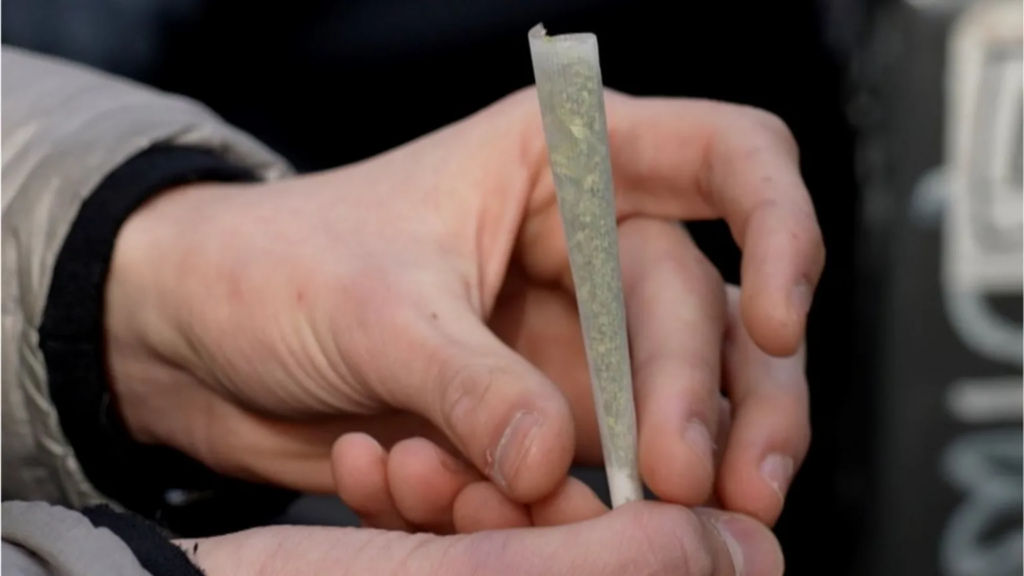
There's also the problem of how police will be able to tell the difference between a consumer and a dealer, if a person is able to carry up to 25g of the drug - enough for dozens of joints.
Concerns that cannabis can be addictive and adversely affect mental health have also been voiced by groups such as the Standing Committee of European Doctors (CPME).
The new measures will "increase use and health related harms, especially among youth," says CPME Vice President, Professor Ray Walley.
Given under 18s can't take advantage of the new laws, it's thought that many young people will still resort to drug dealers.
Germany is one on a long list of nations that have wrestled with the pros and cons of decriminalising marijuana.
The government in Berlin cited a 2021 survey which found 10.7% of men and 6.8% of women had used cannabis at least once in the past 12 months, most commonly in the 18-24 age group.
No approach yet exists that's been "truly successful" in killing the black market or preventing youth issues, according to Dr Robin Hofmann - an assistant professor for criminal law and criminology at Maastricht University.
Curbing the black market is a goal that "hasn't been fully achieved" even in countries where the drug has been properly legalised, such as in Canada or Uruguay.
"It's a long process," says Dr Hofmann, "A marathon, not a sprint."
Germany's journey towards part-decriminalisation has similarly been a long road, in a debate typically pitting left-wingers against conservatives.
This proposal emerged in 2021 when the three ruling parties carved out their coalition agreement, following years of stasis under former conservative Chancellor Angela Merkel.
The party Ms Merkel headed, the Christian Democratic Union party (CDU), has already pledged to reverse the changes if it wins power at the next election.
Marcel Ritschel accepts that the change he's long campaigned for might not last the decade.
"Maybe we have two years and then it's all over."
Latest Stories
-
The brewing tension at KNUST; Beware the Ides of October….
12 minutes -
Health Ministry moves to integrate traditional medicine into mainstream healthcare
35 minutes -
550 pupils in Kintampo South get educational lifeline as ‘Seeds of Hope’ reaches farming communities
56 minutes -
Opoku Mensah urges Christian Council, House of Chiefs to speak up on democratic freedoms
1 hour -
Teacher unions’ strike: Minority demands immediate payment of teacher arrears, 20% deprived area allowance
1 hour -
The Accra-Kumasi Expressway: Building it right
1 hour -
Beyond gold exports: Building value and economic resilience from Ghana’s gold
2 hours -
2027 AFCONQ: Ghana under pressure as Gambia beat Somalia 2-1
2 hours -
Eastern NPP Women’s Organiser calls on AG, Police to secure bail for Salomey Baffoe
2 hours -
Poverty, illiteracy driving acceptance of vote-buying among women – Damongo Queen Mother
2 hours -
Photos: Democracy Is Not For Sale forum in Savannah region
3 hours -
GNFS launches 2026/27 National Anti-Bushfire campaign in Atebubu, records 62.8% reduction in bushfire cases
3 hours -
I’ll vote for a female president; women are less likely to steal from the state – Okyeame Kwame
3 hours -
More public education needed to stop vote-buying – Savannah Region MP
3 hours -
Absa Bank commissions new head office, commits to strengthening operations in Ghana
3 hours