

Audio By Carbonatix
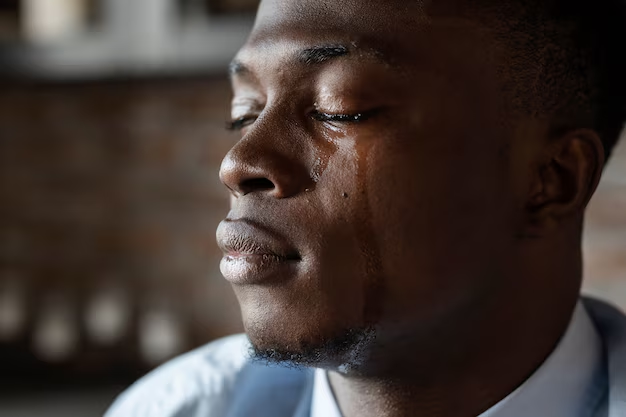
The idea that men must not cry, often summarized in the phrase "Barima Nsu," is a deeply ingrained social expectation that prevents men from expressing their emotions openly.
The origin of this belief is unclear, but its impact is significant, leading to the stigmatization of men who show vulnerability.
In many cultures, including mine, a man who cries or shows any form of emotion is often deemed socially unfit and labeled a weakling. Whether facing a job loss, heartbreak, or the overwhelming challenges of life, men are expected to bottle up their feelings. This societal pressure demands that men must not show any signs of weakness, pushing them to suppress their emotions.
When I lost my dearest uncle a few years ago and expressed my grief through tears, many people questioned why I was crying. Similarly, when my cousin Benny passed away, I had to hide my mourning from friends to avoid being judged. This was epitomized by the case of a student at KNUST who was mocked and called a sissy for mourning his girlfriend's death. His friends recorded him crying and shared the video on social media, where many netizens joined in the mockery. The prevailing sentiment was that a man should not cry, especially over a relationship.
A friend once called me petty for reacting emotionally to things people, especially women, did to me. According to him, a man should not show any emotions. In our conversation, I asked him why many men die prematurely, and he had no answer. I explained that many men die because they bottle up their emotions due to the stigma associated with expressing them. Men often remain silent rather than ask for help, contributing to the high rates of mental health issues and premature death among men.
June has been declared Men's Mental Health Awareness Month, highlighting the importance of mental health and reminding us that seeking help is not a sign of weakness. Mental health disorders are a global concern, affecting around 970 million people in 2019, with anxiety and depression being the most common. These conditions are a leading cause of disability and are strongly linked to premature death due to the increased risk of suicide and other health issues. The World Health Organization (WHO) reports that people with severe mental health conditions tend to die 10 to 20 years earlier than the general population. Mental health conditions account for over 800,000 deaths per year through suicide alone.
In Africa, mental health issues are compounded by limited access to care, stigma, and inadequate funding. The region faces a significant treatment gap, with many people not receiving the necessary care. The lack of mental health resources exacerbates the burden, leading to high rates of untreated mental health conditions and associated mortality. The situation is critical, with suicide rates and other mental health-related deaths remaining high.
Ghana, like many other African countries, struggles with mental health issues due to inadequate mental health infrastructure and societal stigma. According to WHO data, the suicide rate in Ghana is about 5.4 per 100,000 people. Mental health services in Ghana are scarce, and there is a significant treatment gap, with many individuals not receiving the care they need. Efforts are being made to improve mental health services, but challenges remain in addressing the full scope of the problem.
Given these staggering figures, it is time to rethink harmful narratives like "Barima Nsu." Crying or expressing emotions does not make a man any less of a man. Manhood is not tied to whether one cries or asks for help when needed.
Speaking up when mistreated or crying in response to life's challenges proves that you are human. If robots can respond to commands, how much more should a human being be allowed to respond to emotions? When life overwhelms you and crying brings relief, do not hold back. Crying does not make you weak—it makes you human.
The writer, Nii Okantah Ankrah is a Digital Media Executive with The Multimedia Group
Latest Stories
-
GoldBod dismisses NPP’s forex allegations as ‘fishing expedition on desert’
21 seconds -
191 nations set for global youth culture festival in Russia
8 minutes -
Prince Adu-Owusu: He felt the goodbye before it ended
13 minutes -
KNUST study warns sea defence is shifting coastal threats to unprotected communities
33 minutes -
Telecel Ghana launches 2026 SME Month to drive business growth
45 minutes -
Manya Krobo Community Bank records 131% rise in profit after tax
49 minutes -
Even John Hyde must die – A tribute to my friend
1 hour -
‘Online pastor’ romance scam cases to be consolidated and moved to High Court
1 hour -
NPP Ayawaso West Wuogon constituency election dispute escalates into court battle
1 hour -
What happened to E-Blocks, Agenda 111 should not happen to 24-hour markets – Ahmed Ibrahim urges Ayariga
1 hour -
VAST Ghana calls for nationwide action against cigarette-shaped lollipop
1 hour -
Germany says Russia behind Leipzig airport drone attack
1 hour -
NSMQ 2026: Achimota School shatters Adisadel’s semi-final hopes to book penultimate spot
1 hour -
NSMQ 2026: Bright SHS makes history as first private school to reach semi-finals
1 hour -
Ghana, Serbia explore deeper cooperation in agriculture
1 hour