

Audio By Carbonatix
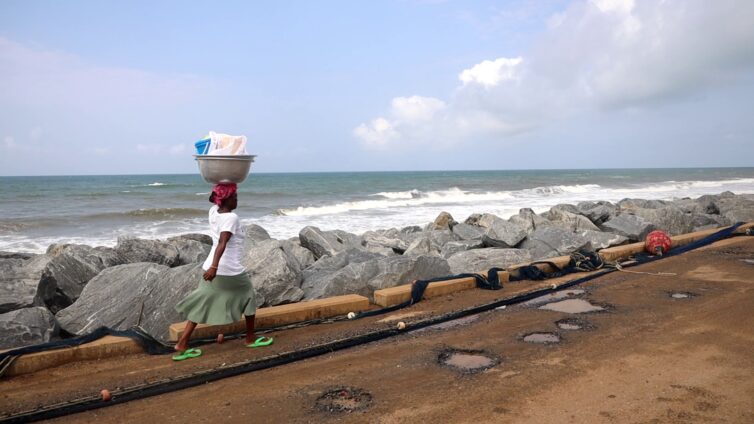
A three-year study by researchers at the Kwame Nkrumah University of Science and Technology (KNUST) has found worsening coastal erosion and saltwater intrusion along Ghana’s eastern coastline, with some communities facing increasing threats from tidal flooding.
The study, conducted under the TIDEKIT (Protecting the Coast and Heritage of Keta Using Integrated Geophysical Methods) project, suggests that the existing sea defence system along parts of the Keta coastline is redirecting some of the impacts of high tides towards communities without similar protection.
Researchers found that some sections of the coastline had lost more than 103 metres of land over the study period, while areas around the Volta Estuary recorded erosion rates of up to 30.5 metres per year.
The study also found that seawater had travelled more than 1.3 kilometres inland in some communities, contaminating groundwater and posing a threat to freshwater supplies.
Researchers at the West Africa Geophysics (WAGeo) Lab are consequently calling for a stronger national coastal monitoring system and real-time early warning mechanisms to help vulnerable communities prepare for tidal waves and coastal flooding.
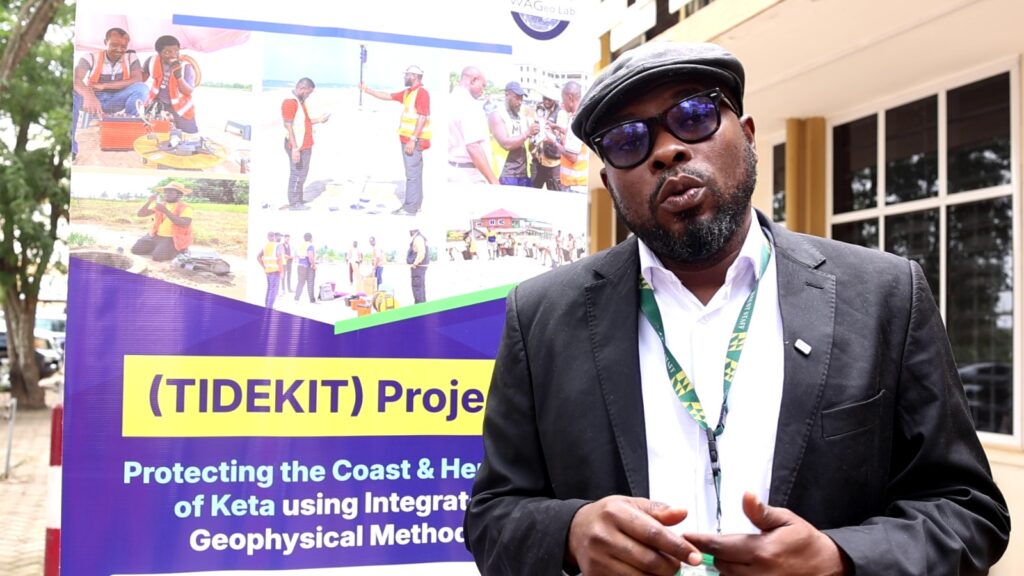
Principal Investigator of the TIDEKIT Project and Head of the WAGeo Lab, Dr Cyril D. Boateng, said the research was designed to ensure that scientific findings translate into practical interventions.
“We've shared the findings with the key agencies responsible for coastal management because the next step is implementation. We hope these recommendations become part of Ghana's coastal protection policies,” he said.
According to him, the project has proposed collaboration with institutions including the National Disaster Management Organisation (NADMO), Ghana Meteorological Agency (GMet), Environmental Protection Agency (EPA), Water Resources Commission and Ghana Ports and Harbours Authority (GPHA).
Dr Boateng said locally developed coastal monitoring systems and meteorological stations developed through the project could complement existing national systems by providing data for early warning, groundwater monitoring and long-term coastal planning.
Deputy Director-General for Operations at GMet, Dr Ignatius K. Williams, described the project as timely, noting that several communities along the Keta coastline continue to experience storm surges and tidal flooding.
He said the monitoring systems and meteorological data generated through the project could improve forecasting and support the dissemination of warnings to vulnerable communities.
Dr Williams said better access to timely information could enable residents to take preventive action and strengthen their resilience to coastal disasters.
For the Environmental Protection Agency, Dr Nathaniel Bimpong said the findings could help Ghana move from responding to environmental disasters to predicting and preventing them.
He said data generated by the project could be integrated into the EPA's environmental monitoring systems to support what he described as predictive environmental intelligence.
He also called for institutional and financial support to replicate the locally developed technology along other sections of Ghana’s coastline.
“The action is now,” he stressed, urging stakeholders to work together to scale up the innovation.
Director in charge of Geological Disasters at NADMO, Dr Bertha Kusimi, said the recommendations were consistent with the organisation’s mandate.
She expressed NADMO’s readiness to adopt aspects of the research, particularly in public education, community awareness and the use of nature-based solutions to strengthen resilience in coastal communities.
The TIDEKIT project uses advanced geophysical techniques and locally developed technologies to investigate coastal erosion, saltwater intrusion and tidal flooding, while developing evidence-based approaches to improve coastal resilience.
The researchers are recommending the expansion of Ghana’s national coastal monitoring network, the deployment of real-time early warning systems for tidal waves and coastal flooding, stronger collaboration among relevant institutions, and increased investment in locally developed technologies for coastal data collection.
The findings come amid growing concerns over the vulnerability of communities along Ghana’s coastline, where rising sea levels, coastal erosion and tidal flooding continue to threaten settlements, freshwater resources and livelihoods.
Latest Stories
-
Global health must be led by countries, not designed for them – Mintah Akandoh
15 minutes -
Mahama honoured at 2026 World Health Summit in Berlin for global health leadership
23 minutes -
Breast cancer is not a death sentence – Besease Kontire Obaapanin, Magmina Foundation lead awareness campaign
25 minutes -
EcoBank invests in digital education of 4 Garisson School to mark 40 years in Africa
56 minutes -
AGI urges investment in skills and raw materials to strengthen local manufacturing
59 minutes -
GPL 2026/27: ‘We have to rectify our mistakes’ – Boadu reacts to Aduana FC defeat
60 minutes -
No disability access, no building permit – KMA declares
1 hour -
Asantehene to lead environmental restoration effort at Jimi Land Reclamation Site
1 hour -
Poor Ghanaians are being jailed because they cannot afford justice – Crime Check Foundation
1 hour -
No conflict in appointing Emelia Agbenyo as Deputy EC Chair – NDC
1 hour -
87-year-old man jailed 20 years for defiling 9-year-old girl at Ofankor
1 hour -
Sankofa Gold targets 70kg output after 9-month shutdown
1 hour -
Tamale, Bolgatanga had just one Legal Aid lawyer between them – Kwesimintsim MP
1 hour -
PAC orders eviction of former irrigation company MD from official residence
1 hour -
Legal Aid Commission has offices in only 45 of Ghana’s 261 districts, needs 180 more staff
1 hour