

Audio By Carbonatix
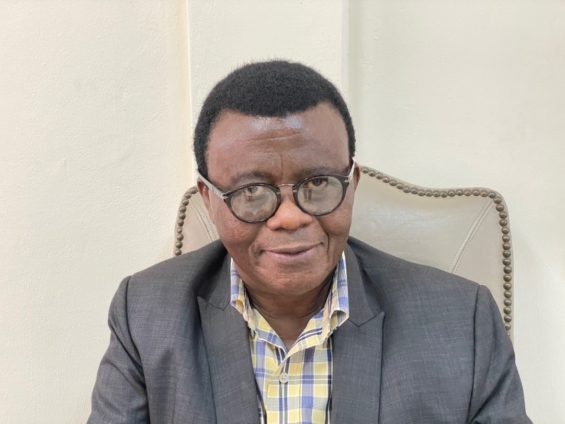
Former UN Senior Governance Advisor Prof Baffour Agyemang-Duah has expressed shock that the government believed it could dismiss the concerns of organised labour.
He stated that underestimating the strength of the "sleeping giant in organised labour" was surprising, especially given the significant implications of tampering with the Social Security and National Insurance Trust (SSNIT) fund, which safeguards workers' futures.
“If organised labour wants to paralyse the whole country, they are in a position to do so. That was why I was surprised when they were defending that was undefendable and dragging their feet," he said. on Joy News PM Express on Monday.
Read Also: Organised Labour declares strike over NPRA’s approval for sale of SSNIT hotels
"SSNIT represents the future of all workers in the country because, by law, you are supposed to keep part of their salaries hoping that upon retirement, they may get some cushion to lay their head.
"So, if someone is playing with that kind of future, you can understand why workers will rise in unison to oppose it."
Prof. Agyemang-Duah also commented on SSNIT's plan to sell 60% of its stake in four hotels, either indicating that SSNIT did not present its case well or that there was a serious conflict of interest.
On Monday, July 15, organised labour suspended its strike, which began in protest against SSNIT's plan to sell 60% shares in four hotels to a private firm owned by the Food and Agriculture Minister, Bryan Acheampong.
Read more: Organised labour suspends strike; gives SSNIT one month to address concerns
This decision was announced by the Secretary General of the Trades Union Congress (TUC), Dr. Yaw Baah, at a news conference after an emergency meeting.
He said they are giving SSNIT one month to address all outstanding issues about pensions or "they will advise themselves."
Describing the breakdown in the relationship between organised labour and SSNIT as “bad news,” Prof. Agyemang-Duah said the Trust should not be seen defending a public official in the middle of wanting to buy state assets.
The head of the Kufuor Foundation noted that the government should have paid attention when organized labour began protesting the sale.
“In the 70s, labour paralyzed the military regime of the time. Between 1975 to 1977, there were lots of labour agitations, leading to internal changes within the government itself.
“Since then, we know that whenever labour begins to rumble over these matters, the government begins to have no options but to capitulate.
"Perhaps, lessons must be learnt from the Kenya peaceful demonstration which rolled into something else and forced the government to swallow its own bill and go beyond that to quickly drop the cabinet," he said.
Latest Stories
-
Ghana needs a law to sustain constitutional reforms – CDD-Ghana
2 hours -
COVID fumigation audit: Auditor-General has a lot of questions to answer – Akwatia MP
2 hours -
Stranded Ghanaian medical graduates in Cuba appeal to Mahama for immediate return
2 hours -
GNFS contains fire outbreak at Teshie Lekma Road near Lekma Hospital
8 hours -
Samia Nkrumah rejects the narrative that Ghanaians were happy after Nkrumah’s overthrow
10 hours -
A Mother’s pain: Tribute by Ivan Baidoo’s mother
10 hours -
‘Forgive us for staying away’ — Samia Nkrumah leads family back to Nkroful, pledges to preserve Nkrumah’s legacy
10 hours -
Ernest Nuamah scores twice as Lyon beat Rennes
10 hours -
‘My dear Ivan’ – A father’s tribute to a son tragically killed
10 hours -
GNPC Explorco advances Voltaian Basin drilling preparations with 13.5km access road
10 hours -
Cabinet approves facility manager for Borteyman Sports Complex – Kofi Adams
11 hours -
Sanitation is improving; critics may be ‘living in another world’ – Salaga South MP replies Bekwai MP
11 hours -
Government must do more to tackle sanitation crisis – Bekwai MP
11 hours -
World Cleanup Day: GFF begins sanitation education in local communities
11 hours -
EU Ambassador, IGP discuss stronger cooperation on policing and security
12 hours